Istria
Pula
The Roman City on the Adriatic
Welcome to Pula
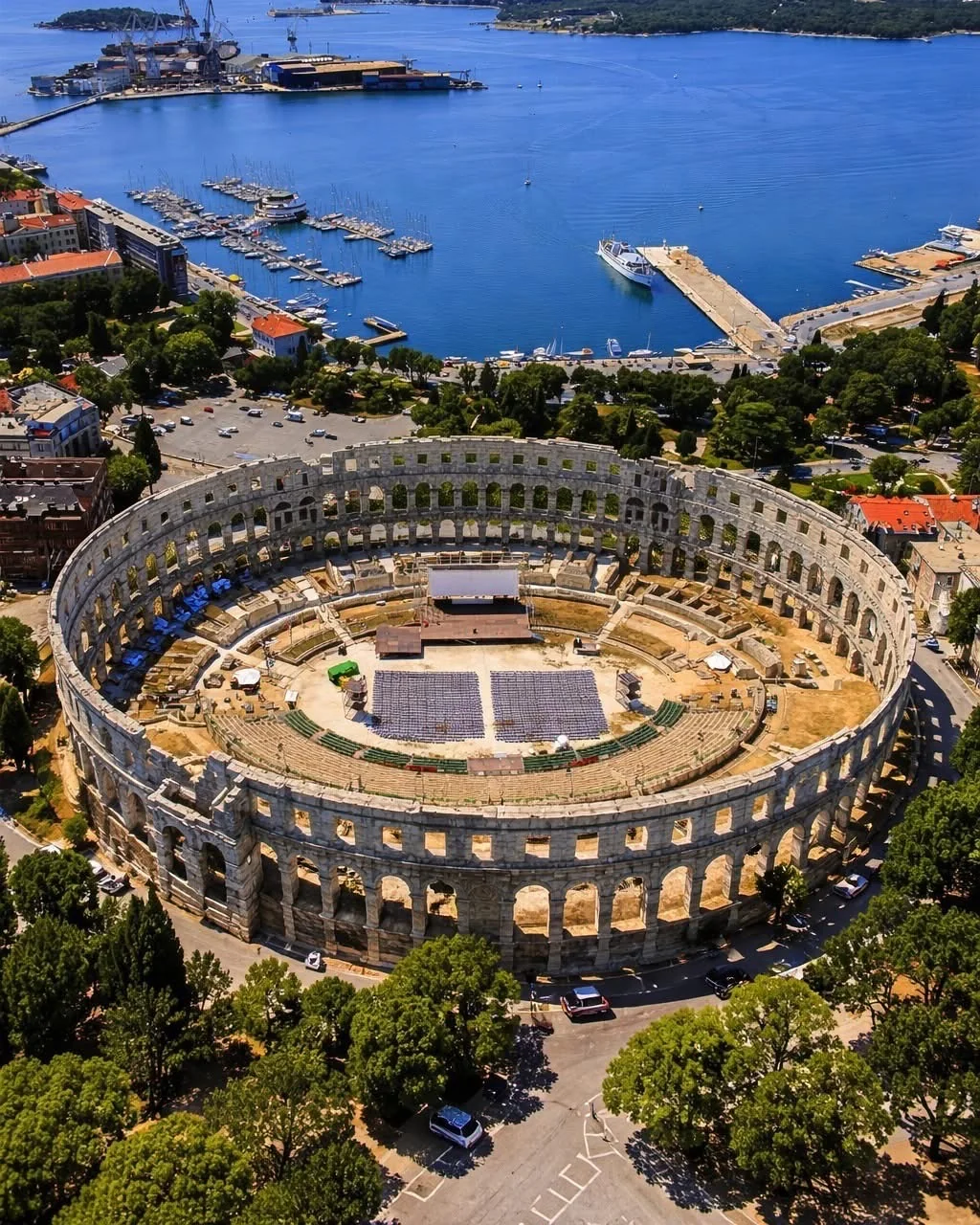
Pula is one of Croatia’s most fascinating cities — a working Adriatic port at the southern tip of the Istrian peninsula that just happens to contain one of the six largest surviving Roman amphitheaters in the world. The Pula Arena, built between 27 BC and 68 AD, still stands almost completely intact: 32 metres high, three storeys of weathered limestone arches, capacity for 23,000 ancient spectators — and the only surviving Roman amphitheater that retains all four side towers. In summer it hosts opera, classical concerts, and the Pula Film Festival under the open sky.
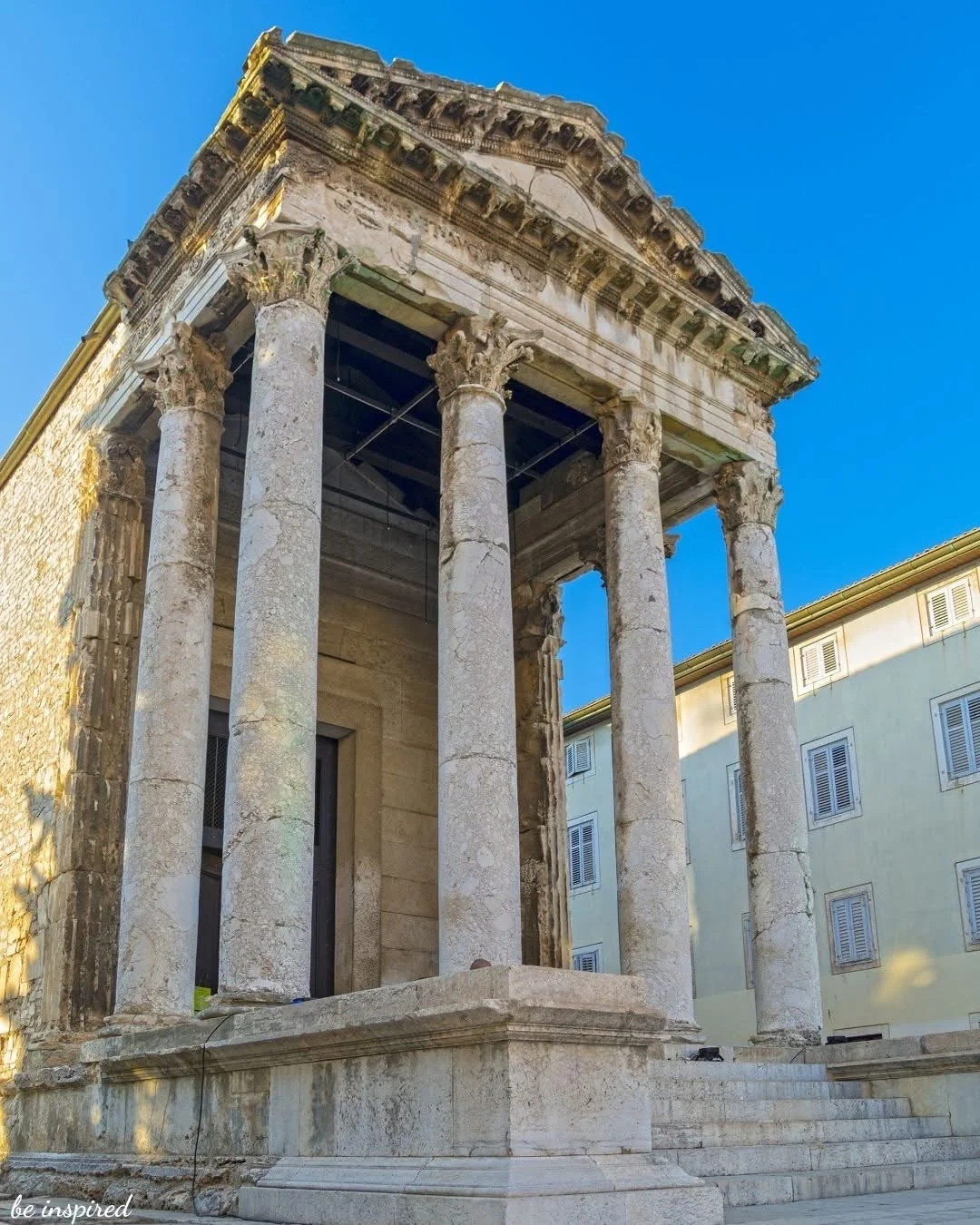
Beyond the Arena, Pula is a layered city — a Venetian fortress, a perfectly preserved Roman temple to Augustus, the Triumphal Arch of the Sergi, and a relaxed pedestrianized old town — anchoring one of Europe’s most exciting wine and food regions: the Istrian peninsula.
Why Visit Pula
For travelers who want to walk among genuine Roman architecture without the queues of Rome or Pompeii, Pula is unmatched. The Arena is the headline, but the old town’s other Roman remains — the Temple of Augustus, the Roman gates and forum — are equally well preserved, and the medieval and Habsburg layers on top of them give Pula a complexity few Croatian cities can match. Pula is also the gateway to Rovinj, the Brijuni Islands, the Istrian wine country, and the truffle forests of the inland — a perfect base for a 4–7 day Istrian week.
For luxury travelers, Pula has only recently entered the high-end conversation — a small wave of design hotels and refined restaurants now complement the Roman ruins.
Top Things to Do in Pula
- Visit the Pula Arena. One of the six largest surviving Roman amphitheaters in the world. Walk the upper galleries, descend into the underground chambers (where gladiators waited), and if your dates align, see an opera or concert under the stars.
- See the Temple of Augustus. A perfectly preserved 1st-century Roman temple in the old town’s main square. The 2,000-year-old portico and pediment look almost untouched.
- Walk the Triumphal Arch of the Sergi. The 27 BC Roman gateway at the entrance to the old town — once the inspiration for Renaissance architects across Italy.
- Climb to the Venetian Fortress (Kastel). The 17th-century star fortress crowns the hill above the old town, with sweeping views of the Arena, the harbor, and the Bay of Pula.
- Day trip to the Brijuni Islands. The 14-island national park just offshore was once Tito’s private retreat. Take the boat from Fažana, hire a bike, and ride past Roman villas, Byzantine ruins, and exotic-animal pastures.
- Beach day at Cape Kamenjak. The wild southern tip of Istria — 30 minutes south of Pula — is a network of cliff coves and turquoise water with no development. The closest Croatia gets to a wilderness coastline.
- Truffle hunting in the Mirna Valley. An hour inland, near the village of Buzet, lies one of the world’s great truffle regions. Half-day truffle hunts with a local family and dog are unforgettable.
- Wine tasting in Istria. The peninsula produces some of Europe’s best Malvasia and Teran. Cellars to visit include Kabola, Kozlović, and Korunzić — mostly within an hour’s drive.
Where to Eat in Pula
Restaurant Milan is Pula’s longtime fine-dining destination — family-run since 1967, with one of the best wine cellars in Croatia. Konoba Batelina, in the village of Banjole 15 minutes south, is the legendary destination konoba where you eat whatever the chef caught that morning — widely considered one of the best fish restaurants in Europe. Restaurant Arena, with its terrace facing the amphitheater, does refined Mediterranean cooking with the best view in the city. For a casual lunch in the old town, Vodnjanka serves traditional Istrian dishes in a stone-walled cellar.
Where to Stay in Pula
For a refined stay, Park Plaza Histria Pula on Verudela peninsula has the best hotel position in the city — sea-front, walking distance to the old town. Boutique Hotel Galija in the old town is the small heritage choice. Valamar Collection Girandella Resort in nearby Rabac (45 minutes east) is the larger five-star option. Many luxury travelers prefer to stay in Rovinj and visit Pula as a day trip — it’s only 40 minutes’ drive.
How to Get to Pula
Pula has its own international airport (PUY) with seasonal direct flights from across Europe. From the airport, the city is a 15-minute taxi ride. Pula is a 2-hour drive from Trieste (Italy), 3 hours from Zagreb, and 1 hour from Slovenia. Frequent buses connect Pula to Rovinj (40 min) and Zagreb. The marina hosts seasonal ferries to Venice and the islands.
Best Time to Visit Pula
May, June, and September are the perfect months — warm enough to swim, the Arena’s evening concerts and operas in full swing, manageable crowds. October is the truffle and wine harvest — the inland Istrian peninsula is at its most beautiful. The Pula Film Festival in mid-July is a wonderful time to be in town if you can find accommodation. Winter is quiet but the Arena and Roman temples are magical in the cold light.
Practical Tips
- Visit the Arena early morning (8am opening) or in the last 90 minutes before closing for the best light and fewest crowds.
- Concert and opera tickets at the Arena sell out months ahead in summer — book early.
- To explore Istria’s hill towns and wine country, a rental car is essential.
- Cape Kamenjak’s beaches are 4×4-friendly only on the dirt tracks; use the marked paths.
- Konoba Batelina has no menu — trust the kitchen and book a week ahead in summer.
Frequently Asked Questions
Is Pula worth visiting?
Yes — Pula contains one of the six largest surviving Roman amphitheaters in the world and a perfectly preserved 1st-century Temple of Augustus. Combined with the Brijuni Islands National Park offshore, Cape Kamenjak’s wild coastline, and the Istrian truffle country an hour inland, Pula deserves at least a full day from any Istrian itinerary.
How many days do you need in Pula?
One full day is enough for Pula’s Roman ruins (Arena, Temple of Augustus, Triumphal Arch). Add a second day for the Brijuni Islands and Cape Kamenjak. Most luxury travelers base themselves in Rovinj (40 minutes north) and visit Pula on a day trip rather than staying overnight.
What is Pula famous for?
Pula is famous for the Pula Arena — one of the largest and best-preserved Roman amphitheaters in the world (built 27 BC – 68 AD, capacity 23,000) — and for the Temple of Augustus, the Triumphal Arch of the Sergi, and as the host city of the Pula Film Festival each July inside the Arena itself.
Can you arrange private after-hours access to Pula Arena?
Yes — private after-hours guided tours of the Pula Arena (including the underground gladiator chambers normally closed to general admission) are arranged through luxury DMCs and the Arena’s curatorial office, typically with three to four weeks’ notice. For evening events, private boxes for the Pula Film Festival in July and the Arena’s classical concerts and operas can be reserved through Adriatic DMC or directly via the venue’s hospitality programme. Helicopter transfers from Hvar or Split land at Pula airport (PUY), 15 minutes from the Arena.
Is Pula better than Rovinj?
They serve different purposes. Rovinj is the most beautiful coastal town in Istria — better for staying. Pula has the more important historical sites — better for visiting. Most luxury travelers stay in Rovinj for 3–5 nights and use a day to drive to Pula for the Arena and Roman ruins.
Plan Your Croatia Trip
Pula pairs naturally with Rovinj, the Brijuni Islands, the Istrian hill towns (Motovun, Grogonjan, Buzet), and the truffle and wine country of the inland. See our Croatia Travel Guide and 7 Day Croatia Itinerary for trip planning ideas. For private truffle hunts, winery introductions, or full Istrian weeks, see our concierge enquiries page.