Dalmatia
Dubrovnik
Pearl of the Adriatic
Welcome to Dubrovnik
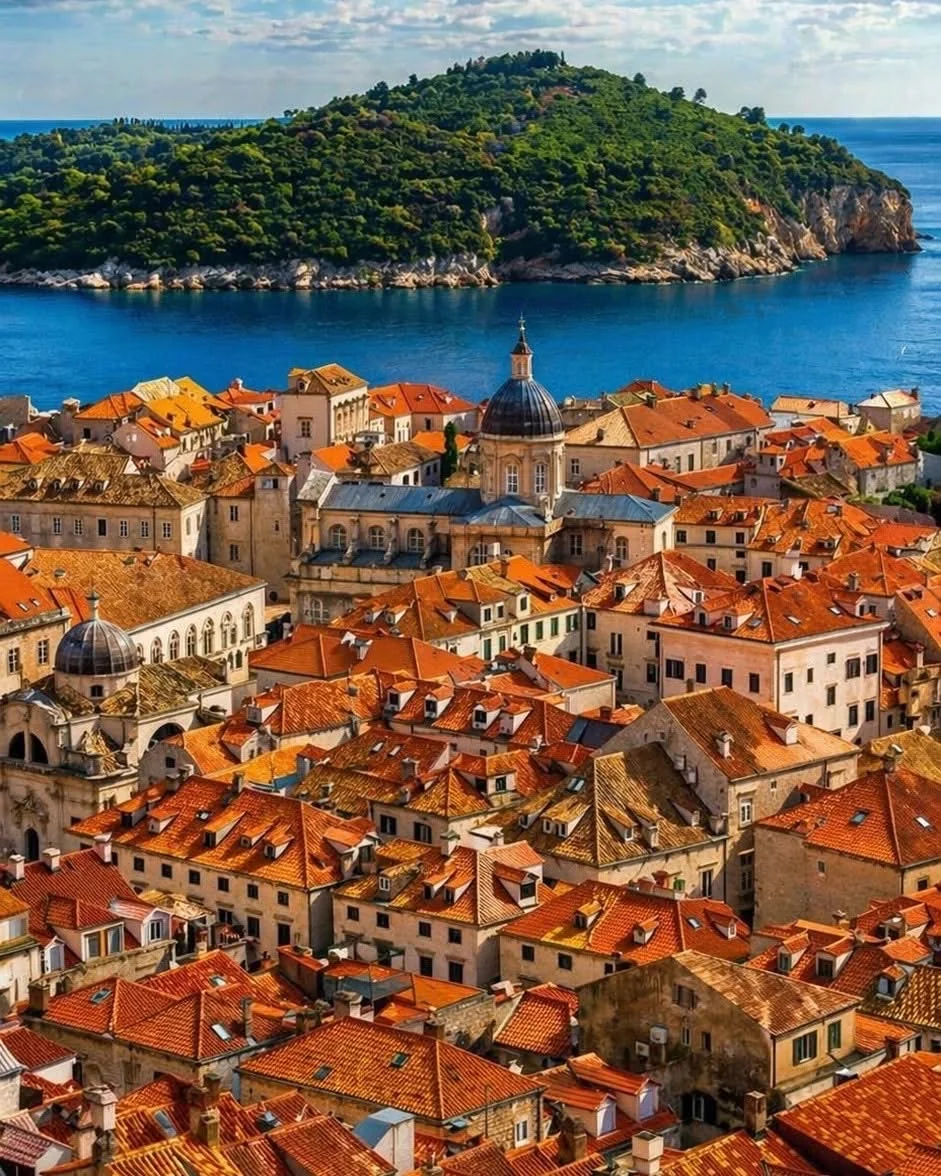
Dubrovnik is Croatia’s most famous destination, and one of the most spectacular walled cities in the world. Sitting on a marble peninsula at the southern tip of the Dalmatian coast, Dubrovnik is a perfectly preserved medieval republic — a city of polished limestone streets, baroque churches, sea-walls thrown three storeys above the Adriatic, and centuries of intrigue tucked behind every gate. Lord Byron called it the Pearl of the Adriatic; UNESCO designated the entire old town a World Heritage Site in 1979; the world fell in love with it again as King’s Landing in Game of Thrones.
This Dubrovnik travel guide covers the best things to do, where to eat, where to stay, and how to plan a luxury visit to Croatia’s most iconic city.
Why Visit Dubrovnik
Few cities on earth concentrate so much beauty into so little space. Dubrovnik’s walled old town is barely 300 metres across, yet it contains a perfectly preserved Renaissance-era republic: the broad limestone Stradun running between two city gates, the 15th-century Onofrio’s fountains, the working Franciscan monastery and pharmacy (one of Europe’s oldest, in continuous operation since 1317), the imposing Rector’s Palace, and a 1,940-metre circuit of city walls that you can walk in a magical, slow ninety minutes.
For luxury travelers, Dubrovnik is the gateway to the southern Dalmatian coast — Korčula, Mljet, the Pelje šac wine country, and the Elaphiti islands are all within easy day-trip range — and the kind of city where the right hotel suite, the right table, and the right boat make all the difference. Stay long enough to see the old town empty out at the end of the day, and you’ll understand why Dubrovnik feels different from anywhere else in Europe.
Top Things to Do in Dubrovnik
- Walk the city walls. The single greatest experience in Croatia. Climb the wall just after opening (8am) or in the last two hours before closing — you’ll have the marble parapet, the Adriatic on one side and a sea of terracotta rooftops on the other, almost to yourself.
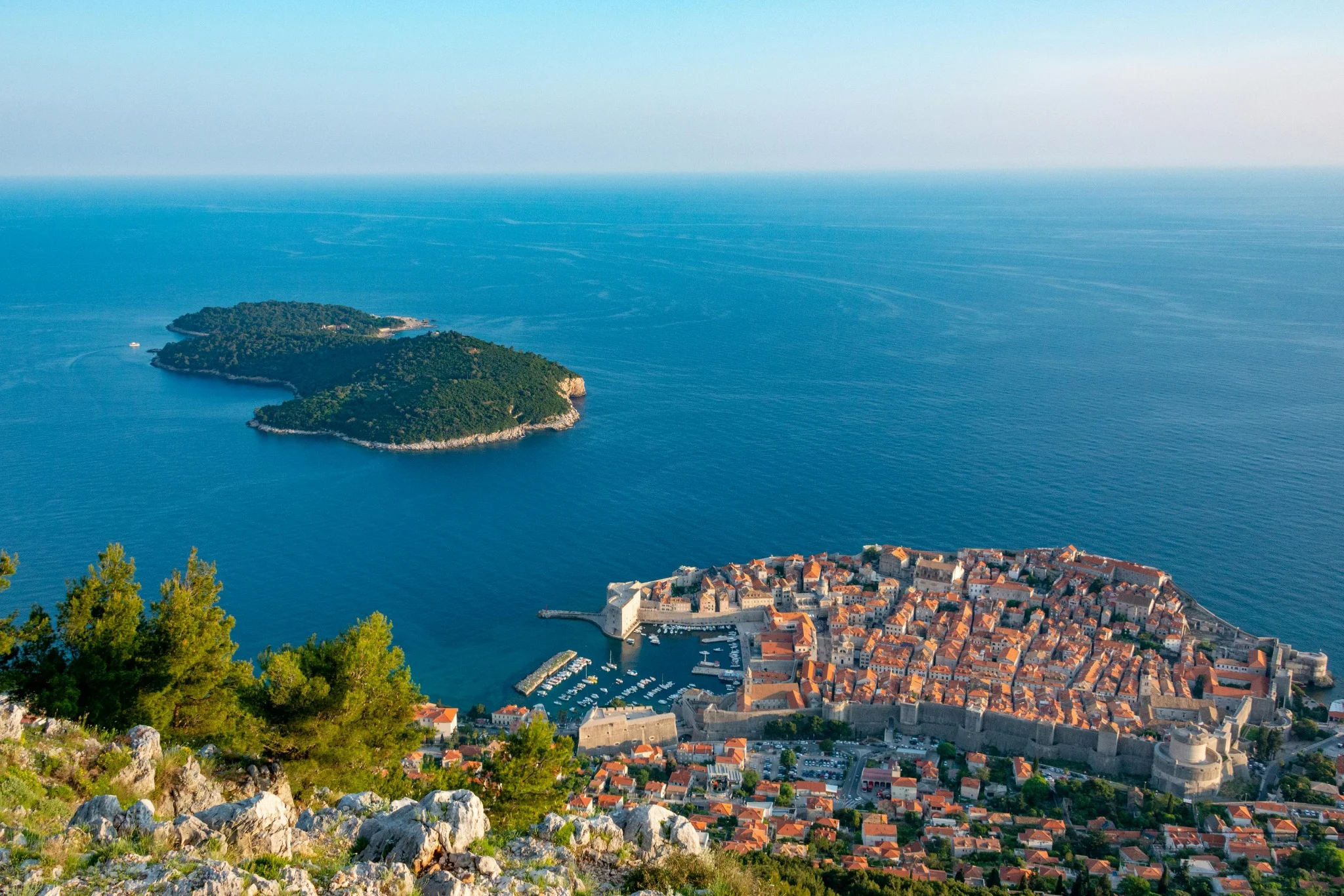
- Take the cable car up Mount Srđ. The 412-metre summit gives you the postcard view: old town, walls, Lokrum, and the islands. Best at sunset.
- Sail to Lokrum Island. A 15-minute boat ride from the old harbor. The island is a botanical garden of cypress and pine, with a ruined Benedictine monastery, the Dead Sea saltwater lake, and peacocks roaming the paths.
- Stroll the Stradun. Dubrovnik’s main marble street, polished to a mirror-shine by seven centuries of footsteps. Walk it at dawn before the tour groups, and again at dusk during the evening passeggiata.
- Visit the Franciscan Monastery and pharmacy. The 14th-century cloister is one of the most peaceful spaces in the city, and the monastery’s Old Pharmacy has been operating since 1317.
- Explore the Rector’s Palace and Sponza Palace. The civic heart of the medieval Republic of Ragusa, with original Gothic-Renaissance architecture and a small but excellent cultural-history museum.
- Swim at Banje Beach or Šulić Cove. Banje is the city beach with views of the walls; Šulić, tucked beneath the western walls, is more secluded and dramatic.
- Day trip to the Elaphiti Islands. A small archipelago of three inhabited islands (Šipan, Lopud, Koločep), all within 45 minutes by boat — perfect for a slow day of swimming and konoba lunches.
- Wine country in Pelje šac. An hour up the coast lies Croatia’s most prestigious wine region — the Dingač and Postup vineyards produce some of the country’s finest reds.
Where to Eat in Dubrovnik
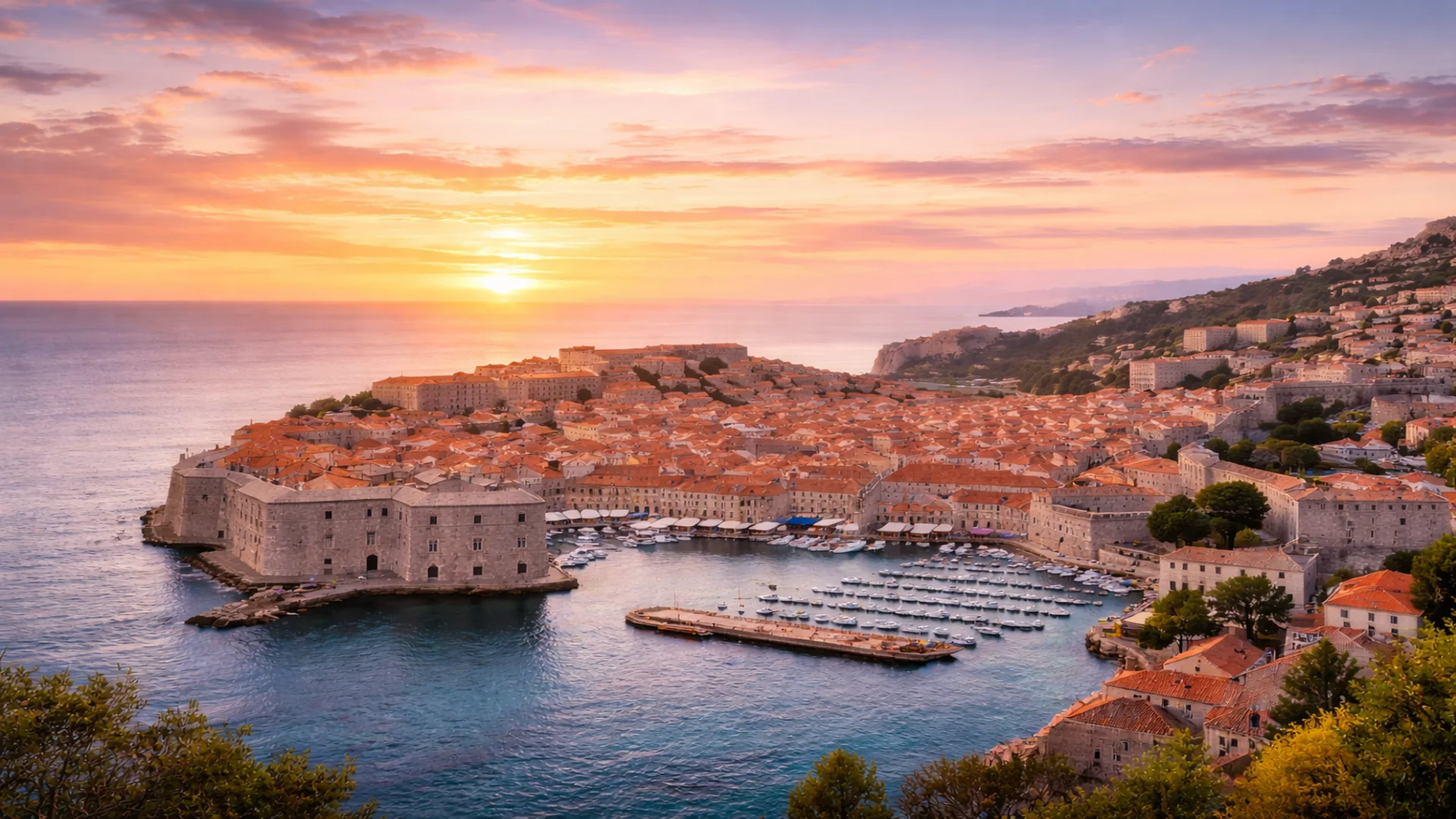
The old town’s restaurant scene rewards travelers who book ahead and avoid the obvious tourist menus on Prijeko Street. Restaurant 360° on the city walls holds Dubrovnik’s only Michelin star — the tasting-menu room with a view straight down into the harbor is one of the great dinner experiences in Croatia. Pantarul serves modern Dalmatian cooking with imagination in a quieter neighborhood just outside the walls. Nautika, perched above Pile Gate, is the longstanding fine-dining choice for sea-view celebrations. For something more relaxed, Konoba Dubrava in the suburbs serves the best peka (slow-cooked meat under an iron bell) in the region, and Azur, hidden in a narrow lane in the old town, blends Mediterranean and Asian flavors beautifully.
Where to Stay in Dubrovnik
For pure luxury, Villa Dubrovnik is one of the most beautifully sited hotels in the Mediterranean — a low-rise modernist villa cantilevered over the sea with direct views of the old town. Hotel Excelsior, perched above Banje Beach, is the historic five-star choice, with Adriatic-front suites and the city walls a ten-minute walk away. The Pucić Palace is the only true boutique inside the walls, occupying a restored 18th-century palazzo on Gundulićeva poljana. For a private villa, the renovated stone houses on the western edge of the old town and the cliff villas of nearby Lapad offer something extraordinary.

How to Get to Dubrovnik
Dubrovnik has its own international airport (DBV), 18 km southeast of the city, with direct flights from across Europe and seasonal connections from North America. From the airport, taxis and shuttles reach the old town in about 30 minutes. Dubrovnik is also reachable by ferry from Split (4–5 hours by Jadrolinija catamaran), and by coastal road from Split (about 3.5 hours’ drive). Most visitors arrive by air or by sea on a yacht or sailing trip.
Best Time to Visit Dubrovnik
May, early June, and late September into October are the perfect months — warm sea, long evenings, and the old town busy but not crushed. July and August are spectacular but bring cruise crowds (the city walls become very busy 10am–4pm; visit at opening or in the last hour for solitude). April and October are cool but lovely for walking the walls and exploring the islands. Winter is quiet and atmospheric, with fewer flights and many smaller restaurants closed.
Practical Tips
- The old town is fully pedestrian — leave the car at one of the parking garages outside Pile or Ploče gates.
- Cable car queues build quickly in summer — go early morning or after 7pm.
- Walk the walls counter-clockwise (starting at Pile Gate) for the best light progression and harbor views at the end.
- The Dubrovnik Pass (1, 3, or 7 days) covers the city walls plus 9 museums and city buses — worth it if you’ll see two or more attractions.
- Sea swimming directly below the walls (at BužaBar) is a classic Dubrovnik moment — bring a towel.
Frequently Asked Questions
Is Dubrovnik worth visiting?
Yes — Dubrovnik is one of the most spectacular walled cities in the world and easily worth two to three days. The marble old town, the 1,940-metre city walls walk, the cable car up Mount Srđ, and the boat trip to Lokrum island are unforgettable. To experience Dubrovnik at its best, plan your visits to the walls early morning or late afternoon to avoid the cruise-ship crowds.
How many days do you need in Dubrovnik?
Two full days is the minimum: one day for the old town and the city walls, and a second day for Lokrum island, Mount Srđ, and a refined dinner. Three days lets you add a day trip to the Pelje šac wine peninsula or the Elaphiti islands. Luxury travelers often stay four to five nights to fully unwind.
When is the best time to visit Dubrovnik?
Late May, early June, and September into early October are the sweet spots — warm sea, long evenings, and the old town busy but not crushed. July and August are spectacular but bring heavy cruise-ship crowds. April and October are peaceful and pleasant for walking the walls and exploring the islands without summer heat.
How do I get from Dubrovnik to Split?
Three options: a Jadrolinija catamaran (4–5 hours along the coast, the most scenic route), a coastal-road drive of about 3.5 hours (the spectacular D8 coastal highway), or a 50-minute flight. Most travelers combine Dubrovnik and Split into a 7–10 day Dalmatian itinerary using the catamaran or a private transfer.
What is Dubrovnik famous for?
Dubrovnik is famous for its perfectly preserved medieval old town, its 1,940-metre circuit of walkable city walls, its history as the independent merchant Republic of Ragusa, and more recently as the King’s Landing filming location for HBO’s Game of Thrones. UNESCO listed the entire old town as a World Heritage Site in 1979.
Plan Your Croatia Trip
Dubrovnik pairs naturally with Korčula, Hvar, the Pelje šac wine peninsula, and the Elaphiti islands. Most travelers combine Dubrovnik with Split on a 7–10 day Dalmatian coast itinerary. See our 7 Day Croatia Itinerary and Croatia Travel Guide for trip planning ideas.
For private boat days, villa introductions, or full Croatian weeks, see our concierge enquiries page.