Istria
Rovinj
The Jewel of Istria
Welcome to Rovinj
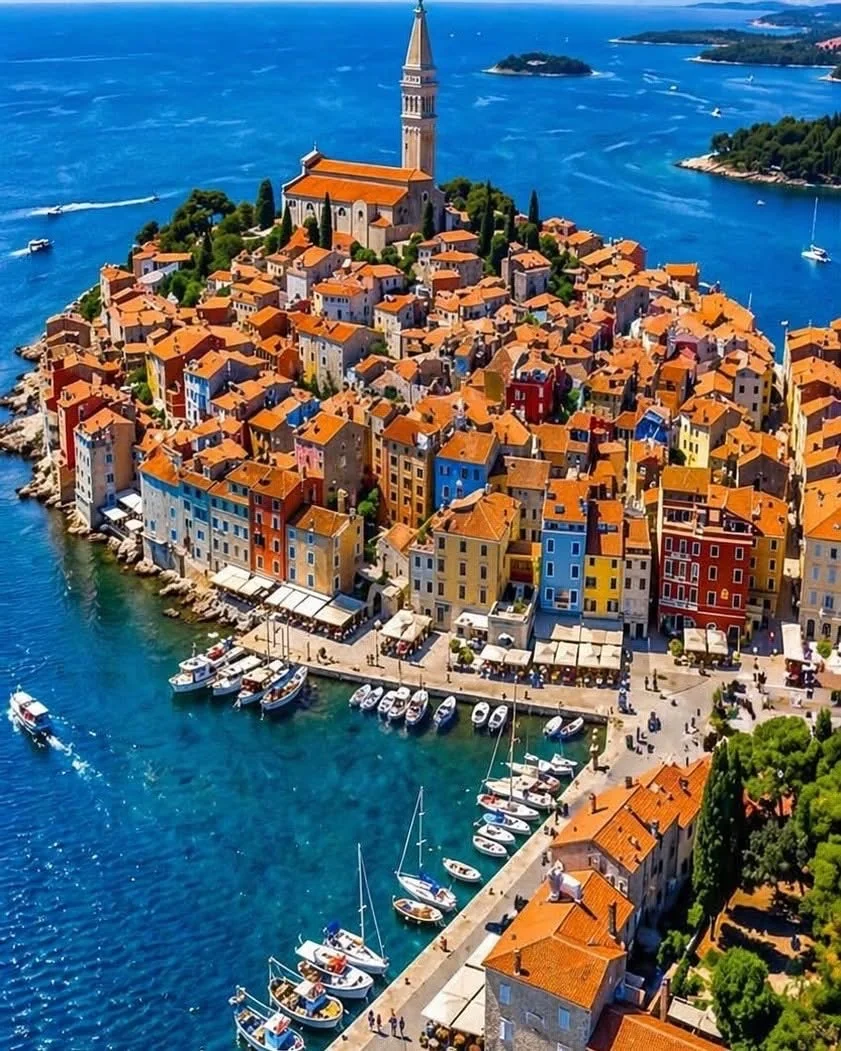
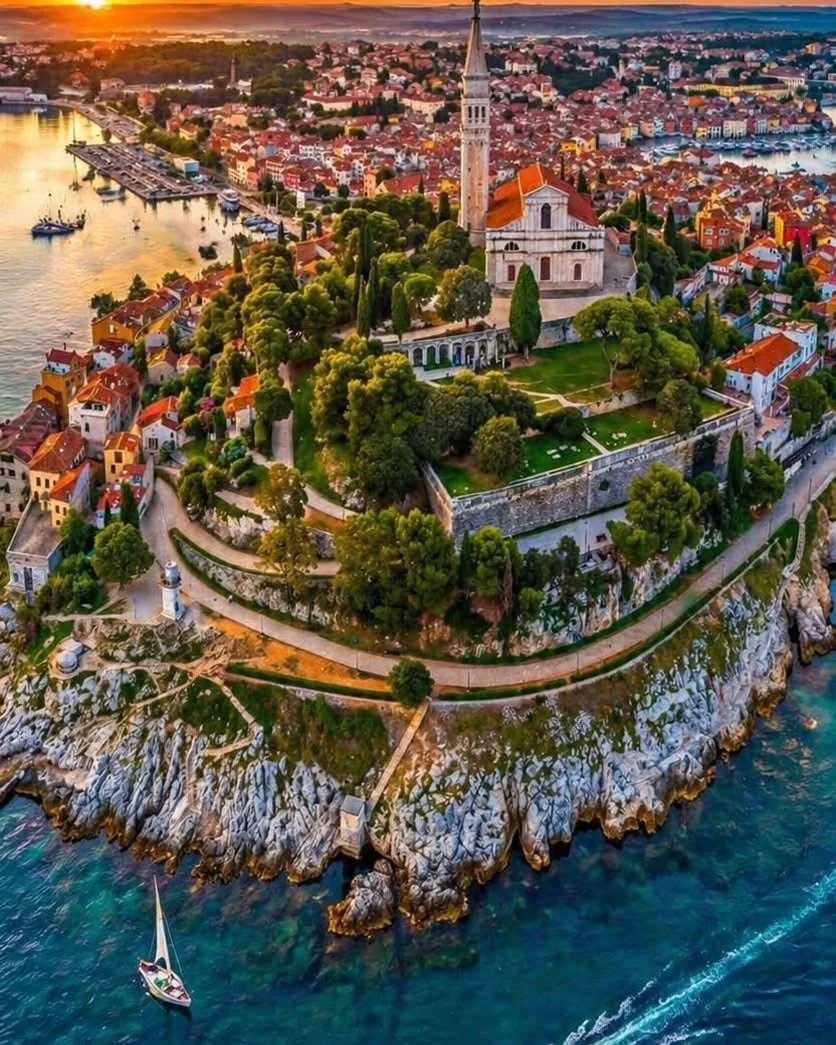
Rovinj is one of the most beautiful coastal towns in Croatia — and one of the most romantic places on the entire Adriatic. Once an island, Rovinj’s old town rises out of the sea on a tear-shaped peninsula crowned by the baroque tower of St Euphemia’s Church, its walls a tumble of pastel-painted stone houses straight out of a Venetian dream. Until 1763 the town was actually an island; the channel between it and the mainland was filled in, but the old town’s character — narrow lanes climbing toward the cathedral, fishermen’s houses with their feet in the sea — has barely changed in centuries.
This Rovinj travel guide covers the best things to do, where to eat, where to stay, and how to plan a luxury visit to the jewel of Istria.
Why Visit Rovinj
Rovinj has the easy elegance of the Italian Adriatic with the price tag and pace of Croatia. The old town is one of the most photographed views in the Mediterranean, particularly at sunset; the harbor is a working fishing port that becomes a luxury yacht marina by evening; the surrounding archipelago of small wooded islands is perfect for boating; and the Istrian peninsula behind it is one of Europe’s most exciting wine and food destinations.
For luxury travelers, Rovinj has become Istria’s anchor city in the past decade — the opening of the five-star Grand Park Hotel in 2019 marked the beginning of a wave of refined hotels, fine-dining restaurants, and design-forward boutiques that now make Rovinj one of the most sophisticated small towns on the Adriatic.
Top Things to Do in Rovinj
- Walk up to St Euphemia’s Church. The 18th-century baroque church on the highest point of the old town — climb the 60-metre bell tower for one of the great panoramic views in Istria.
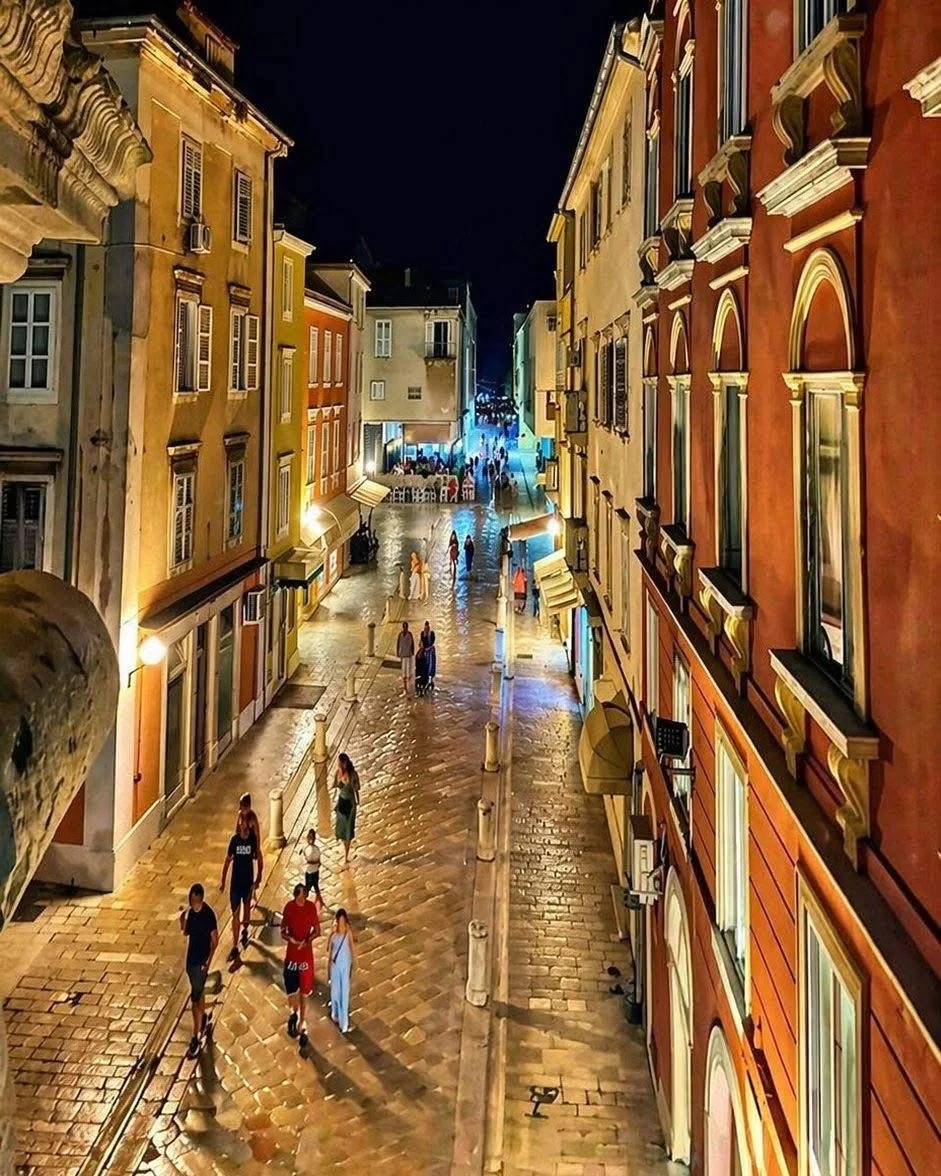
- Get lost in the old town. Rovinj’s tangle of marble streets, hidden squares, and pastel houses is best explored without a destination. Grisia Street, the main artisans’ lane, is lovely in early morning before the day gets busy.
- Watch sunset from the harbor. Rovinj has one of the most photographed sunsets in the Mediterranean. Find a seat on the harbor steps or at one of the western waterfront cafes.
- Explore Zlatni Rt (Golden Cape) Park. The pine-forested park just south of the old town has Mediterranean walking trails, hidden coves, and clifftop swimming spots — a perfect morning escape from the harbor.
- Boat to the Rovinj archipelago. Twenty-two small islands lie just offshore, including Sveta Katarina (a 5-minute boat ride) and Crveni otok (Red Island), both with quiet swimming spots and small hotels.
- Visit the Batana Eco-Museum. Rovinj’s traditional wooden fishing boat — the batana — is the heart of local maritime culture. The small UNESCO-listed museum is one of the most charming in Croatia.
- Day trip into Istria’s hill towns. Motovun, Grogonjan, Buzet, and Hum are 30–60 minutes inland — medieval hilltop villages, truffle country, and Croatia’s most exciting wine and food region.
- Day trip to Pula. The Roman amphitheater of Pula is just 40 minutes south — one of the most extraordinary Roman ruins in Europe.
Where to Eat in Rovinj
Rovinj’s restaurant scene is among the most refined on the Adriatic. Monte, in the old town just below St Euphemia’s, holds a Michelin star and is one of the best fine-dining experiences in Croatia. Cap Aureo at the Grand Park Hotel — also Michelin-starred — is the destination tasting-menu room with sea views. La Puntulina hangs over the rocks on the western edge of the old town with the most romantic terrace in town. Konoba Veli Jže is the long-standing local favorite for traditional Istrian and Dalmatian cooking. For a casual seafood lunch, Maistra Bistro on the harbor is reliable and lovely.
Where to Stay in Rovinj
Grand Park Hotel Rovinj is the flagship five-star — a low-rise design hotel with a serious spa, two Michelin-starred restaurants, and the best old-town view in town. Hotel Lone, on a wooded headland just south, is a striking modernist design hotel — the first true five-star design hotel in Croatia. Hotel Adriatic on the harbor is the boutique heritage choice. Maistra’s Villa Polesini is a beautifully restored heritage villa-hotel with a private bay. For a private villa, the restored stone houses in the inland villages of Bale and Krnčić offer something unforgettable.
How to Get to Rovinj
The closest airports are Pula (PUY), 40 minutes south, with seasonal direct flights from across Europe; and Trieste (Italy), about 90 minutes by car. Zagreb and Venice (Italy) are both 3-hour drives. Rovinj has no rail service — most travelers arrive by rental car or private transfer. The marina hosts seasonal ferries to Venice (3.5 hours) and to Pula.
Best Time to Visit Rovinj
May, June, and September are the best months in Rovinj — warm enough to swim, long evenings on the harbor, and the crowds manageable. October is exceptional for wine and truffle season in the Istrian interior. July and August bring more visitors, but Rovinj’s old town somehow always feels less crowded than the bigger Dalmatian destinations. Winter is quiet and atmospheric — a few restaurants close, but the harbor and old town keep their character.
Practical Tips
- The old town is entirely pedestrian — leave the car at the public garage on the edge of town.
- To explore the Istrian interior (truffle hunting, hill towns, vineyards), you’ll want a rental car.
- Both Michelin-starred restaurants book up weeks in advance in summer — reserve as soon as you have dates.
- The bell tower of St Euphemia is best climbed early morning for clear light — it gets busy by 10am.
- Rovinj’s beaches are mostly rocky/concrete — for sandy beach time, plan a day on Crveni otok or drive south to Premantura.
Frequently Asked Questions
Is Rovinj worth visiting?
Yes — Rovinj is one of the most beautiful coastal towns in Croatia and the most romantic destination in Istria. The pastel old town climbing toward St Euphemia’s bell tower is one of the most photographed views in the Mediterranean, and Rovinj is now home to two Michelin-starred restaurants and a wave of refined boutique hotels.
How many days do you need in Rovinj?
Two to three days is ideal. One day for the old town and St Euphemia’s bell tower, one for the Rovinj archipelago by boat, and a third for day trips into the Istrian hill towns of Motovun, Grožnjan, and Buzet for truffles and wine. A full Istrian week is rewarding.
Is Rovinj or Pula better?
Rovinj is the more beautiful and more romantic of the two — the perfect small coastal town. Pula has Croatia’s most spectacular Roman ruins, including one of the six largest surviving Roman amphitheaters in the world. Most travelers stay in Rovinj and visit Pula on a day trip (40 minutes south).
What is Rovinj famous for?
Rovinj is famous for its perfectly photogenic old town on a tear-shaped peninsula, the baroque tower of St Euphemia’s Church, its working fishing harbor that becomes a luxury yacht marina by evening, and as the gateway to the Istrian peninsula’s wine and truffle country.
What private experiences are available in Rovinj?
Rovinj has matured into Istria’s premier luxury destination. The Grand Park Hotel Rovinj’s signature suite, Hotel Lone’s penthouse, and Maistra’s Villa Polesini all coordinate private experiences end-to-end: yacht charters from the marina, private truffle hunts in the Mirna Valley, helicopter transfers from Pula or Trieste, and priority bookings at the two Michelin-starred restaurants (Monte and Cap Aureo). Most international travelers arrive by private jet into Pula (PUY) or Trieste (TRS), then chauffeured Mercedes for the 40-minute drive.
Plan Your Croatia Trip
Rovinj pairs naturally with Pula, the Istrian hill towns (Motovun, Grogonjan, Buzet), and the Brijuni Islands National Park. Many travelers combine Rovinj with a swing through Slovenia or down the Dalmatian coast. See our 7 Day Croatia Itinerary and Croatia Travel Guide for trip planning ideas.
For private boat days, villa introductions, or full Croatian weeks, see our concierge enquiries page.