Dalmatia
Trogir
A UNESCO Old Town on a Tiny Island
Welcome to Trogir
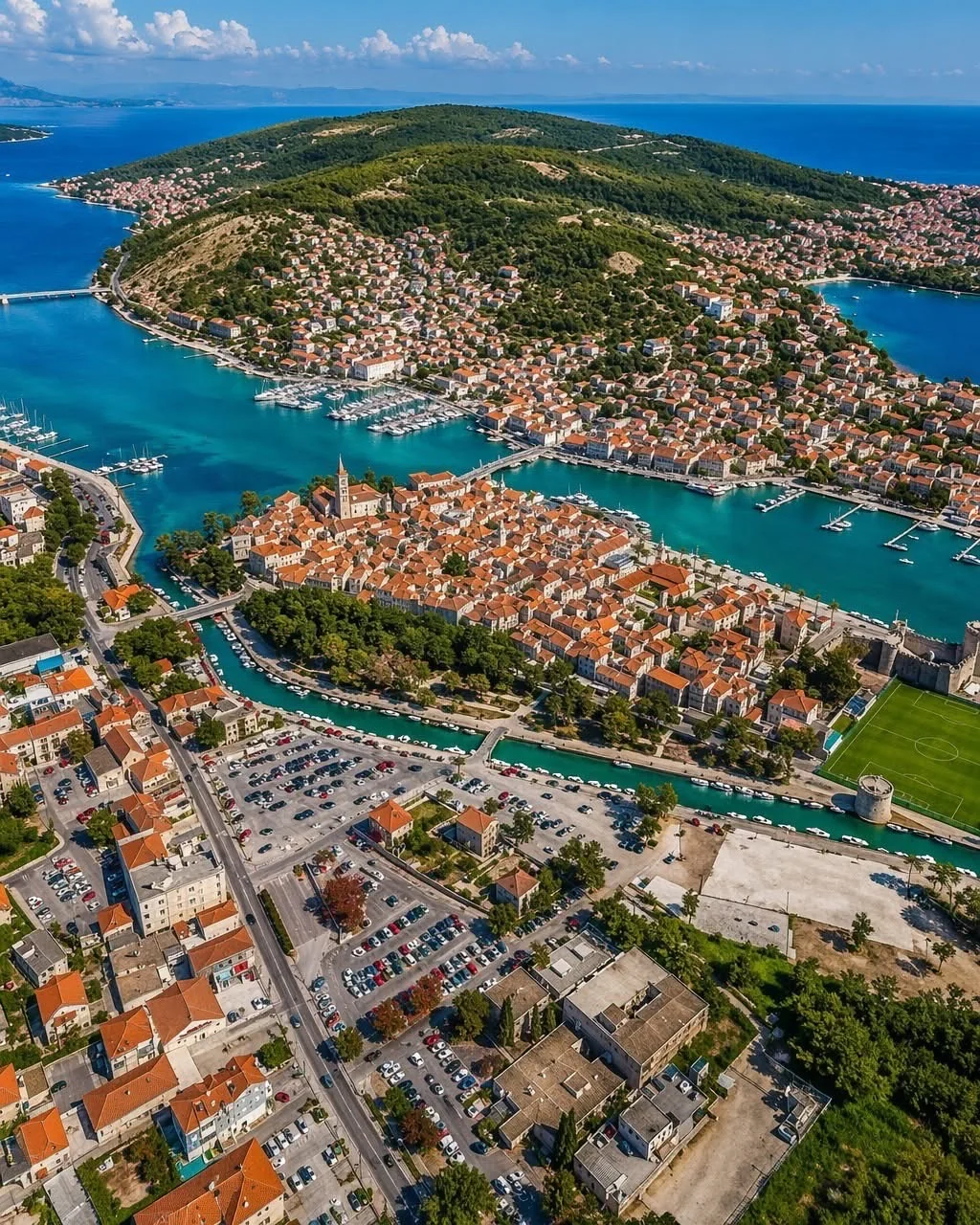
Trogir is one of the Adriatic’s great surprises — a complete medieval city compressed onto a tiny island the size of a small town square, connected to the Dalmatian mainland by one bridge and to the holiday island of Čiovo by another. UNESCO inscribed Trogir’s old town as a World Heritage Site in 1997, calling it the best-preserved Romanesque-Gothic complex in central Europe. Twenty-three centuries of continuous habitation are written into its stone — Greek foundations laid by colonists from Vis in the 3rd century BC, Roman streets, Venetian palaces, and a cathedral whose west portal is one of the most important pieces of medieval sculpture in Europe.
This Trogir travel guide covers the best things to do, where to eat, where to stay, and how to weave Trogir into a refined Dalmatian itinerary alongside Split, Šibenik, and the islands.
Why Visit Trogir
Trogir rewards travellers who appreciate density. The walled old town fits inside a fifteen-minute walk, yet packs in a UNESCO cathedral, a 15th-century Venetian fortress, three medieval churches, an old town gate, a marble palazzo, and one of the most photogenic seafront promenades in Croatia. Unlike Dubrovnik or Split, you can see the whole town in an unhurried day — and you can do it without ever needing a car.
For luxury travellers, Trogir works best as a quieter base for a Dalmatian week — twenty minutes from Split airport, fifteen from the marinas at Marina and Seget, and an easy gateway to Čiovo’s beaches, the Pakleni and Šolta day-sailing waters, and the inland villages above Kaštela. Many travellers who would once have based themselves in Split now prefer the calm of Trogir’s seafront and Čiovo, dipping into Split for a single day.
Top Things to Do in Trogir
- Stand before the Radovan Portal at the Cathedral of St Lawrence. The carved stone west portal, completed by master Radovan in 1240, is one of the most important works of Romanesque sculpture in Europe — Adam and Eve flanking the doors, the calendar of months around the arch, the lions beneath the apostles. Take fifteen unhurried minutes here.
- Climb the cathedral bell tower. The 47-metre tower, built in three stages from the 14th to the 16th century, gives the best panorama of the old town’s red-tile roofs, the channel, and Čiovo opposite.
- Walk the seafront Riva. Trogir’s Riva — the wide stone promenade between the old town and the channel — is the social heart of the town: morning coffee, evening passeggiata, and one of the most beautiful sunset walks on the Dalmatian coast.
- Explore Kamerlengo Fortress. The 15th-century Venetian fortress at the western tip of the island once defended the channel; today it hosts open-air summer concerts and offers a short climb up the ramparts for views back over the old town.
- Step into the Cipiko Palace. Directly opposite the cathedral, the Gothic-Renaissance palace of the noble Cipiko family is one of the finest secular buildings in Dalmatia — beautiful courtyards and arched windows.
- Visit the Town Loggia and clock tower. The 15th-century stone loggia on the main square, with Nikola Firentinac’s relief of justice, is where civic life played out for five centuries. The clock tower opposite is the meeting point of the town.
- Cross the bridge to Čiovo for a beach afternoon. Okrug Gornji’s long pebble beach — known locally as Copacabana — is a fifteen-minute drive from the old town. For a quieter swim, the small coves on the south side of Čiovo are reachable by car or scooter.
- Take a private boat to the Blue Lagoon and Šolta. Trogir is the easiest launch point in central Dalmatia for a day on the water — the Blue Lagoon at Drvenik Veli, the bays of Šolta, and the Pakleni Islands off Hvar are all within easy half-day reach.
- Browse the morning Pijaca market. The daily market just outside the north gate is the most authentic in central Dalmatia — peninsula vegetables, Kaštela olive oil, Pag cheese, and the morning’s catch from the channel.
Where to Eat in Trogir
Trogir’s restaurant scene punches well above the size of the island. Konoba Trs, tucked in a narrow lane behind the cathedral, is the long-standing favourite for refined Dalmatian cooking — fresh fish, slow-cooked octopus, and an excellent local wine list. Don Dino, in a small stone courtyard near the loggia, serves more contemporary plates with a confident hand. For something more theatrical, Mauro on Čiovo opposite the channel has tables right on the water and a serious seafood kitchen. For a casual lunch with the best view in town, the seafront Konoba Mare on the Riva pairs grilled sardines and chilled Pošip with Trogir’s working harbour life. The morning Pijaca market outside the north gate is unmatched for picnic supplies — local cheese, olives, prosciutto from the Drniš hills, and tomatoes from the Kaštela coast.
Where to Stay in Trogir
For a stay inside the old town walls, Heritage Hotel Tragos occupies a beautifully restored Renaissance palazzo on a quiet stone lane minutes from the cathedral — the most atmospheric address in town. Brown Beach House Trogir, on the mainland edge of the channel, is the design-led choice — a former tobacco warehouse turned beach-club hotel with a serious restaurant, a quiet spa, and the smartest bar within twenty kilometres. For a Čiovo retreat, the renovated stone villas on the south coast of the island offer privacy, swimming straight from the rocks, and a fifteen-minute drive back into the old town. For full villa estates with private chefs and pools, our concierge introductions cover the best of Čiovo and the Kaštela bay.
How to Get to Trogir
Trogir is the easiest old town to reach in central Dalmatia. Split Airport (SPU) is just 5 km away — a ten-minute taxi or a fifteen-minute walk along the channel road. From Split, Trogir is a 30-minute drive on the coastal road or a slightly slower bus from the central station. From Zadar, the A1 motorway brings you down in 90 minutes; from Dubrovnik, allow four hours by car or a one-hour flight via Split. Trogir’s marina and the larger marinas at Seget Donji and Marina serve as a major yacht charter base for central Dalmatia and a popular start point for one-week Adriatic itineraries.
Best Time to Visit Trogir
Trogir is at its best from May through early October. Late May, June, and September are the sweet spots — the sea is warm enough to swim, the cathedral and bell tower are uncrowded, and the Čiovo restaurants have tables. July and August are spectacular but the cruise-ship daytime crowd in the old town is intense between 10 a.m. and 4 p.m.; if you visit in summer, walk the streets early or after dinner. April and October are unhurried and cool — perfect for the cathedral and the cooking. Winter is quiet and atmospheric, with most kitchens open weekends only and the old town largely to yourself.
Practical Tips
- The old town is fully pedestrian — leave the car in the paid car parks on the mainland side of the bridge.
- The cathedral closes for lunch most days; visit early morning or late afternoon to see the Radovan Portal and climb the bell tower without queues.
- Trogir’s cruise-ship crowd peaks midday in summer; book lunch on Čiovo or save the old town for early or late.
- The morning market outside the north gate runs roughly 7 a.m. to 1 p.m. — go before 10 for the best of the catch.
- Tap water throughout Trogir is excellent.
Frequently Asked Questions
Is Trogir worth visiting?
Yes — Trogir’s old town is one of the most rewarding stops on the Dalmatian coast and a UNESCO World Heritage Site since 1997. The Cathedral of St Lawrence and its Radovan Portal, the Kamerlengo Fortress, the 15th-century town loggia, and the seafront Riva can be experienced in a relaxed day, and the neighbouring island of Čiovo adds beaches and quieter restaurants. For travellers who already know Split or Dubrovnik, Trogir is a more compact and atmospheric alternative.
How long should I spend in Trogir?
A full day is enough to see the old town properly — the cathedral, the bell tower, Kamerlengo Fortress, the Cipiko Palace, and a long lunch on the Riva. An overnight is far better than a day trip; the old town is at its best in the early morning and after the cruise visitors leave around 5 p.m. Two nights lets you add a Čiovo beach afternoon and a private boat day to the Blue Lagoon or Šolta.
Is Trogir better than Split?
They are different. Split is larger, livelier, and an unmissable Roman city built into Diocletian’s palace — the better base for island-hopping by ferry. Trogir is smaller, calmer, and more architecturally complete, with a UNESCO old town you can walk in fifteen minutes. Many luxury travellers now base themselves in Trogir or Čiovo and visit Split for a day, rather than the other way around.
How do you get from Split Airport to Trogir?
Split Airport is just 5 km from Trogir — a ten-minute taxi (around 15–20 €) or a 25-minute local bus. Many luxury hotels in Trogir and on Čiovo arrange private transfers from the airport. The same airport serves Split itself (about 25 minutes away) so it is the natural arrival point for any central Dalmatian itinerary.
Can you visit Trogir as a day trip from Split?
Yes — Trogir is one of the easiest day trips from Split, 30 minutes by car or by bus. A morning visit covers the cathedral, the bell tower, and Kamerlengo Fortress with a long lunch on the Riva. For the best experience, however, stay overnight: Trogir’s old town is at its most atmospheric early morning and after dark, when the cruise-ship visitors have gone.
What is Trogir famous for?
Trogir is famous for its UNESCO World Heritage old town — the best-preserved Romanesque-Gothic complex in central Europe — and for the Cathedral of St Lawrence, whose Radovan Portal (1240) is one of the most important medieval sculptural works on the Adriatic. The Kamerlengo Fortress, the seafront Riva, and the proximity to Split Airport and Čiovo’s beaches complete the picture.
Plan Your Croatia Trip
Trogir pairs naturally with Split, Šibenik, and the central Dalmatian islands of Hvar and Brač. See our 7 Day Croatia Itinerary for ideas on combining Trogir with the rest of the Dalmatian coast, or the Croatia Travel Guide for trip planning essentials. For private guides, yacht days from Trogir’s marinas, restaurant introductions, or full Dalmatian weeks, see our concierge enquiries page.