The Adriatic’s grande dame
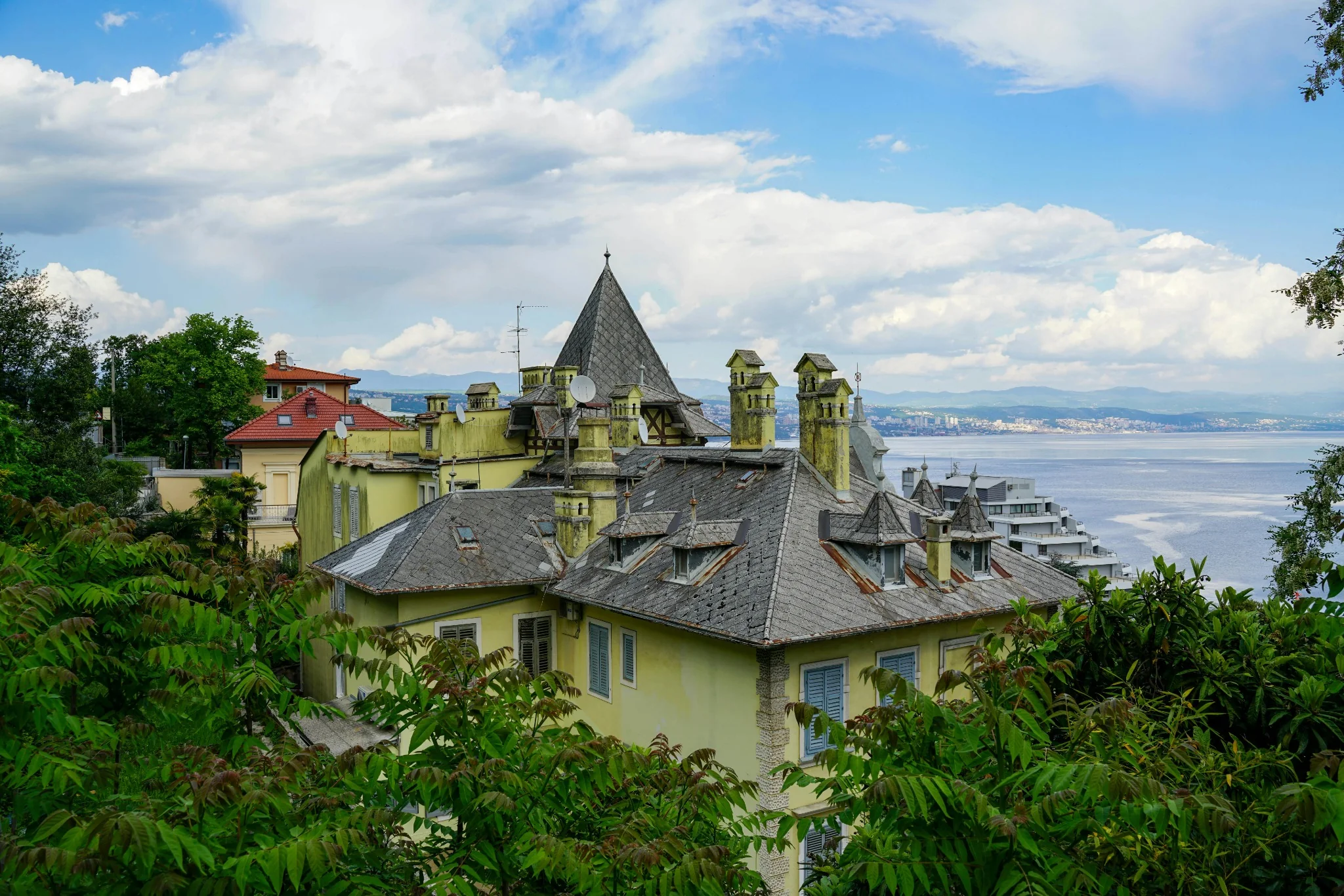
Opatija sits on the edge of Kvarner Bay where the high karst of the Učka mountain range falls almost vertically to the sea, with a sheltered south-facing aspect that gives the resort one of the mildest microclimates in the northern Mediterranean. From the 1880s, when the Vienna–Trieste railway extended the Habsburg empire’s reach to the Adriatic, Opatija became the imperial seaside — the Cannes of central Europe, the place Franz Joseph and his court wintered, where Mahler and Chekhov took the air, where the grand hotels of the European fin de siècle were built one after another along the shoreline.
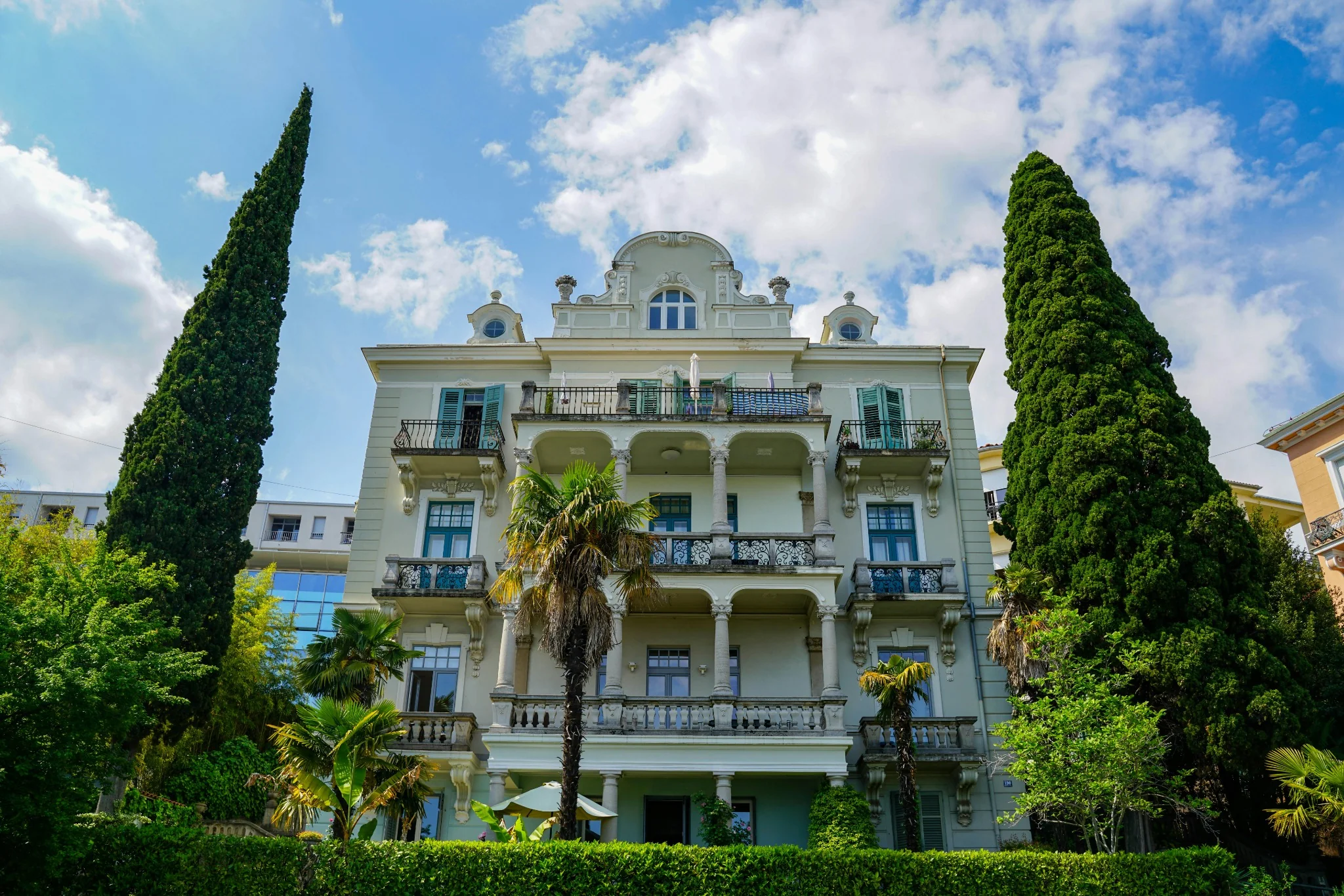
For the luxury traveller in 2026, Opatija is the most distinct destination on the Croatian coast. It is not a Dalmatian fishing town and does not pretend to be — it is a Belle Époque resort, with the architecture, the parks, the seafront promenade, and the grand hotels of one. Two of those hotels (Hotel Kvarner, opened 1884; Hotel Imperial) are still operating in their original buildings, and a third (Hotel Milenij) has been beautifully restored. Pair Opatija with two or three nights in inland Istria or with the Kvarner islands and the result is one of the most refined weeks anywhere on the Adriatic.
The Lungomare
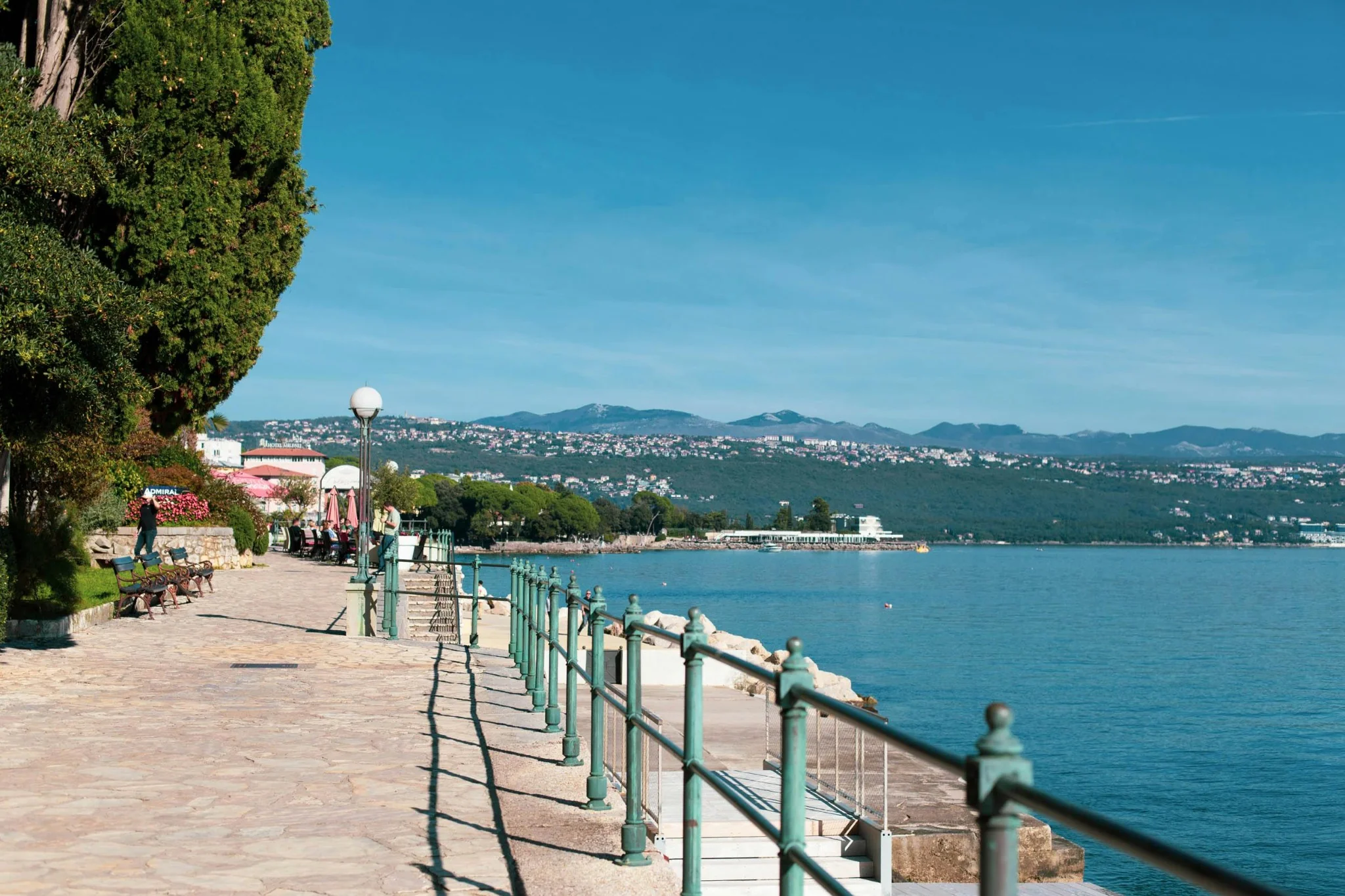
The Lungomare — formally the Šetalište Franza Josefa I, after the emperor — is the twelve-kilometre seafront promenade that runs from Volosko in the north, through Opatija itself, to Lovran in the south. It is the longest continuous seaside promenade on the Croatian coast and one of the great walks on the Adriatic. The path passes Belle Époque villas, sub-tropical gardens (Opatija’s microclimate sustains palms, magnolias, and bay laurels — the town is named for the bay laurel, opatija in Croatian), small swimming coves, and the harbours of three distinct settlements.
The full walk takes about three hours at a relaxed pace; most travellers do it in two halves. The northern section to Volosko is the most rewarding for food (Volosko has the strongest restaurant cluster on the Kvarner) and the southern section to Lovran is the most beautiful walk, ending in a small medieval village built around an old church.
Volosko — the small fishing harbour to the north
Volosko, ten minutes north along the Lungomare, is the small fishing harbour at the start of the promenade. It is also one of the strongest dining destinations on the Croatian coast. The headline restaurant is Plavi Podrum, a Slow Food sanctuary that has been the leading kitchen of the Kvarner for thirty years; Konoba Tramerka is the elegant alternative; Skalinada the small natural-wine bar; Korta the modern fish kitchen. Travellers should plan at least one Volosko dinner during any Opatija stay — the walk back along the lit Lungomare in the warm evening is one of the great Adriatic pleasures.
Lovran — medieval village to the south
Lovran sits at the southern end of the Lungomare — a small medieval walled village built around the eleventh-century Church of St George, with a tiny harbour and a beautifully preserved old town that pre-dates the Habsburg resort era. The town is famous for its cherries (the late-spring cherry festival is one of the prettiest events on the calendar), its sweet chestnut groves on the slopes of Učka above, and its small konobas. Restaurant Najade on the harbour is the local institution; Konoba Lovran in the old town is the more traditional alternative.
Where to stay
- Hotel Milenij, Opatija — the most polished Belle Époque restoration in town, on the seafront in the centre of Opatija, with seventy rooms and the strongest spa in the resort.
- Hotel Kvarner, Opatija — the original Opatija grand hotel (opened 1884), the first hotel built on the eastern Adriatic, lavishly restored with its original ballroom and palm-court atrium.
- Remisens Premium Hotel Ambasador, Opatija — five-star contemporary on the seafront, with the largest spa in town and a strong wellness programme.
- Villa Astra, Lovran — Relais & Châteaux, an Art Nouveau villa on the seafront in Lovran, with eight suites and one of the strongest small-luxury experiences on the Kvarner.
- Hotel Bevanda, Opatija — small (eleven rooms), beautifully designed, on the small harbour at the southern edge of Opatija.
Spa, wellness, and the Habsburg legacy
Opatija was developed in the late nineteenth century as a wellness destination — the imperial physicians prescribed the climate to Habsburg patients, and the resort grew up around a model of structured outdoor walking, sea-bathing, and bay-laurel air. That tradition continues in the spa programmes of the major hotels, which are unusually serious for the Croatian coast: full thermal facilities, structured wellness weeks, and supervised medical-wellness programmes at the Ambasador and Milenij. For travellers wanting a more contemporary spa experience, the larger Bristol-group properties on the seafront and Villa Astra in Lovran provide it.
Učka — the mountain above
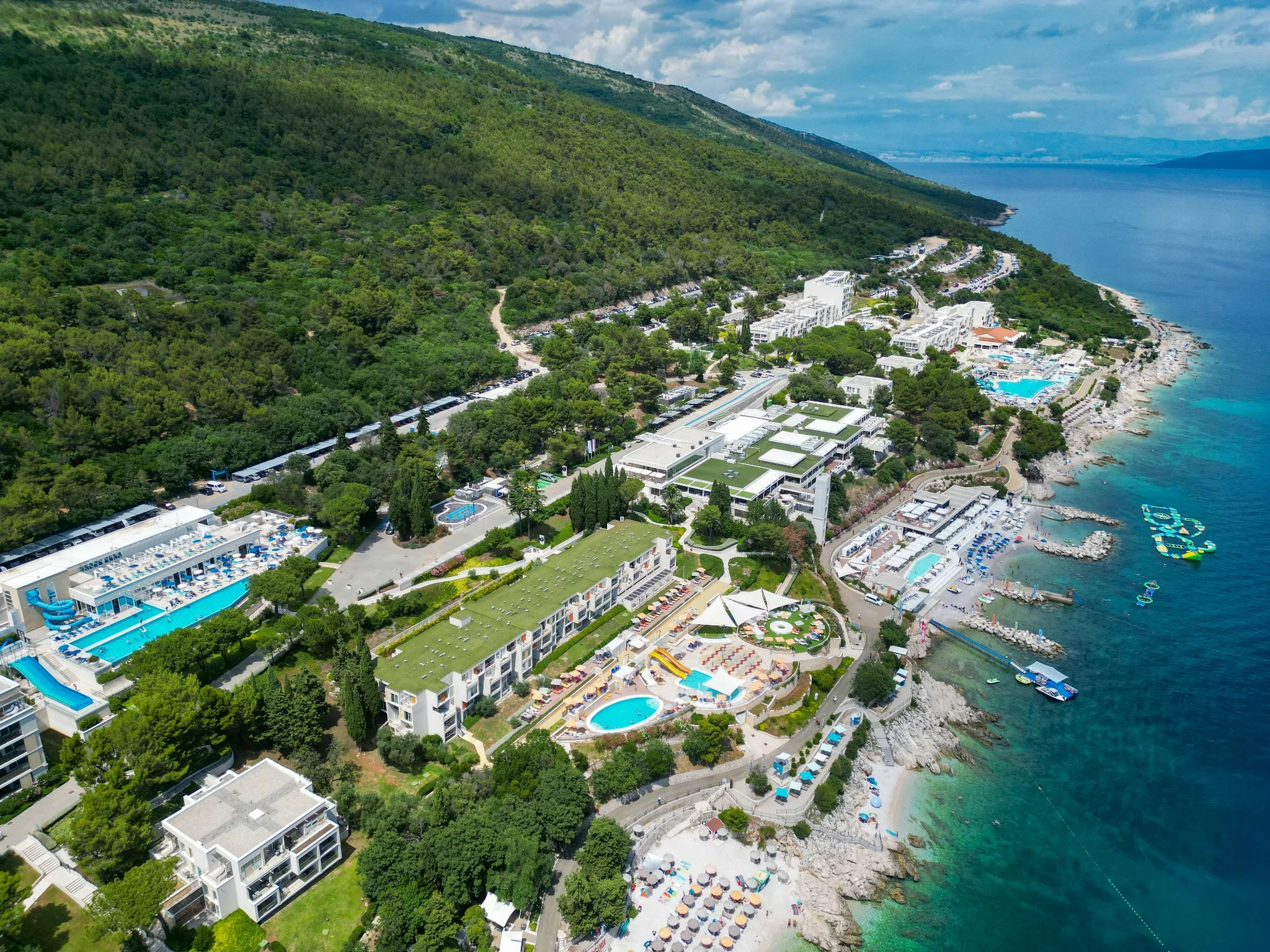
Behind Opatija rises Učka, a 1,400-metre limestone ridge that gives the town its sheltered microclimate and its weather. The summit (Vojak) is reached by a one-hour drive and a short walk and offers what is genuinely the most remarkable view on the northern Adriatic — Kvarner Bay, the islands of Krk and Cres, the Italian shore on a clear day, and the Slovenian Alps to the north. Učka Nature Park is excellent walking country and a good half-day off the seafront for travellers staying longer.
How to get to Opatija
Opatija is the easiest of the Croatian luxury destinations to reach by air — Pula, Rijeka, and Trieste airports are each within an hour’s drive, and Ljubljana (Slovenia) and Venice are within two and a half. The town pairs naturally with a coastal Istrian stay (Rovinj, Pula) — the drive between Opatija and Rovinj is around ninety minutes — and with the Kvarner islands of Krk, Cres, and Lošinj. See our Croatia travel guide for full transfer logistics.
Frequently asked questions
Is Opatija worth visiting?
For travellers interested in Belle Époque architecture, structured wellness, the strongest restaurant cluster on the Kvarner coast, or simply the most refined seafront promenade on the Adriatic, Opatija is one of the most rewarding destinations in Croatia. It is also the most distinct — neither a Dalmatian fishing town nor an Istrian hill village, but the Habsburg empire’s seaside resort, beautifully preserved.
How long should I spend in Opatija?
Two to three nights is right for most luxury itineraries — time to walk the full Lungomare, eat in Volosko and Lovran, and take a half-day to Učka or one of the Kvarner islands. Travellers building a structured wellness week comfortably spend five to seven nights.
When is the best time to visit Opatija?
May, June, September, and October are ideal — Opatija’s microclimate is especially generous in shoulder season, and the Lungomare is at its most beautiful when the magnolias or autumn light are in. Winter is genuinely worth doing for travellers wanting the Belle Époque resort at its quietest; the major hotels stay open year-round and Opatija was originally developed as a winter resort, not a summer one.
Is Opatija a beach destination?
Not in the Dalmatian sense. Opatija has a series of small cement-platform swimming spots along the Lungomare and a single municipal beach (Slatina) in the centre of town. Travellers wanting the great pebble-cove beaches of the Croatian coast are better served by Lovran’s small bay or by a day trip to Krk or Cres. Opatija’s strength is the seafront, the architecture, and the wellness — not the beaches.
What is the Lungomare?
The Lungomare (formally the Šetalište Franza Josefa I, after the Habsburg emperor) is the twelve-kilometre seafront promenade that runs from Volosko in the north through Opatija to Lovran in the south. It is the longest continuous seaside promenade on the Croatian coast and one of the most beautiful walks on the Adriatic.
Can I combine Opatija with the Istrian hill towns?
Yes — and it is one of the strongest week-long itineraries in Croatia. Opatija is roughly an hour’s drive from Motovun and the Mirna valley, and the contrast between the imperial seafront and the medieval hill country is the defining feature of Istria. See our Motovun & Istrian hill towns guide for the inland half.
Plan your Opatija trip
Opatija pairs naturally with the rest of Istria and Kvarner — see our Rovinj travel guide, Pula travel guide, and Motovun & Istrian hill towns guide, and our Krk and Cres guides for the Kvarner islands. For private guides, restaurant introductions, or full Kvarner weeks, see our concierge enquiries page.