Travel Guide
Best Beaches in Croatia
Adriatic coves, pebble bays, and the most beautiful coastline in the Mediterranean
Croatia’s Most Beautiful Beaches
Croatia’s 1,777-kilometre coastline is one of the most varied in the Mediterranean — dramatic cliff coves on Vis, white pebble crescents on Brač, sandy curves on Dugi Otok, and cypress-fringed bays in Istria. Unlike the long sandy beaches of the Italian Adriatic or the Greek islands, Croatian beaches are predominantly pebble or rocky, with crystal-clear water and small, intimate scale. Below, the most beautiful Croatian beaches we know — organized roughly south to north — with notes on when to visit and how to reach them.
1. Zlatni Rat — Brač Island
The Golden Horn. The most photographed beach in Croatia and one of the most distinctive in the world — a 600-metre white-pebble spit that points into the Adriatic and changes shape with every tide and wind shift. Zlatni Rat is at Bol on Brač island, an hour’s catamaran from Split. Pine forests behind, Hvar Island visible across the channel, kite-surfers on the western side. Best in late May, June, or September.
2. Stiniva — Vis Island
One of the most cinematic beaches in Europe — a tiny pebble cove walled in by towering limestone cliffs that nearly close at the entrance, leaving only a narrow channel to the sea. Stiniva is reached by a 20-minute hike down from the road above, or more atmospherically by boat from Komiža on Vis island. The European Best Destinations panel voted it the best beach in Europe in 2016.
3. Pasjača — South of Dubrovnik
The most dramatic beach in Croatia and a relative newcomer — a black-pebble crescent at the foot of 80-metre limestone cliffs near the village of Popovići, 30 minutes south of Dubrovnik. Reached only by a tunnel cut through the cliff. The European Best Destinations panel voted Pasjača the best beach in Europe in 2019. Visit early morning or late afternoon — the cliffs cast a long shadow that blocks midday sun.
4. Sakarun — Dugi Otok
The closest thing to a tropical beach in Croatia — a long sandy crescent on the northwestern tip of Dugi Otok (‘Long Island’), an hour’s boat trip from Zadar. The water is exceptionally shallow and bright turquoise, and pine forests come right down to the sand. A beautiful day trip from Zadar; few crowds outside July and August.
5. Punta Rata — Brela
The poster image of the Makarska Riviera. A long pebble beach fringed by mature Aleppo pines, with the small town of Brela behind it and the Biočovo mountains rising directly out of the sea. The famous offshore rock formation — ‘Brela’s stone’ — has appeared on a thousand postcards. About 50 km south of Split on the coastal road.
6. Mala Rađuča — Primošten
The smaller and more beautiful of Primošten‘s two famous beaches — a long pebble crescent fringed by pine trees, with views back to the postcard-perfect old town silhouette. Less crowded than the better-known beaches further south. Combine with a vineyard visit on the Bucavac hills above town.
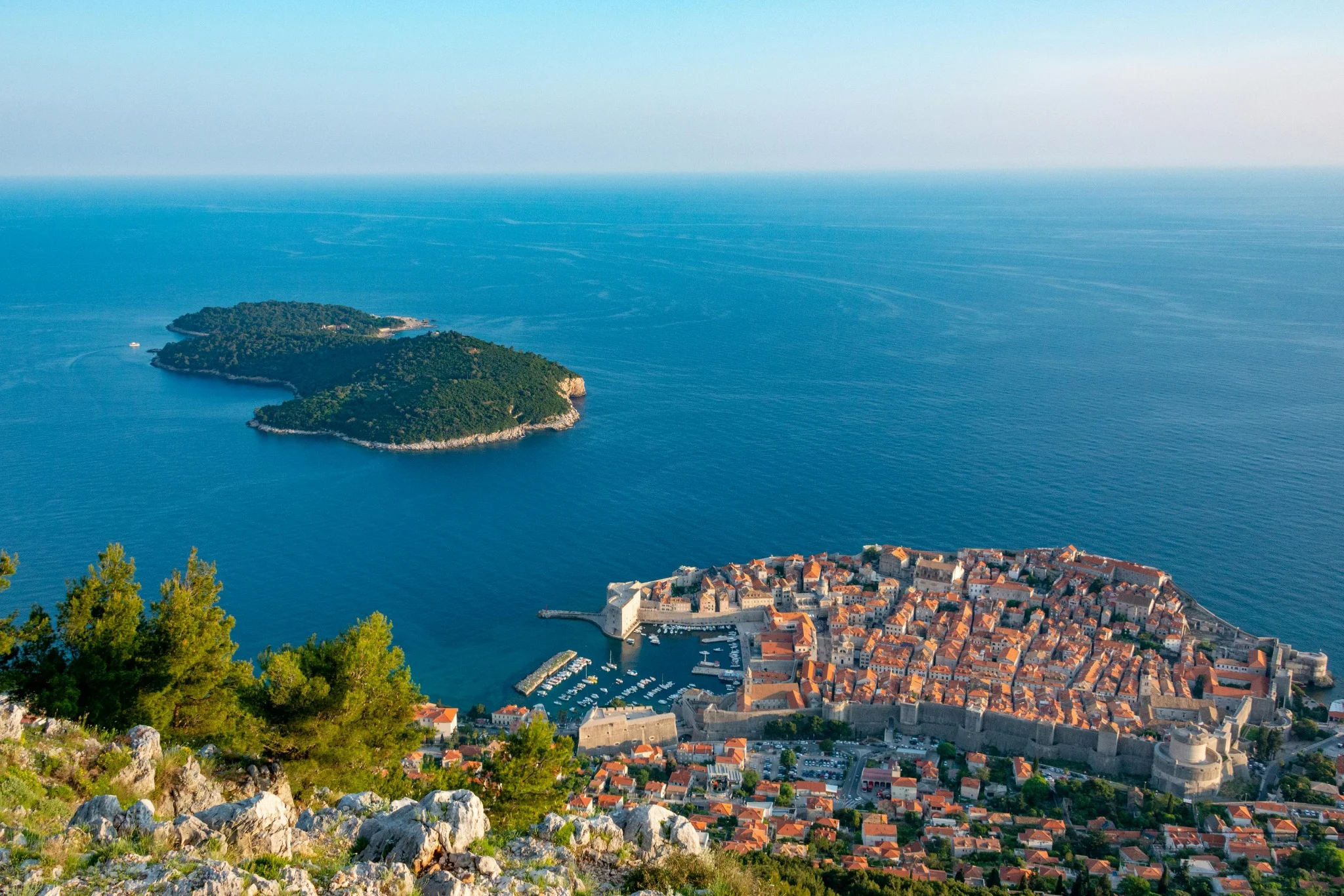
7. Banje Beach — Dubrovnik
The classic city beach with Adriatic Croatia’s most photographed view — the 1,940-metre walls of Dubrovnik‘s old town rising directly out of the sea. Banje is a short pebble beach a five-minute walk from Ploče Gate. The luxury option is the day-bed service at the EastWest beach club; the public side is free and equally beautiful.
8. Lubenice — Cres Island
One of the most remote beaches in Croatia — a long white pebble crescent at the foot of a 378-metre limestone cliff topped by the Bronze Age village of Lubenice on Cres island. Reached only by a steep 30-minute walking path down (and a workout back up) or by boat from Cres Town. Arrive early; you’ll likely have it almost to yourself.
9. Pakleni Islands — off Hvar
Not a single beach but an archipelago of small wooded islands directly off Hvar Town with dozens of swimming spots — from the long pebble beach at Palmižana to the rocky coves of Jerolim and Stiṕanska (naturist) and Marinkovac (lunch at Carpe Diem Beach Club). Reach by water taxi or charter from Hvar harbor.
10. Pržina — Lumbarda, Korčula
One of Croatia’s rare sandy beaches, on the Lumbarda peninsula at the eastern end of Korčula island. The combination of soft sand, Pelješac wine country across the channel, and the Lumbarda vineyards behind makes this a perfect afternoon stop after a morning in the wine cellars.
Practical Notes
- Bring water shoes. Most Croatian beaches are pebble or rocky — not painful but uncomfortable barefoot. Cheap rubber shoes make the difference.
- Crowds peak 11am–3pm. The most photographed beaches (Zlatni Rat, Banje, Sakarun) are at their best at opening and after 4pm.
- Beach clubs vs public. Banje and Punta Rata both have day-bed services; everywhere else is mostly free-access public beach.
- Sea temperature. Comfortable swimming June–October. May and November are bracing.
- Drive vs boat. Many of the most spectacular beaches (Stiniva, Pasjača, Lubenice) are easier to reach by boat than by road.
Frequently Asked Questions
What is the most beautiful beach in Croatia?
The most photographed and most distinctive is Zlatni Rat on Brač island — the famous shape-shifting white-pebble spit. The most dramatic is Stiniva on Vis (cliff-walled cove) or Pasjača near Dubrovnik (black pebble at the foot of 80-metre cliffs). All three have won European ‘best beach’ awards in recent years.
Are there sandy beaches in Croatia?
Yes, but they’re rare — most Croatian beaches are pebble or rocky. The notable sandy beaches are Sakarun on Dugi Otok (the most tropical-looking), Pržina and Vela Pržna near Lumbarda on Korčula, parts of Baška on Krk Island, and Sahara Beach on Ražanj.
When is the best time for a Croatian beach holiday?
June and September are the sweet spots — warm sea, long evenings, manageable crowds. July and August are the warmest but the most crowded. Late May and early October are quieter but the sea is cooler. The Croatian Adriatic is generally swimmable June through early October.
Can you swim under waterfalls in Croatia?
Swimming below the famous Skradinski Buk waterfall in Krka National Park has been restricted in recent years — check current rules. Swimming is not permitted in Plitvice Lakes National Park. The freshwater swimming options are mostly on the Cetina River near Omiš and the Mrežnica river system.
Are Croatian beaches family-friendly?
Yes — most Croatian beaches are calm, shallow, and clean (the country has more Blue Flag beaches per capita than most of Europe). Sandy options for young children include Baška on Krk, Sakarun on Dugi Otok, and Pržina on Korčula. The pebble beaches are easier with water shoes.
Plan Your Croatia Trip
Pair the beaches with the destination guides for the islands and coastal towns above: Dubrovnik, Split, Hvar, Korčula, Primošten, Cres. See the 7 Day Croatia Itinerary for a worked itinerary that includes Zlatni Rat, the Ferry Guide for getting to the islands, and the Croatia Travel Guide for trip planning essentials.