Dalmatia
Brač
Zlatni Rat, Bol & the White-Stone Island
The white-stone island
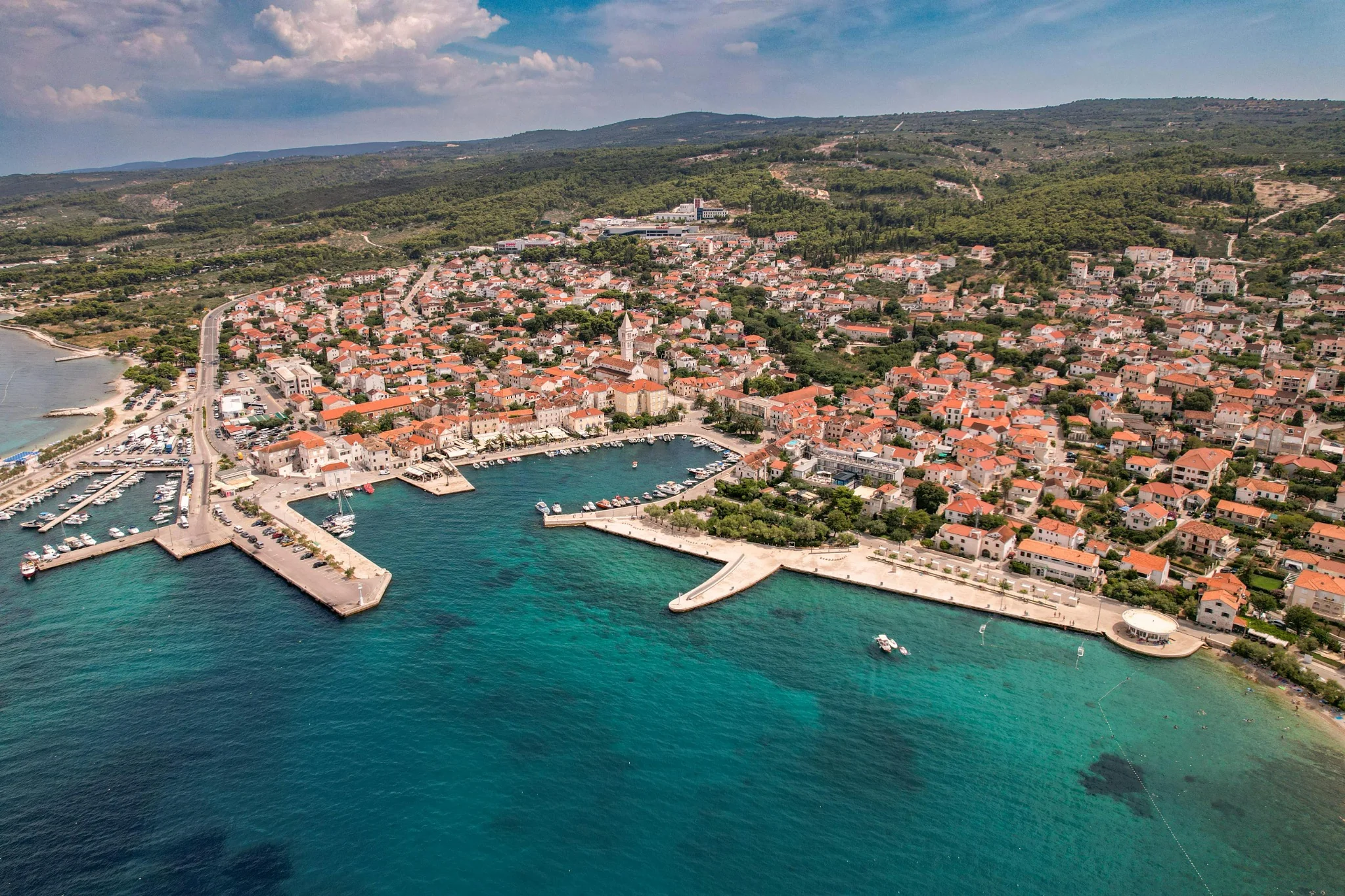
Brač is the third-largest island on the Adriatic and the closest of the major Dalmatian islands to Split — a fifty-minute ferry from the city, and yet a different country in feel. The island is high (Vidova Gora, the highest peak in the Adriatic islands, rises to 778 metres), arid, and famously white. Brač limestone built Diocletian’s Palace in Split, the cathedral of Šibenik, parliaments in Vienna and Budapest, and — the line every Brač guide eventually quotes — a portion of the White House in Washington. The same stone gives the island its character: bone-pale villages, terraced olive groves, and the famous golden cape of Zlatni Rat.
For the luxury traveller, Brač offers something the busier islands no longer can: real space, real quiet, and a coastline whose finest beaches reach by tender rather than by tourist boat. It is the most rewarding day of a Split-based week and the easiest serious island to base a longer stay from.
Zlatni Rat — the most photographed beach in Croatia
Zlatni Rat (“the Golden Horn”) is the slim white-pebble spit that stretches almost half a kilometre into the channel south of Bol. The point is famous for shifting shape with the wind and current, leaning sometimes east, sometimes west, almost never the same as it was the season before. The water is cold-clear, the sea-bed drops fast, and the beach itself is genuinely beautiful — though it is also the single most visited beach in Croatia and best seen, by anyone able to manage it, either at first light or from the water.
The strongest way to experience Zlatni Rat is from a private boat at anchor off the point, swimming in to the beach and lunching on board. From Split or Hvar the run is under an hour. From the village of Bol itself, a ten-minute walk along the pine-shaded path brings you to the beach.
Bol — the southern coast
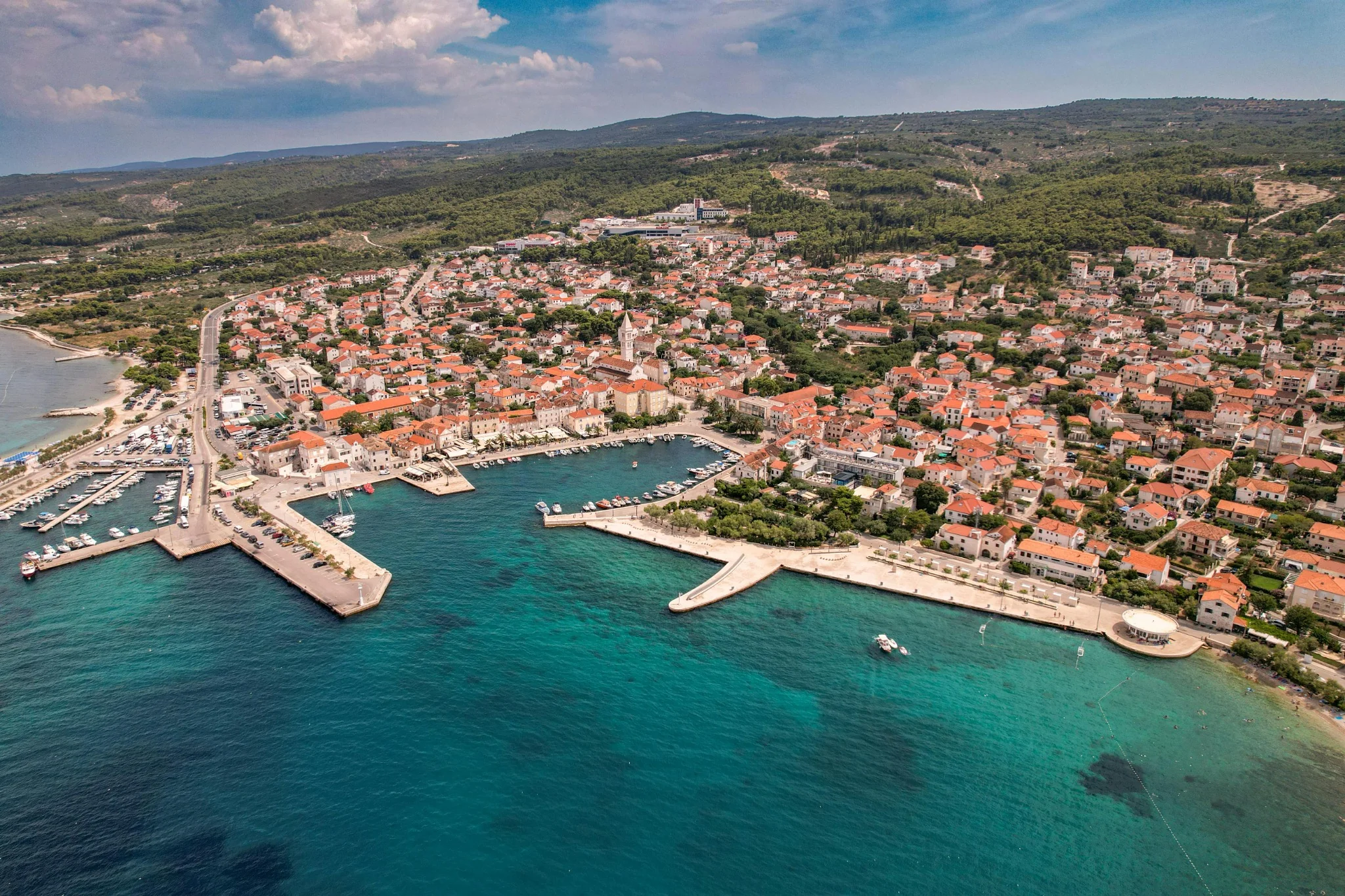
Bol is the principal southern-coast village, a former fishing harbour built around a small horseshoe bay. It is the most polished settlement on the island, with a handful of beautifully kept stone houses, the Renaissance Brač Museum, and what is now the most credible luxury hotel in Croatia: the Bluesun Elaphusa group’s Hotel Bretanide, the family-run Villa Adriatica, and — the headline arrival — the Lemongarden-aligned villas above the village. For dining, Konoba Mlin is the institution; Restaurant Ribarska Kućica sits directly on the water on the path to Zlatni Rat.
The interior — quiet stone villages
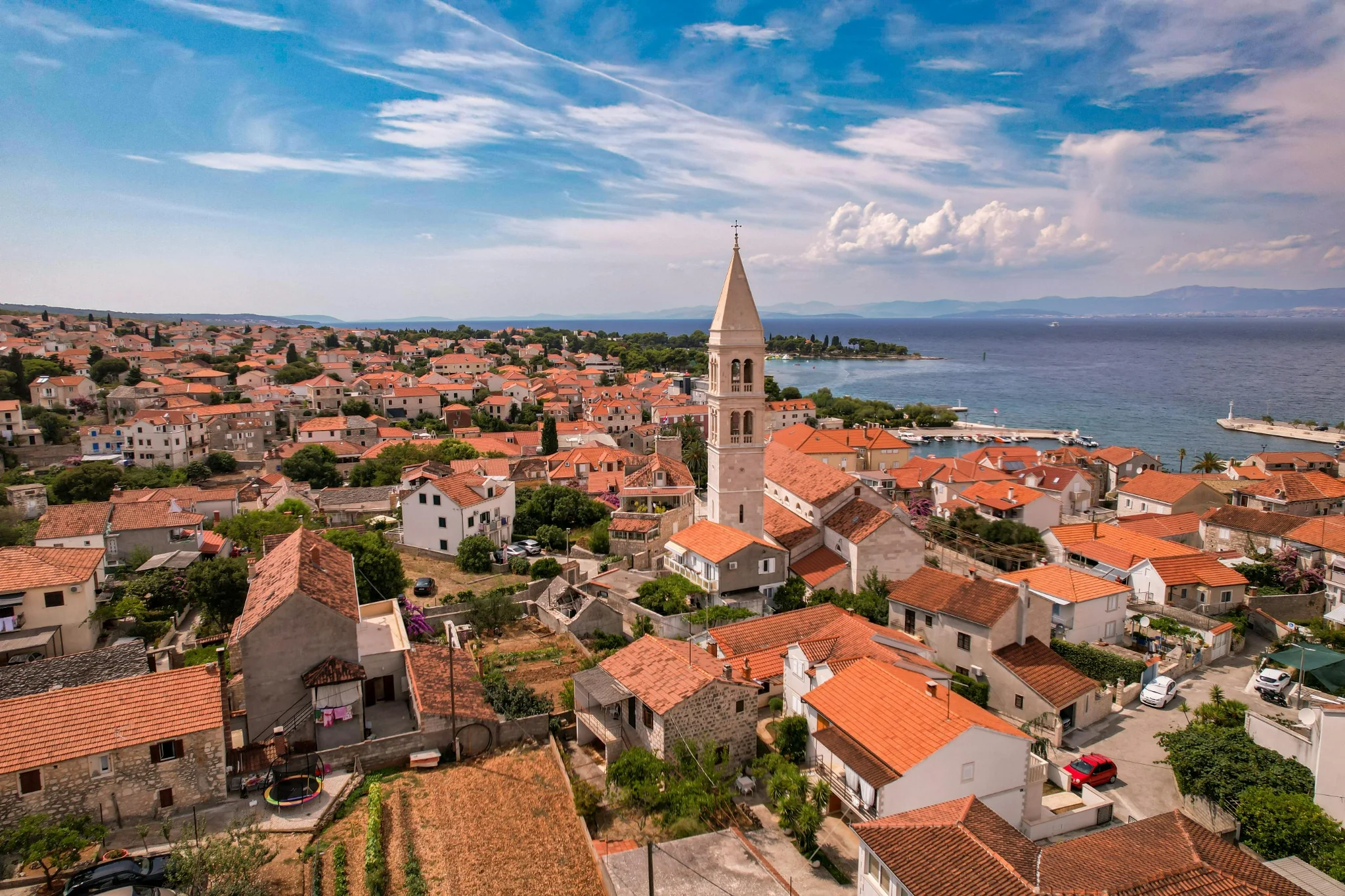
What gives Brač its real personality is the interior. A drive across the high spine of the island — from Bol up to Vidova Gora, then down through Murvica, Nerežišća, Pražnice, and Škrip — opens onto a Croatia almost no traveller sees. The villages are small, half-emptied, beautifully built in pale stone, and surrounded by terraced olive groves that have been worked for two thousand years. The road to Vidova Gora ends at the highest point in the Adriatic islands, with a single small konoba serving lamb under the bell and a view that takes in Hvar, Vis, and on a clear day the Italian shelf.
Pučišća and the stone-cutting school
Pučišća, on the northern coast, is the most photographed village on the island after Bol — a long stone harbour built almost entirely from the local limestone. It is also home to the Klesarska Škola, the only stone-cutting school in Croatia, where students learn the same techniques that built Diocletian’s Palace. Visits to the school during term time can be arranged and are among the most memorable hours anyone spends on Brač. The road in to Pučišća, descending through olive groves to the white harbour below, is one of the most beautiful drives on the Adriatic.
Where to stay
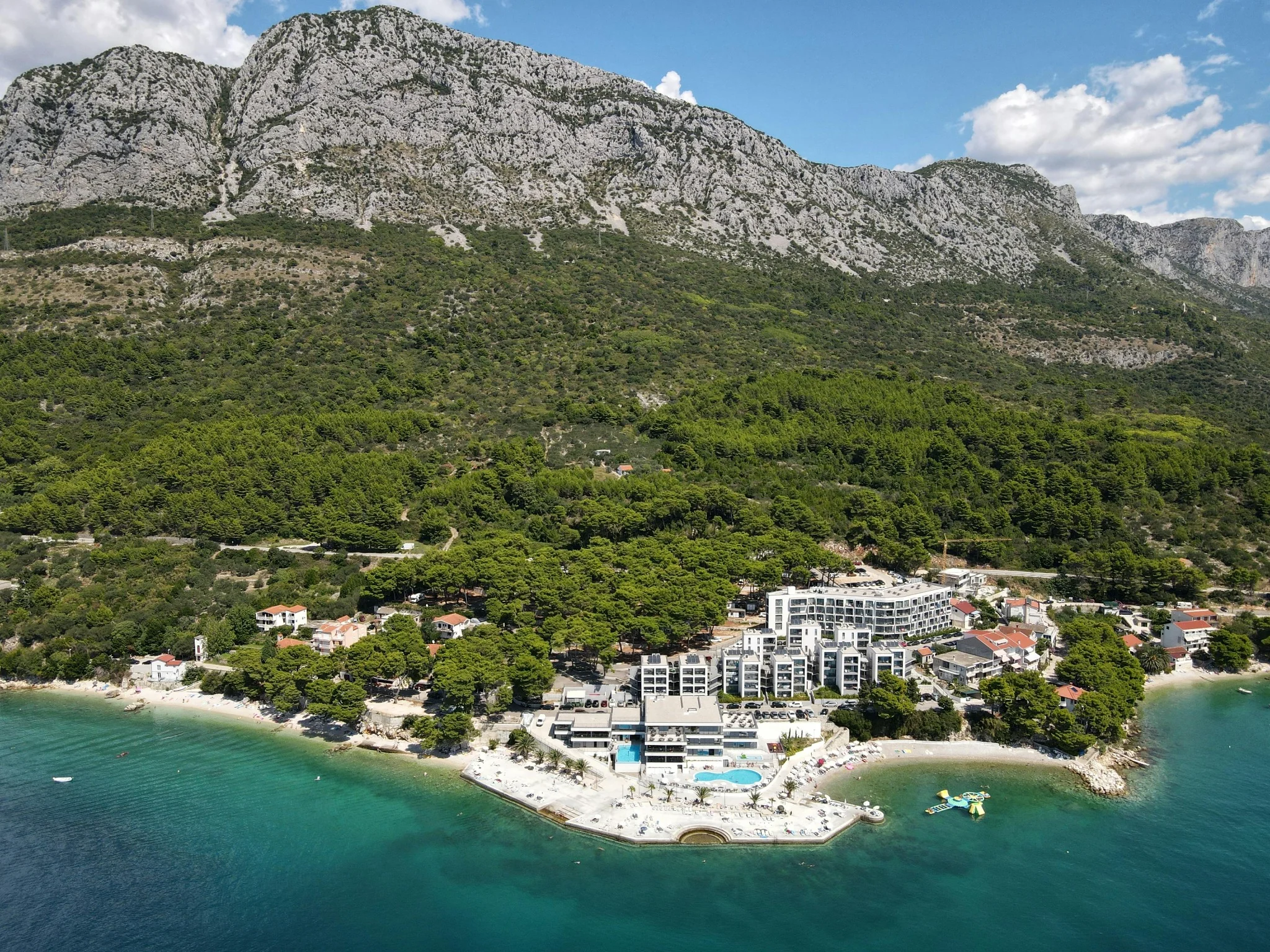
- Lemongarden, Sutivan — restored eighteenth-century stone houses, six suites, the most considered luxury stay on the island. Concierge service, private chef on request, beautifully designed.
- Hotel Bretanide, Bol — adults-only, all-inclusive on the path to Zlatni Rat. Polished rather than design-forward, but the most consistent five-star service on Brač.
- Villa Adriatica, Supetar — small, family-owned, walking distance from the ferry. The right base for travellers who want to do the island by car and don’t need a beach hotel.
- Private villa rentals — the strongest luxury option. Five- and six-bedroom stone villas with pools have appeared above Pučišća, Postira, and Bol over the past decade. Concierge introductions on request.
Food and wine on Brač
Brač lamb (bračka janjetina) is the island’s most famous product — the lambs feed on wild herbs and salt-spray on the sparse interior pastures, and the meat is leaner and more aromatic than the lamb of the mainland. The traditional preparation is peka, slow-cooked under the bell with potatoes, rosemary, and white wine. Konoba Toni in Murvica and Konoba Kopačina outside Donji Humac are the institutions; both require booking a day ahead.
The island also produces a small, characterful range of wines — Bolina, Plančić, Stina from Bol, and the indigenous white grape Vugava. Stina’s Bol-front tasting room, set in the renovated former cooperative on the harbour, is the easiest serious tasting on the island.
How to get to Brač
The Jadrolinija car ferry from Split to Supetar on Brač runs every hour or two and takes fifty minutes; the foot-passenger catamaran from Split to Bol takes the same time and lands directly at the southern village. From Hvar, a small summer catamaran connects Jelsa to Bol. For private travellers, a chartered tender from Split or Hvar is the most rewarding way to arrive — the run takes the same fifty minutes but lands you wherever the day’s plan needs you, including directly off Zlatni Rat. See our Croatia ferry & yacht guide for full transfer options.
Frequently asked questions
Is Brač worth visiting?
Yes — Brač is the most rewarding day-trip island from Split and one of the strongest bases for travellers wanting a quieter Croatian island week. Zlatni Rat is the most famous beach in Croatia, and the interior villages and stone-cutting school of Pučišća give the island a depth most Adriatic islands have lost.
How long should I spend on Brač?
A day is enough for Zlatni Rat and a tender lunch; two nights is right for the southern coast plus a Vidova Gora and interior loop; three to five nights at a private villa or the Lemongarden suits travellers building a quieter Adriatic week.
When is the best time to visit Brač?
June and September are ideal — warm sea, clear weather, the southern coast at its best, and the interior accessible without the August heat. May and early October are quieter still and excellent for travellers focused on the villages and the food rather than the beach.
Is Zlatni Rat actually as beautiful as the photographs?
Yes — but the photographs are taken from the air or the water, not from the beach. Zlatni Rat is at its most beautiful seen from a boat at anchor off the point, or from the trail above the bay. From the beach itself the geometry is harder to see, and in midsummer the crowds are heavy. Come at first light or arrive by tender.
Can you do Brač as a day trip from Split?
Yes — the catamaran from Split to Bol takes fifty minutes, and a private boat day from Split lands you at Zlatni Rat in the same time. Travellers wanting to see the interior and Pučišća, however, should plan at least one overnight; the island is much larger than it appears on the map.
Is Brač better than Hvar?
They are different islands. Hvar is glamorous, sociable, and built around its old town and harbour scene. Brač is quieter, more rural, and built around its landscape and its food. Travellers wanting nightlife and the best small-luxury hotels go to Hvar; travellers wanting space, lamb peka, and a private villa with a view of Vidova Gora go to Brač.
Plan your Brač trip
Brač pairs naturally with a Split-based week — see our Split travel guide, our Hvar travel guide for the next island south, and the 7-day Croatia itinerary for the canonical Dalmatian route. For the broader picture of Adriatic island travel, see our Croatia islands guide. For private boat days, villa introductions, or full Brač weeks, see our concierge enquiries page.