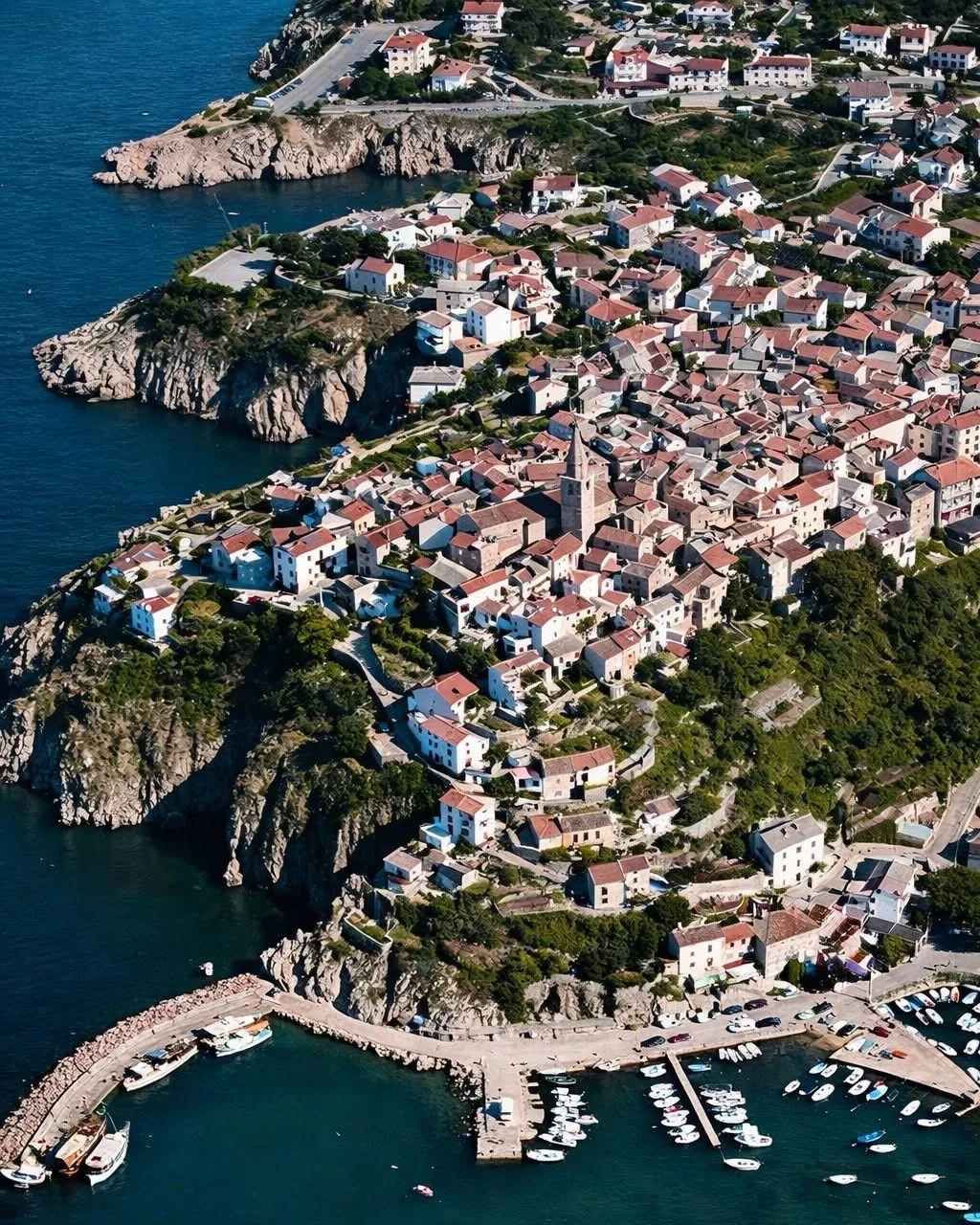
Kvarner Islands
Cres
The Wild Island of the Kvarner
Welcome to Cres
Cres is one of Croatia’s largest islands, but also one of its least developed — a long, narrow island in the Kvarner Bay that has stayed remarkably wild while neighbouring Krk and Lošinj filled with summer traffic. The interior is a mosaic of dry-stone-walled pastures, ancient sheep tracks, and oak forests; the coastline is a series of dramatic cliffs and hidden coves; the medieval old towns of Cres and Osor are among the most atmospheric on the Adriatic; and the island is home to one of Europe’s last colonies of the rare Eurasian Griffon vulture.
This Cres travel guide covers the best things to do, where to eat, where to stay, and how to plan a slow, considered visit to the wildest of the Kvarner islands.
Why Visit Cres
Cres is for travellers who want a Croatian island that has stayed itself. The population of the entire island is barely 3,000, the interior empties of cars within minutes of leaving the main road, and large stretches of the coast are reachable only on foot or by boat. There are no resort hotels, no nightclubs, and almost no cruise traffic — only stone villages, olive groves that have been worked for two thousand years, and the deep silence of the Tramuntana oak forest in the north.
For a luxury traveller looking for the antithesis of a Hvar or Dubrovnik week, Cres delivers space, time, and an unusually intact landscape. Pair it with neighbouring Lošinj for a quieter Kvarner week, or use it as a long, slow stop on a longer Croatian island circuit.
Top Things to Do on Cres
- Walk Cres Town’s old harbour. The island’s main settlement is a small Venetian-influenced port wrapped around a horseshoe bay — the 16th-century Loggia, the Cathedral of St Mary, the narrow stone lanes climbing from the Riva, and a calm inner harbour where small fishing boats still outnumber the yachts.
- Stand on the cliff at Lubenice. The Bronze Age village of Lubenice perches 378 metres above the Adriatic on a sheer cliff. The view down to the cove of Sveti Ivan and the open Kvarner is one of the most extraordinary on the Croatian coast — best at first or last light.
- Swim at Sveti Ivan. The pebble cove directly below Lubenice is a small turquoise bay reached by a steep walking path of about an hour from the village, or by boat from Valun. Often nominated for Europe’s most beautiful beach lists, and rarely as crowded as those lists suggest.
- Visit Osor. The tiny medieval town at the southern tip of Cres sits on the narrow channel separating Cres from Lošinj — a Roman-canal crossing now traversed by a small swing bridge. Once the most important Adriatic town between Aquileia and Zadar, Osor is now a few hundred residents, a Romanesque cathedral, a sculpture trail, and the summer Osor Musical Evenings festival.
- Drive into the Tramuntana. The northern third of the island is covered in primeval oak forest — cool, silent, completely unlike the bare-limestone south. The village of Beli, perched above a small pebble cove, is the historic capital of the Tramuntana and home to the Caput Insulae visitor centre.
- See the Griffon vultures at Beli. The Eurasian Griffon, with a wingspan of nearly three metres, nests on Cres’s northern cliffs — one of the last colonies in Europe. The Caput Insulae centre at Beli rehabilitates injured birds and runs guided walks to viewing points where you can watch the colony riding the cliff thermals.
- Walk to Vrana Lake. The freshwater karst lake at the centre of the island is the only major source of fresh water and a quietly remarkable landscape — a deep, blue lake surrounded by limestone slopes, fenced and protected as the island’s drinking-water reserve, with a viewing trail along the eastern rim.
- Lunch in Valun. The small fishing village on the western coast — home of the 11th-century Valun Tablet, one of the earliest Glagolitic Croatian inscriptions — has a row of seafront konobas serving the morning’s catch on stone tables right above the water.
- Hike the ancient sheep tracks. Cres is laced with hundreds of kilometres of dry-stone-walled mediaeval paths, originally built by shepherds. The waymarked trails between Lubenice, Pernat, and Valun are the best introduction.
Where to Eat on Cres
Cres lamb (creška janjetina) is the island’s most famous product — the lambs feed on the wild salt-and-herb pastures of the karst interior, and the meat is leaner and more aromatic than mainland lamb. The traditional preparation is peka, slow-cooked under the bell. Konoba Bukaleta in the inland village of Loznati is the institution — a stone-walled barn, communal tables, and the most respected lamb peka on the island; reserve a day ahead. Konoba Belona in Cres Town is the harbour-front favourite for fish, with tables on the Riva. Toncina Konoba in Valun and the small fish kitchens of Martinšćica serve whatever the morning’s catch produced. The island’s olive oil — from groves on the karst above Cres Town — has won international awards and is worth bringing home.
Where to Stay on Cres
Cres is not a hotel island. The right way to stay is in a small boutique property or a renovated stone villa, and to take the island at its own pace. Hotel Kimen in Cres Town is the largest established hotel — polished, family-friendly, and walking distance from the harbour. Heritage Hotel Bisera, in a restored 19th-century stone house in Cres Town, is the most considered small-luxury option. For a remote stay, the small Pansion Tramontana in Beli puts you above the cove with the Tramuntana forest at your door. Private villa rentals are now the strongest luxury option — four- and five-bedroom stone villas with pools have appeared above Cres Town, Martinšćica, and the Punta Křiža peninsula. Concierge introductions on request.
How to Get to Cres
Cres is reached by ferry from two directions. The most common route is the Valbiska–Merag ferry from Krk (about 25 minutes), which connects to the mainland via the Krk Bridge. From the Istrian side, the Brestova–Porozina ferry crosses to the northern tip of the island in about 20 minutes. From Opatija via the Krk Bridge and Merag ferry, allow about two hours total. From Rijeka Airport (RJK) on Krk, allow about 75 minutes including the ferry crossing. Cres is also a popular pause for private yachts on a Kvarner itinerary; the marinas at Cres Town and Martinšćica accommodate larger vessels.
Best Time to Visit Cres
Cres is at its best from late May through September, with June and September the sweet spots — warm sea, settled weather, the konobas open, and the inland tracks accessible without the August heat. Late September into October is the most atmospheric time for the Tramuntana forest and for travellers focused on hiking and the Griffon vulture viewing. April and May are excellent for the wildflowers and the green interior, before the summer browns the karst. Winter is quiet and dramatic, with most kitchens closed but the old towns largely empty.
Practical Tips
- You will want a rental car — the best of Cres is spread along a single long road, and the inland villages have almost no public transport.
- The ferry queues at Valbiska and Brestova can be long on July and August weekends; book online in advance and arrive early.
- Konoba Bukaleta is small — reserve a day or two ahead in summer, especially for the lamb peka.
- The walking path to Sveti Ivan is steep and exposed; bring water, decent shoes, and start early on warm days.
- The Caput Insulae centre at Beli runs guided vulture walks year-round — book ahead in summer.
- Tap water on Cres is excellent and comes from the protected Vrana Lake reserve.
Frequently Asked Questions
Is Cres worth visiting?
Yes — Cres is the wildest of the Croatian islands and one of the most rewarding for travellers who want a slower, more authentic island experience. The medieval old towns of Cres and Osor, the Bronze Age clifftop village of Lubenice, the Tramuntana oak forest, and the Griffon vulture colony at Beli give the island a depth and quietness most Adriatic islands have lost.
How long should I spend on Cres?
Three to four days is ideal. One day for Cres Town, the harbour, and Osor; one for Lubenice and the Sveti Ivan beach below it; one for Beli and the Tramuntana forest with a Griffon vulture walk; and a fourth for hiking the inland sheep tracks or a beach day at Martinšćica. Two days is the absolute minimum.
How do you get to Cres?
Cres is reached only by ferry. The Valbiska–Merag ferry from Krk takes 25 minutes and is the most common route from the mainland (Krk is connected to the mainland by bridge). The Brestova–Porozina ferry from the Istrian coast takes 20 minutes. From Rijeka Airport, allow about 75 minutes including the ferry; from Opatija, about two hours.
Is Cres better than Krk?
They serve different travellers. Krk is larger, busier, more developed, easier to reach (connected by bridge), and has more dining and shopping options. Cres is wilder, quieter, and rewards travellers who want a slower, more authentic Croatian island experience. Many travellers visit both — the ferry between them is just 25 minutes.
Can you see Griffon vultures on Cres?
Yes — Cres is home to one of the last Eurasian Griffon vulture colonies in Europe. The Caput Insulae centre at Beli rehabilitates injured birds and runs guided walks to viewing points on the cliffs above the eastern coast, where you can watch the vultures riding the thermals. Book ahead in summer.
Is Cres connected to Lošinj?
Yes — Cres and Lošinj are connected by a small swing bridge at Osor, where the two islands are separated only by a narrow channel originally cut as a Roman canal. Driving from Cres Town to Mali Lošinj takes about 90 minutes; the two islands are often visited together as a single Kvarner trip.
Plan Your Croatia Trip
Cres pairs naturally with Krk, neighbouring Lošinj, and the Opatija riviera on a Kvarner itinerary, with onward connections south to Rovinj and the Istrian peninsula. See our Croatia Travel Guide for trip planning essentials and the Croatia Ferry & Yacht Guide for the logistics of Kvarner crossings. For private guides, villa introductions, or full Cres weeks, see our concierge enquiries page.