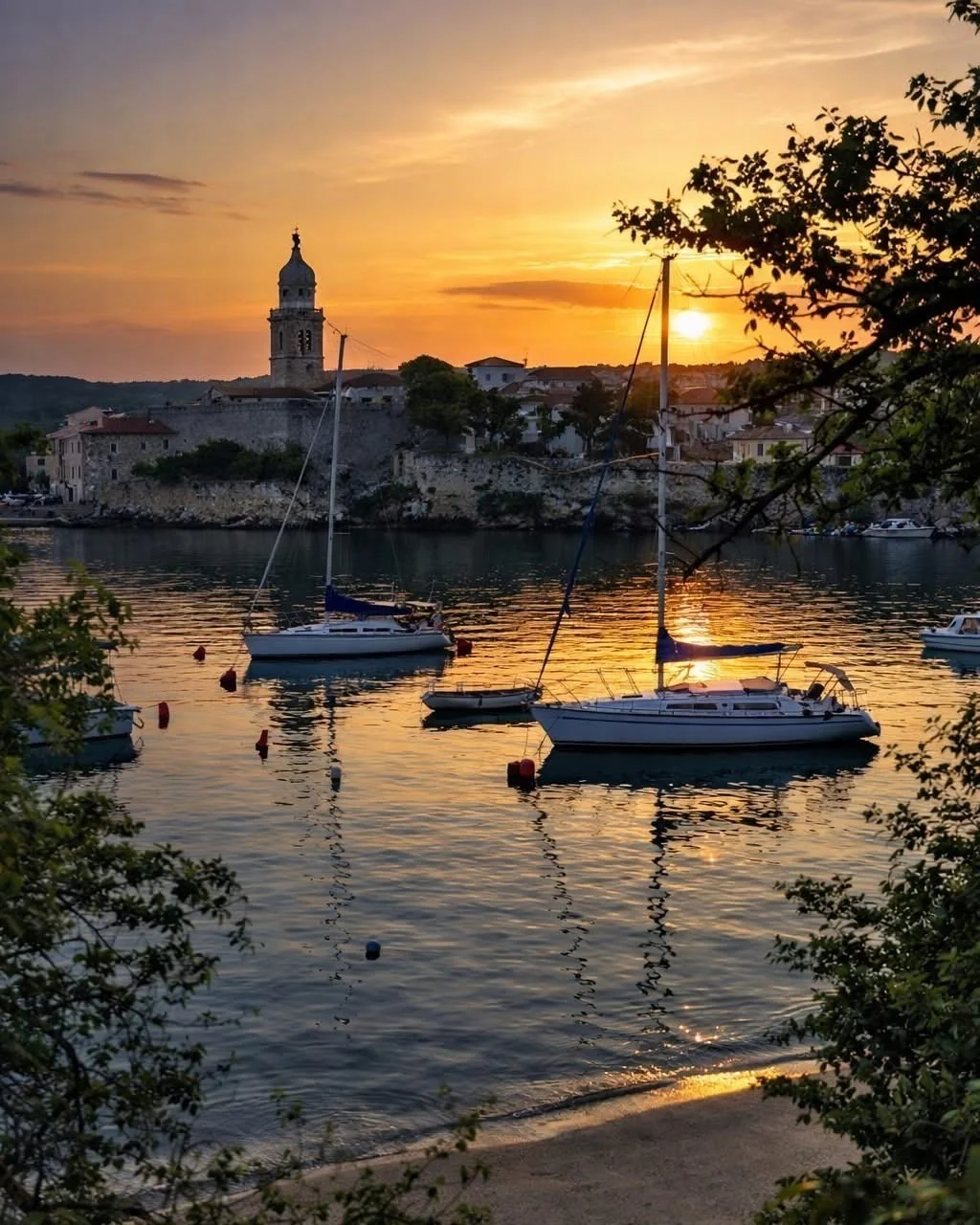
Kvarner Islands
Krk
Croatia’s Largest Island
Welcome to Krk
Krk is one of Croatia’s largest islands — nearly 60 kilometres long, perched in the Kvarner Bay just south of Rijeka, and the easiest of the country’s major islands to reach: a single 1,430-metre concrete bridge connects it to the mainland. That accessibility has made Krk a favorite of Croatian and Italian families for decades, but it has also kept the island wonderfully unpretentious. The medieval walled town of Krk, the Roman ruins of Omišalj and Krk’s old town, the sandy beaches of Baška, the cliffside village of Vrbnik (perched 50 metres above the sea), and the wineries of the Vrbnička Polje plateau all lie within a 30-minute drive of each other.
This Krk travel guide covers the best things to do, where to eat, where to stay, and how to plan a luxury visit to Croatia’s most accessible island.
Why Visit Krk
Krk’s appeal is variety. The island has more 30-Blue-Flag-certified beaches than any in Croatia, three medieval old towns (Krk, Vrbnik, and Omišalj), one of the most spectacular sandy beaches on the Adriatic at Baška, a celebrated indigenous white wine (Vrbnička Žlahtina), and — thanks to the mainland bridge — you can reach it within 90 minutes of Zagreb without ever waiting for a ferry. For families, sailors, wine travelers, and anyone wanting a Croatian island without the logistical effort, Krk is a wonderful introduction.
For luxury travelers, Krk is best treated as a relaxed 3–4 day base — staying in the medieval village of Vrbnik or the small luxury hotels of Malinska, with day trips to the wineries, the beaches of Baška, and the islands of Cres and Lošinj.
Top Things to Do on Krk
- Walk the old town of Krk. The island’s main town is a small medieval walled city — the Frankopan castle, the Romanesque cathedral of the Assumption, the harbor lined with cafes and yachts.
- Visit Vrbnik. The clifftop village of Vrbnik sits 50 metres above the sea on the island’s eastern coast — famous for its narrow streets (the world’s narrowest, according to Guinness), its medieval Glagolitic-script library, and the surrounding vineyards of Vrbnička Žlahtina.
- Wine tasting in Vrbnik. The island’s signature white — Vrbnička Žlahtina — is grown only in the small Vrbnička Polje plateau. Cellars to visit include Tolić, KatiŽarica, and Nada (whose terrace restaurant overlooks the cliff to the sea).
- Beach day at Baška. The southern town of Baška has one of the longest sand-and-pebble beaches on the Adriatic — nearly two kilometres of crescent shoreline, backed by a charming small old town and Velebit mountain views.
- Hike the Stara Baška coastline. The wild southern peninsula of Krk has dramatic cliff coves and remote pebble beaches — some of the most beautiful undeveloped coastline in the Kvarner.
- Visit Košljun monastery. The small wooded island in the bay of Punat — reached by a 5-minute boat ride — holds a 15th-century Franciscan monastery with one of Croatia’s finest religious-art collections.
- See the Baška Tablet replica. The original 11th-century stone slab — one of the earliest known monuments of Glagolitic Croatian writing — was found at the Romanesque church of St Lucy in Jurandvor, a few kilometres inland from Baška. The original is in Zagreb; a fine replica remains.
- Day trip to Cres and Lošinj. The Krk–Merag ferry crosses to Cres in 25 minutes; from there a bridge connects to Lošinj. A wonderful slow day of island-hopping by car.
Where to Eat on Krk
Konoba Nada in Vrbnik is the legendary island restaurant — a clifftop terrace, a deep cellar of Žlahtina, and traditional Krk cuisine including the famous šurlice (hand-rolled pasta) with goulash. Restaurant Frankopan in Krk Town is the upscale choice for fresh fish on the harbor. Konoba Hrźja in the inland village of Bog Bog is the local favorite for peka. Taverna Plav in Punat is a wonderful waterfront seafood restaurant. For wine and small plates, the cellar bars in Vrbnik are extraordinary.
Where to Stay on Krk
Krk doesn’t have a flagship five-star, but it has several wonderful boutique options. Heritage Hotel Cobel in Vrbnik is a beautifully restored stone-walled boutique inn. Hotel Božica in the resort village of Malinska is the relaxed mid-luxury choice. Hotel Marina Krk on the harbor of Krk Town is the contemporary option. For a private villa, the renovated stone houses around Vrbnik and the inland village of Linardići offer wonderful self-catering luxury.
How to Get to Krk
Krk is the only Croatian island connected to the mainland by bridge — the Krk Bridge crosses from the mainland near Crikvenica directly to the northern end of the island. The island also has its own airport, Rijeka Airport (RJK), with seasonal direct flights from across Europe. Driving from Zagreb takes about 90 minutes; from Pula, about 2.5 hours; from Trieste (Italy), about 2 hours. From Krk, ferries connect to Cres (Valbiska–Merag) and to Rab.
Best Time to Visit Krk
May, June, and September are perfect — warm sea, the wineries are open, and the beaches haven’t yet filled with summer-holiday crowds. July and August are beautiful but the most popular beaches (especially Baška) are very busy. September is the harvest in the Žlahtina vineyards — a wonderful time for wine travelers. October and April are quieter shoulder months — the sea is cool but the old towns and wineries are at their most peaceful.
Practical Tips
- You’ll want a rental car — Krk is large and the best parts of the island are spread out.
- The Krk Bridge has a small toll — about €6 per car each way.
- Konoba Nada in Vrbnik is small — reserve a day or two ahead in summer.
- The wineries are best visited by appointment — contact the cellars in advance.
- For Baška beach, arrive early or after 4pm to avoid midday crowds.
Frequently Asked Questions
Is Krk worth visiting?
Yes — Krk is one of Croatia’s largest and most accessible islands, with three medieval old towns, the spectacular Baška beach, the clifftop village of Vrbnik, and the indigenous Vrbnička Žlahtina white wine. The bridge connection to the mainland makes Krk a perfect 3–4 day island base, especially for travelers driving down from Zagreb or Trieste.
How do you get to Krk Island?
Krk is the only Croatian island connected to the mainland by bridge — drive directly from the mainland near Crikvenica. The island also has its own airport (Rijeka Airport, RJK) with seasonal direct flights. Driving from Zagreb takes about 90 minutes; from Pula about 2.5 hours.
What is Krk famous for?
Krk is famous for being Croatia’s most accessible island (connected by bridge), for the long sand-and-pebble beach at Baška, for the clifftop wine village of Vrbnik (with its Guinness-listed narrowest street and the indigenous Žlahtina wine), and for the 11th-century Baška Tablet — one of the earliest known Glagolitic Croatian inscriptions.
Is Krk better than Cres?
They serve different travelers. Krk is larger, busier, more developed, easier to reach, and has more dining and shopping options. Cres is wilder, quieter, and rewards travelers who want a slower, more authentic Croatian island experience. Many travelers visit both — the ferry between them is just 25 minutes.
How many days do you need on Krk?
Three to four days is ideal. One day for Krk Town and the Frankopan castle, one for Vrbnik and the Žlahtina wineries, one for Baška beach, and a fourth for the wild Stara Baška coastline or a day trip to nearby Cres. Two days is the minimum for a meaningful visit.
Plan Your Croatia Trip
Krk pairs naturally with Cres, the Istrian peninsula (Pula, Rovinj), and the gulf city of Rijeka. See our Croatia Islands Guide and Croatia Travel Guide for trip planning ideas. For private guides, wine introductions, or full Krk island weeks, see our concierge enquiries page.