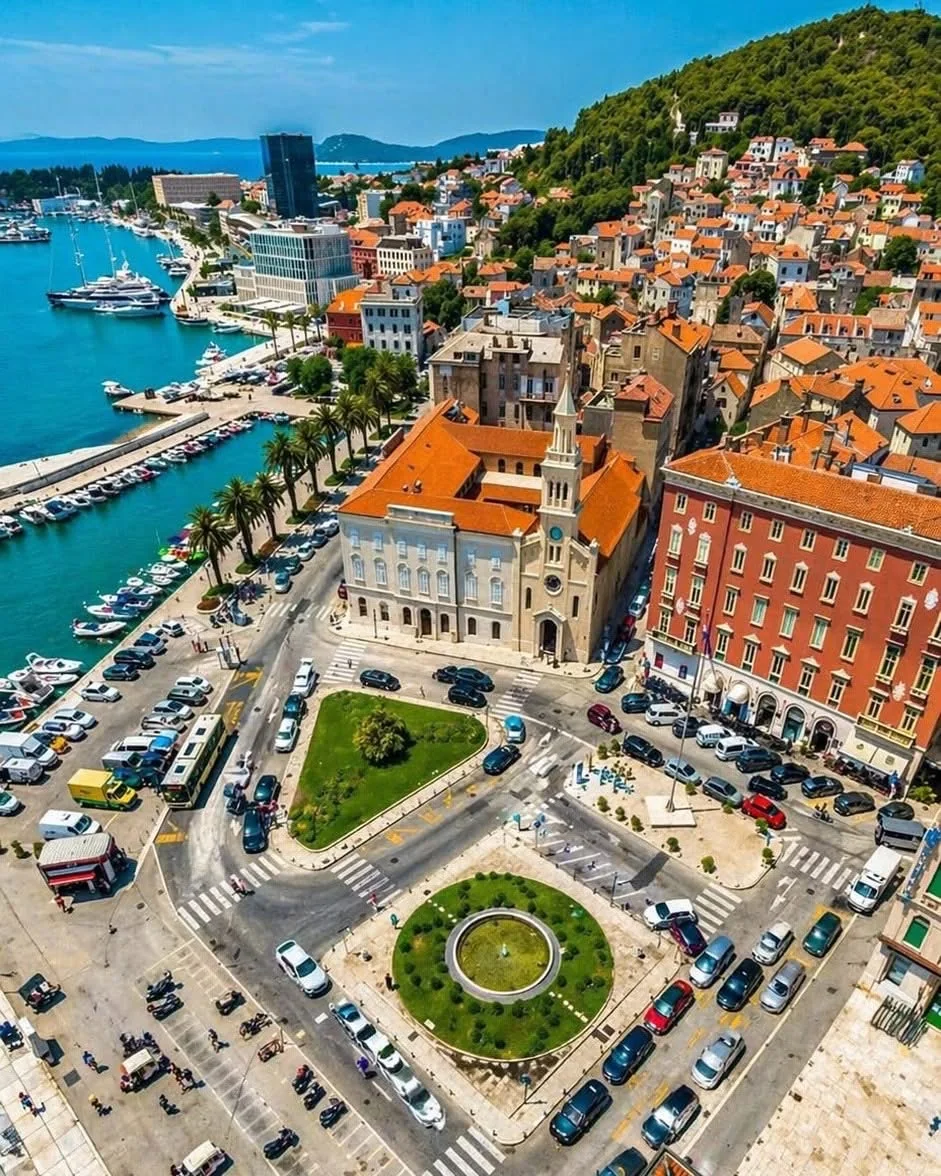
Dalmatia
Šibenik
UNESCO cathedral, four fortresses, and the gateway to Krka National Park
A different Dalmatian city
Šibenik is the Dalmatian city the cruise ships skip — and that is most of its appeal. Where Dubrovnik and Split were Roman or Republican by foundation, Šibenik is uniquely Croatian: founded in the 11th century by the Croatian king Petar Krešimir IV, never colonised by Greeks or Romans, and built around a defensive crescent of four hilltop fortresses overlooking a deep, sheltered bay. The walled old town climbs steeply between the harbour and the Cathedral of St James — the UNESCO World Heritage Site that is the architectural masterpiece of the Croatian Renaissance.
For the luxury traveller, Šibenik is the Dalmatian city for travellers who have already done the famous walled old towns and want something quieter and more local — plus the easiest base for a day in Krka National Park and the long, beautiful coastline running south towards Trogir and Split.
The Cathedral of St James
The cathedral is one of the most extraordinary buildings on the Dalmatian coast. Built in three architectural phases between 1431 and 1535, it represents a complete transition from Gothic to Renaissance, executed entirely in stone (no brick, no wood, no mortar between stones — the first such building in Europe at this scale). The architect Juraj Dalmatinac, working from 1441, designed the unprecedented stone-vaulted dome and the famous frieze of 71 portrait heads of Šibenik citizens that runs around the apses — the first Renaissance portrait sculpture in central Europe. UNESCO listed the cathedral in 2000.
The four fortresses
Šibenik is the only Croatian city defended by four separate hilltop fortresses, three of them open to visitors and two recently restored to a remarkable standard:
- St Michael’s Fortress — the oldest, directly above the old town. Restored as an open-air concert venue with one of the most beautiful summer-evening views on the Adriatic.
- Barone Fortress — 17th-century, built against Ottoman incursions. The recent augmented-reality interpretation centre is one of the better museum experiences in Croatia.
- St John’s Fortress — the highest of the three, with the most expansive view across the Šibenik archipelago.
- St Nicholas Fortress — the seaward fortress, on a small islet at the entrance to the channel, reached by boat. UNESCO-listed since 2017.
Krka National Park
Krka, 20 minutes inland from Šibenik, is the second of Croatia’s iconic waterfall national parks (after Plitvice). The travertine cascades at Skradinski Buk — the park’s headline waterfall — are spectacular, and the park’s other features include the small monastic island of Visovac in the middle of the river, the Roman fort at Burnum, and the cascades at Roški Slap. Visit early morning (8am opening) or in the last two hours before closing to avoid the day-trippers from cruise ships.
When to visit
May, June, and September are the strongest months — warm enough to swim in the Šibenik archipelago, manageable visitor numbers at the cathedral and fortresses, and Krka at full water flow. The St Michael’s Fortress summer concert programme runs from late June through August. Late September is exceptional for travellers wanting Krka largely to themselves.
How to get there
Šibenik is roughly an hour’s drive north of Split on the A1 motorway, and 90 minutes south of Zadar. Both cities have international airports. There is no direct ferry to Šibenik but the channel out to the Šibenik archipelago and the Kornati islands is a serious sailing destination. Most luxury travellers visit Šibenik as part of a longer Dalmatian itinerary or use it as the gateway base for Krka National Park.
Where to stay
- D-Resort Šibenik — the design-forward five-star on the Mandalina marina, with the best harbour view in the city.
- Heritage Hotel Life Palace — small heritage hotel inside the old town walls, beautifully restored.
- Brown Beach House Trogir — 50 minutes south on the coast, the design-led beach hotel for travellers wanting both Šibenik and the Krka day plus a beach base.
- Private villa rentals — a small but growing supply on the Šibenik archipelago islands of Zlarin and Pršnjak. Concierge introductions on request.
Where to eat
- Pelegrini — the Michelin-starred destination dining room directly opposite the cathedral. One of the most refined kitchens on the Dalmatian coast.
- Konoba Nostalgija — small, family-run, traditional Dalmatian cooking in a stone-walled cellar in the old town.
- Tijesno-side konobas — in the small fishing villages along the Tijesno channel, family-run kitchens that serve whatever the morning’s catch produced.
- Konoba Vinko, Skradin — on the river at the entrance to Krka National Park. The traditional lunch stop on a Krka day.
Frequently asked questions
Is Šibenik worth visiting?
For travellers wanting a quieter Dalmatian city with serious historical and architectural depth, Šibenik is one of the most rewarding destinations on the coast. The UNESCO Cathedral of St James, the four restored fortresses, and the gateway position to Krka National Park make Šibenik a strong 2–3 day stop on any longer Dalmatian itinerary.
How long should I spend in Šibenik?
Two nights is the right minimum — one day for the old town, the cathedral, and the fortresses (St Michael’s at sunset is essential), and a second day for Krka National Park. Three nights lets you add a boat day in the Šibenik archipelago or a beach day along the Tijesno coast.
Is Krka better than Plitvice?
They are different parks. Plitvice is larger, more famous, with sixteen interconnected lakes and ninety waterfalls (it is also more crowded and harder to access). Krka has the spectacular Skradinski Buk cascades, the monastic island of Visovac, and is far easier to combine with a coastal Dalmatian itinerary. Many travellers visit both on a longer trip; for a single waterfall day from the coast, Krka is the easier choice.
When is the best time to visit Šibenik?
May, June, and September are ideal — warm enough for the archipelago, the St Michael’s Fortress summer concerts running, Krka at full water flow, and the cathedral and old town at their most peaceful. July and August are excellent for the festivals but bring cruise traffic.
Can you see Šibenik as a day trip from Split?
Yes — Šibenik is an hour’s drive north of Split, and a private-driver day takes in the cathedral, St Michael’s Fortress, and a Krka stop on the way back. For travellers who want to see the inside of the cathedral properly and walk all four fortresses, however, an overnight is far more rewarding.
Plan your Šibenik trip
Šibenik pairs naturally with Zadar to the north, Trogir and Split to the south, and the Krka National Park on a longer Dalmatian itinerary. See the Croatia travel guide for the broader picture and the best time to visit for month-by-month planning. For private boat days, villa introductions, or full Croatian weeks, see our concierge enquiries page.