Dalmatia
Primošten
The Peninsula of the Babić Vines
Welcome to Primošten
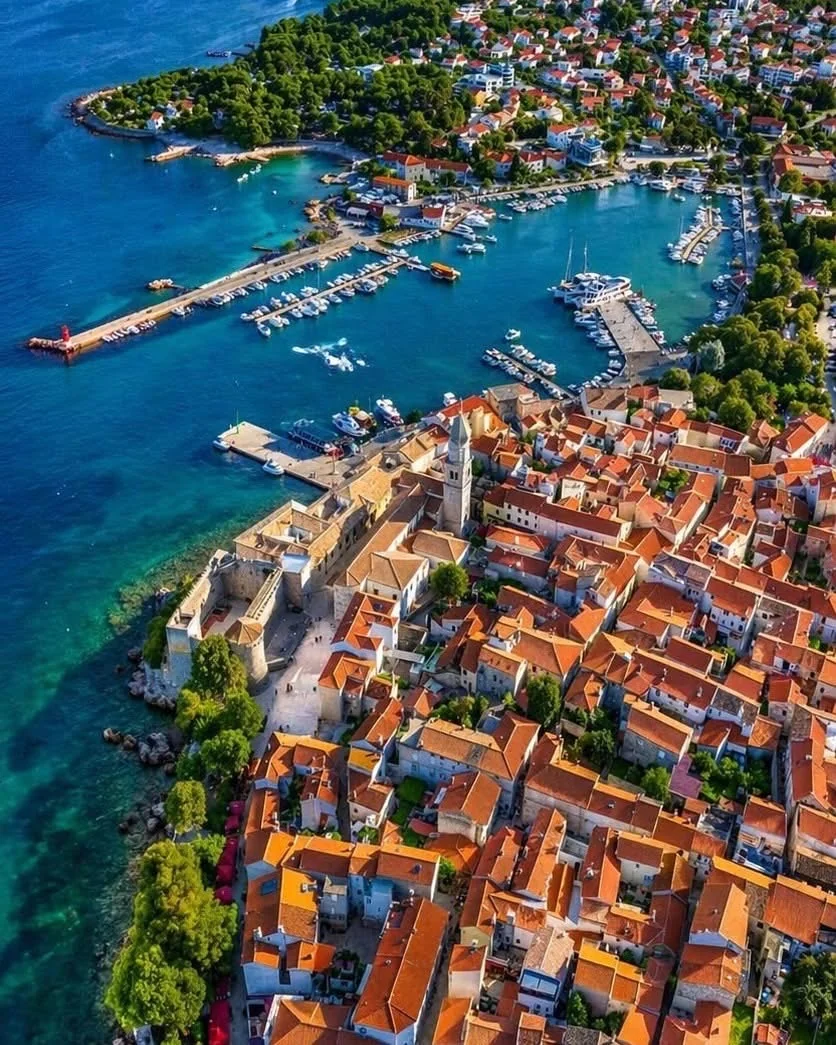
Primošten is the most photogenic small town on the Dalmatian coast — a tight cluster of red-tiled stone houses crowded onto a small peninsula, crowned by the bell tower of the Church of St George, and ringed by some of the clearest swimming water in Croatia. Once a true island, the town was named for the wooden bridge (most) that local 16th-century refugees built to escape Ottoman raids; the bridge was eventually replaced by a stone causeway, and the medieval old town sits today exactly where it was four hundred years ago.
Inland of the town, the karst hillsides hold the most photographed vineyards in Europe — hand-built dry-stone parcels of Babić vines whose patchwork pattern has appeared in National Geographic and hangs at United Nations headquarters in New York. This Primošten travel guide covers the old town, the Babić wine country, the beaches, the restaurants, and how to plan a refined Adriatic stay.
Why Visit Primošten
Primošten is for travellers who want a small, beautiful Dalmatian town without the cruise crowds of Dubrovnik or the scale of Split. The old town is walkable in twenty minutes, the swimming is excellent and right at your doorstep, and the surrounding Babić wine country offers some of the most distinctive reds on the Adriatic. Primošten is also a long-time favourite for Croatians themselves — the legendary Aurora Club has drawn musicians and dancers to the headland just outside town since 1972, and the Riviera’s pebble beaches are among the country’s most loved.
For a luxury traveller working a Dalmatian itinerary, Primošten makes the perfect quieter pause between Šibenik and Trogir — two unhurried nights of swimming, wine tasting, slow seafood lunches, and the Adriatic at its prettiest.
Top Things to Do in Primošten
- Walk the old town to the Church of St George. The narrow stone lanes climb gently from the Riva to the highest point of the peninsula, where the parish church and bell tower (1485, rebuilt in the 18th century) crown the town. The cemetery at the church gives a panorama of the Adriatic and the surrounding islands.
- Swim at Mala Raduča. The town’s iconic Blue Flag pebble beach, ten minutes’ walk from the old town, with shallow turquoise water, sun-warm white pebbles, and a curving pine-shaded headland behind. One of the most photographed beaches in central Dalmatia.
- Drive into the Babić vineyards. Twenty minutes inland, the dry-stone-walled vineyards of Bucavac and the Primošten karst plateau form one of the most extraordinary cultivated landscapes in Europe — hand-built parcel by parcel over generations on the rocky karst. The view above Bucavac, photographed from the air for the United Nations, is unforgettable.
- Taste Babić at the source. The local red grape produces a structured, earthy wine that pairs beautifully with grilled fish and lamb. Family producers in and around Primošten — Vinoplod, Suban, Tomić — host tastings; our concierge introductions cover the most welcoming small estates.
- Take a private boat to the surrounding islands. Primošten’s bay opens onto the Smokvica and Kapriĝe archipelago and the open Adriatic. A half-day private boat reaches small uninhabited islets and quiet coves no road can.
- Watch sunset from the Aurora headland. The walk south of town to the Aurora promontory — home of the famous open-air club since 1972 — gives one of the best sunset positions on this stretch of coast.
- Visit the Wednesday market. The morning market on the mainland side of the causeway is small but excellent for olives, lamb, fresh produce, and cheese from the Drniš hills.
- Day trip to Krka National Park. The waterfalls of Krka are 45 minutes north — an easy half-day from Primošten, ideally arriving at opening or in the last two hours.
- Klapa concert in the old town. In summer, the town hosts evening klapa concerts — traditional Dalmatian a-cappella singing, performed in the small piazzetta below the church.
Where to Eat in Primošten
The best kitchens in Primošten are still family-run, and the seafood is some of the freshest on the central Dalmatian coast. Konoba Torkul, in a stone-vaulted cellar in the old town, is the long-standing classic — grilled fish to order, slow-cooked octopus under the bell, and a serious local Babić list. Konoba Mediteran, with its terrace high on the peninsula, has the best view in town and a refined Mediterranean menu. For lunch on the water, the Buffet Mlin on the Mala Raduča headland is a long-time local favourite — simple, well-priced, and right above the swim. Inland, Konoba Stara Stolica in the village of Vrpolje serves the kind of slow-cooked lamb and homemade pasta you go to Dalmatia for.
Where to Stay in Primošten
For the luxury Adriatic stay, the Hotel Zora on the Raduča peninsula is the long-running five-star with private beach access, sea-view suites, and one of the better resort spas in central Dalmatia. Hotel Marina Lučica, on a quiet cove ten minutes south of the old town, is the smaller four-star alternative — atmospheric, family-run, and right above its own pebble bay. For boutique character, the restored stone Villa Antonia in the old town offers just a handful of rooms with the Adriatic at the end of the street. Private villa rentals are increasingly available on the Krvavica and Vodice headlands either side of town — our concierge can introduce the best of them.
How to Get to Primošten
Primošten is roughly halfway between Split and Zadar on the coastal road. Split Airport (SPU) is 50 minutes by car; Zadar Airport (ZAD) is 80 minutes. Šibenik is just 25 minutes north and Trogir 35 minutes south, making Primošten the easiest two-night pause on a Dalmatian coastal drive. The A1 motorway exit at Šibenik or Vrpolje brings you to the coast in twenty minutes. There is no airport closer than Split, but the town has a small marina and easy private-boat access for arrivals from the islands.
Best Time to Visit Primošten
Primošten is most enjoyable from late May through September. June and September are the sweet spots — the sea is warm enough to swim, the old town is unhurried, and the wineries can host tastings without summer-crowd pressure. July and August are spectacular for swimming and the open-air club season at Aurora, but the small town is at full capacity. The September wine harvest is one of the most atmospheric times to visit the Primošten karst, with the vineyards busy and the cellars open. April and October are quieter but lovely — Babić tastings, long walks above town, and most kitchens still open.
Practical Tips
- The old town peninsula is fully pedestrian — leave the car in the paid car parks on the mainland side of the causeway.
- Mala Raduča fills early on July and August mornings; aim to arrive by 9 a.m. or visit late afternoon.
- Babić wineries usually require a phone-ahead booking; the smallest family estates only open by appointment.
- The Aurora open-air club season runs from late June through August. Tickets for major nights sell out and dress is more polished than at most beach clubs.
- Tap water throughout Primošten is excellent; the local olive oil is among the best on the coast and worth bringing home.
Frequently Asked Questions
Is Primošten worth visiting?
Yes — Primošten is one of the most photogenic small towns on the Dalmatian coast and a calmer alternative to Šibenik or Split. The medieval old town on its peninsula, the Blue Flag pebble beaches at Mala Raduča, and the dry-stone Babić vineyards inland make Primošten a beautiful two-night stop on any central Dalmatian itinerary.
How long should I spend in Primošten?
Two nights is the right minimum. One day for the old town, the bell tower, and a long lunch on the Riva, and a second day for the Babić wine country and a beach afternoon at Mala Raduča. Three nights lets you add a half-day at Krka National Park or a private boat day to the surrounding islets.
What is Primošten famous for?
Primošten is famous for three things: its medieval old town on a peninsula crowned by the bell tower of St George; its Babić vineyards — the dry-stone-walled karst landscape photographed for National Geographic and hung at United Nations headquarters in New York; and the legendary Aurora open-air club, which has drawn music lovers to the Primošten headland since 1972.
What is Babić wine?
Babić is the indigenous red grape of the Primošten and Šibenik karst — a structured, earthy, food-friendly red that thrives on the dry-stone terraces above the town. The best Babić wines come from low-yielding vines on the rocky Bucavac plateau and pair beautifully with grilled fish, lamb, and aged Pag cheese.
Are there beaches in Primošten?
Yes — Primošten is one of the best swimming towns on the central Dalmatian coast. Mala Raduča is the iconic Blue Flag pebble beach (a ten-minute walk from the old town), Velika Raduča has more space and pine shade, and a series of smaller coves stretch south along the Krvavica headland. The water is exceptionally clear and the entry is gentle on small pebbles.
How do you get to Primošten from Split Airport?
Split Airport is about 50 minutes from Primošten by car — north on the coastal road or via the A1 motorway. Private transfers from the airport are widely arranged through hotels and concierge services, and a rental car is the most flexible option as Primošten is a natural pause on a Dalmatian coastal drive between Split and Zadar.
Plan Your Croatia Trip
Primošten pairs naturally with Šibenik, Trogir, and Split on a Dalmatian itinerary, with an easy half-day reach to Krka National Park. See our 7 Day Croatia Itinerary for ideas on combining Primošten with the rest of the Dalmatian coast, or the Croatia Travel Guide for trip planning essentials. For private Babić tastings, villa introductions, or full Dalmatian weeks, see our concierge enquiries page.