A Tuscany on the Adriatic
Inland Istria — the rolling, forested interior of the Croatian peninsula that points like a heart south from the Italian and Slovenian borders — is one of the most quietly extraordinary places to travel in Europe. The shape of the country is Tuscan: low limestone hills, oak and chestnut forests, vineyards in the valleys, fortified medieval towns crowning the high ridges. The food, the wine, the truffles, the cheese, the olive oil are all of an order that punishes any comparison to lesser Mediterranean destinations. And the towns themselves — Motovun, Grožnjan, Hum, Buzet, Oprtalj — are some of the most beautifully preserved hill villages anywhere in the Mediterranean.
For the luxury traveller, inland Istria is the perfect counterweight to a coastal Croatian week. A Rovinj-and-Pula coastal stay paired with two or three nights in the hill country gives a full picture of Istria — and a far stronger trip than the coast alone. The food alone justifies the detour.
Motovun — the great hill town
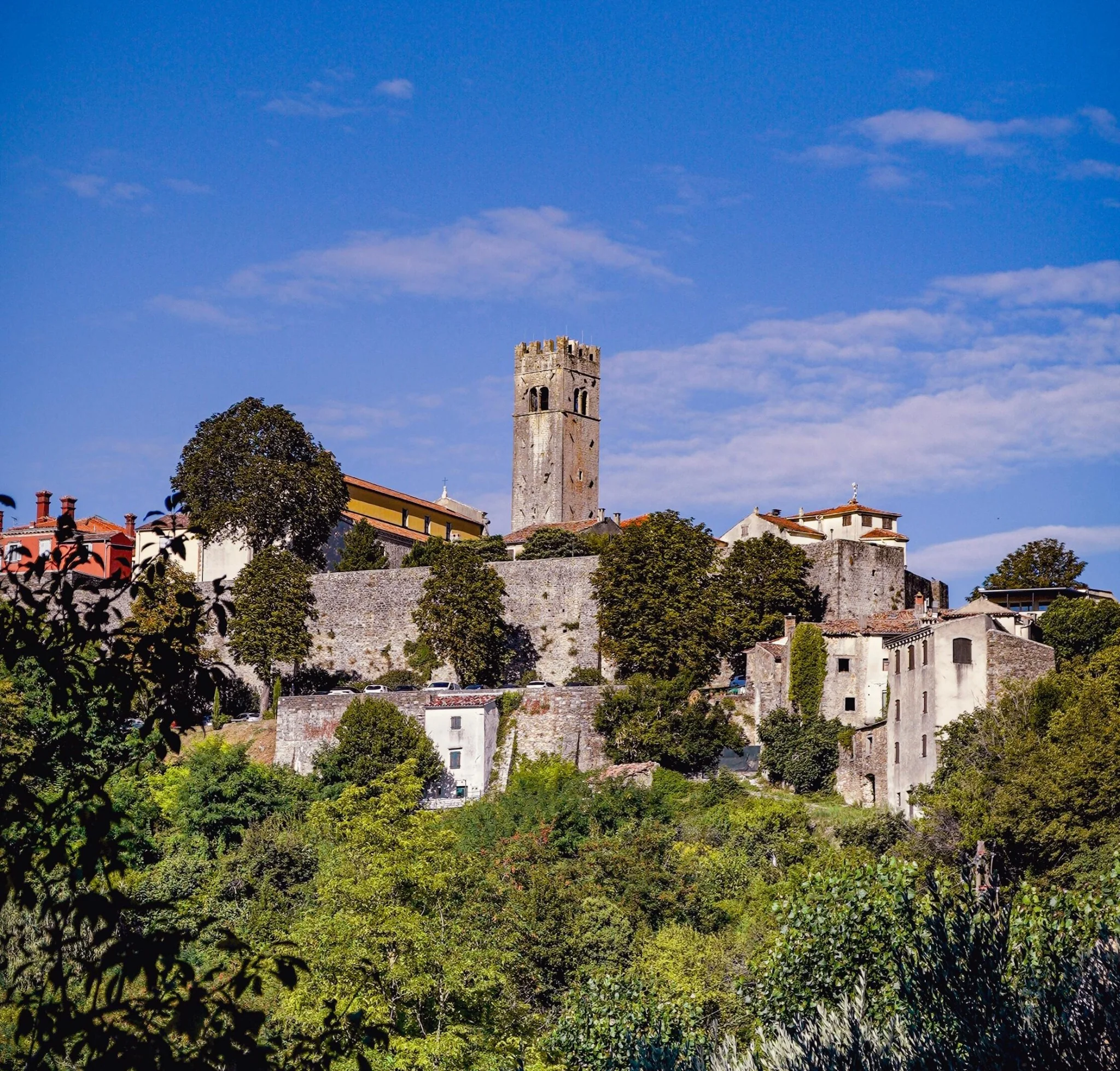
Motovun is the most famous of the Istrian hill towns and the unmissable centrepiece of any inland trip. The medieval village sits on a 277-metre hill above the Mirna river valley, fortified by a triple ring of walls, with a single approach road that climbs in tight switchbacks through the lower vineyards. From the ramparts at the top, the view runs across oak forest in every direction; on a still autumn morning, the valley below fills with fog and Motovun appears to float.
The town has perhaps two hundred year-round residents, three or four restaurants of real quality, two excellent small hotels, and the most concentrated truffle and Istrian-wine offering in the country. Plan to walk the walls in the early morning, eat lunch at Konoba Mondo or Restaurant Mlin in the valley below, and stay at least one night to see the town empty after the day-visitors leave.
Truffles and the Mirna valley
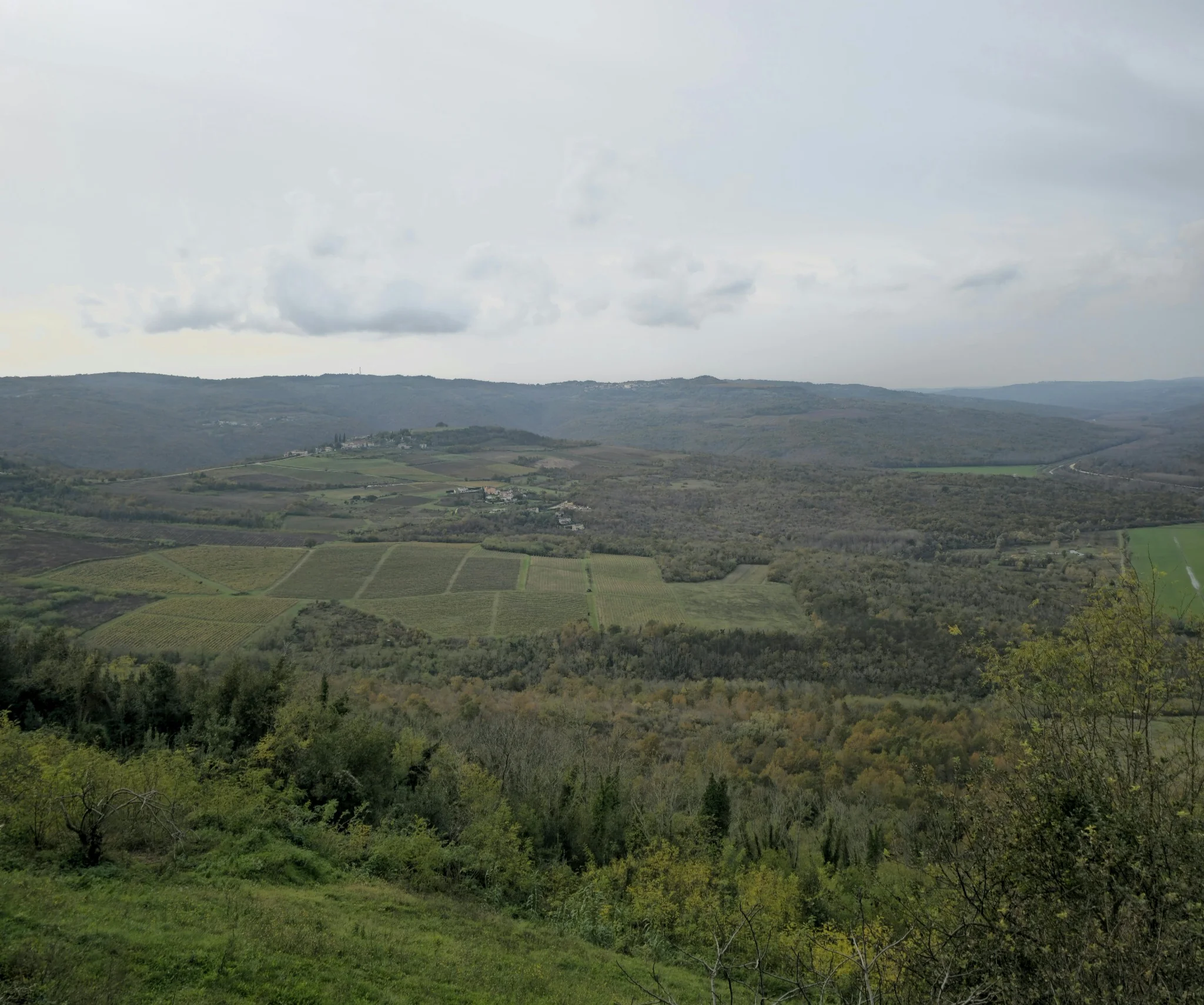
The oak forests of the Mirna river valley below Motovun are among the most productive truffle grounds in Europe. The white truffle (Tuber magnatum) — the same species as Alba’s, and the more valuable of the two — fruits here from September through December, and the largest specimens have set world records. The black truffle is in season virtually year-round.
For the luxury traveller, the right way to engage with Istrian truffles is a private morning hunt with a working family — typically Karlić, Zigante, or Prodan — followed by an estate lunch built around the morning’s haul. The hunt itself is real: dogs working through the oak undergrowth at first light, the family handler reading the dogs, the truffles unearthed and weighed in the field. The lunch that follows — fuži pasta with truffle, scrambled eggs and truffle, fresh sheep’s cheese, olive oil from the family grove — is one of the great small experiences in European travel.
The other hill towns
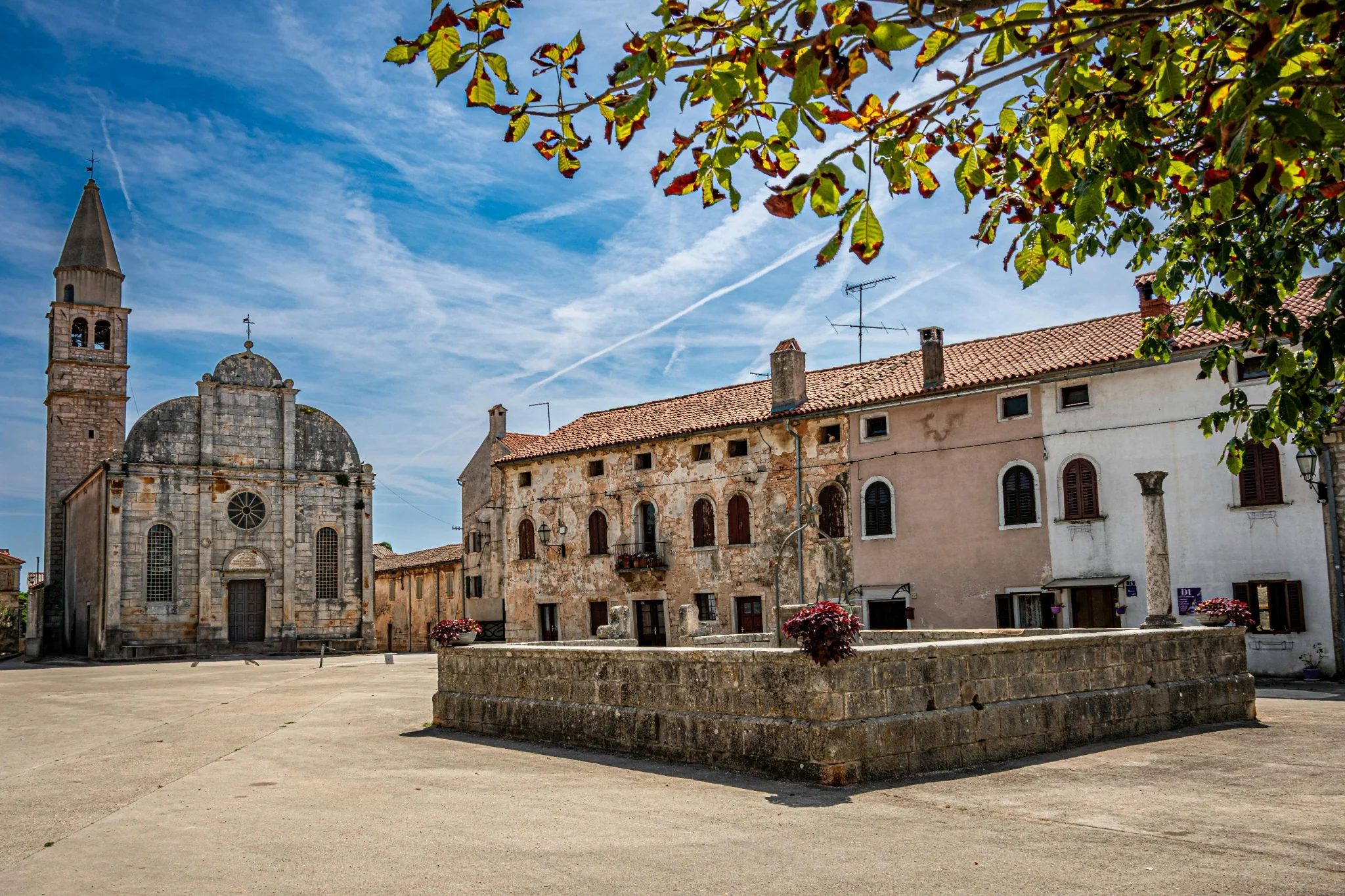
- Grožnjan — fifteen minutes from Motovun, an artists’ colony since the 1960s, with stone-walled lanes, working studios, and one of the great hilltop konobas (Konoba Bastia). The most romantic of the Istrian hill towns and a strong base for travellers who find Motovun too busy in midsummer.
- Hum — billed by the Croatian tourist board as “the smallest town in the world” — a single street, a single church, and twenty residents. Best visited late in the afternoon for the quiet hour before the konoba opens for dinner.
- Buzet — the truffle capital, built on a higher hill above the Mirna valley, with the strongest truffle festival in the country (the second weekend of September) and three of the better truffle producers within a short drive.
- Oprtalj — a quieter alternative to Grožnjan, with the best small wine bar in inland Istria and a beautifully kept main square.
- Roč and Hrastovlje — the smallest hill villages, known for the medieval Glagolitic-script churches that mark a forgotten chapter of Croatian Christianity.
Istrian wine — Malvazija and Teran
Istria is the most exciting wine country in Croatia and one of the most exciting in the Mediterranean. The two indigenous grapes are Malvazija Istarska (white, mineral, often barrel-aged for serious examples) and Teran (red, structured, dark, distinctive). The producers worth a private visit:
- Roxanich — the most ambitious winery in Istria, set in a beautifully designed estate near Motovun, with a serious natural-wine programme and a small luxury hotel (Roxanich Wine & Heritage) on site.
- Kabola — biodynamic, with amphora-aged Malvazija, and an excellent restaurant attached.
- Coronica — old-guard, the benchmark Teran.
- Matošević — modern, polished, the most consistently strong Malvazija producer.
- Trapan — the experimental young winery in southern Istria, with serious sparkling and a small natural-wine programme.
Where to stay
- Roxanich Wine & Heritage Hotel, Motovun — the most considered luxury stay in inland Istria. Thirty-two rooms in a beautifully designed contemporary building below the old town, a serious wine programme, an excellent restaurant.
- Hotel Kaštel, Motovun — small heritage hotel inside the walls of the old town, with twenty-eight rooms and a restaurant on the main square. The right base for travellers who want to stay inside Motovun itself.
- San Canzian Village & Hotel, Mužolini Donji — a Relais & Châteaux property in a restored hamlet near Buje, the polished destination for travellers prioritising hotel quality.
- Meneghetti Wine Hotel, Bale — Relais & Châteaux, on a working wine and olive estate at the southern edge of the hill country, an hour’s drive from Motovun and forty minutes from Rovinj.
- Private villa rentals — strong throughout the Mirna valley, particularly in the smaller villages around Buje and Oprtalj. Concierge introductions on request.
Where to eat
- San Rocco, Brtonigla — Michelin-recommended, a Relais & Châteaux dining room, and one of the most polished kitchens in inland Croatia.
- Konoba Mondo, Motovun — the unmissable truffle lunch in the valley below the old town. Book a day ahead.
- Restaurant Mlin, Livade — old mill on the Mirna river, full Istrian truffle programme.
- Konoba Bastia, Grožnjan — perched on the edge of the old town, a short menu of perfect Istrian classics.
- Konoba Toklarija, Sovinjsko Polje — a hidden farmhouse konoba near Buzet, single-table service some nights, the most personal dinner on the peninsula.
How to get to inland Istria
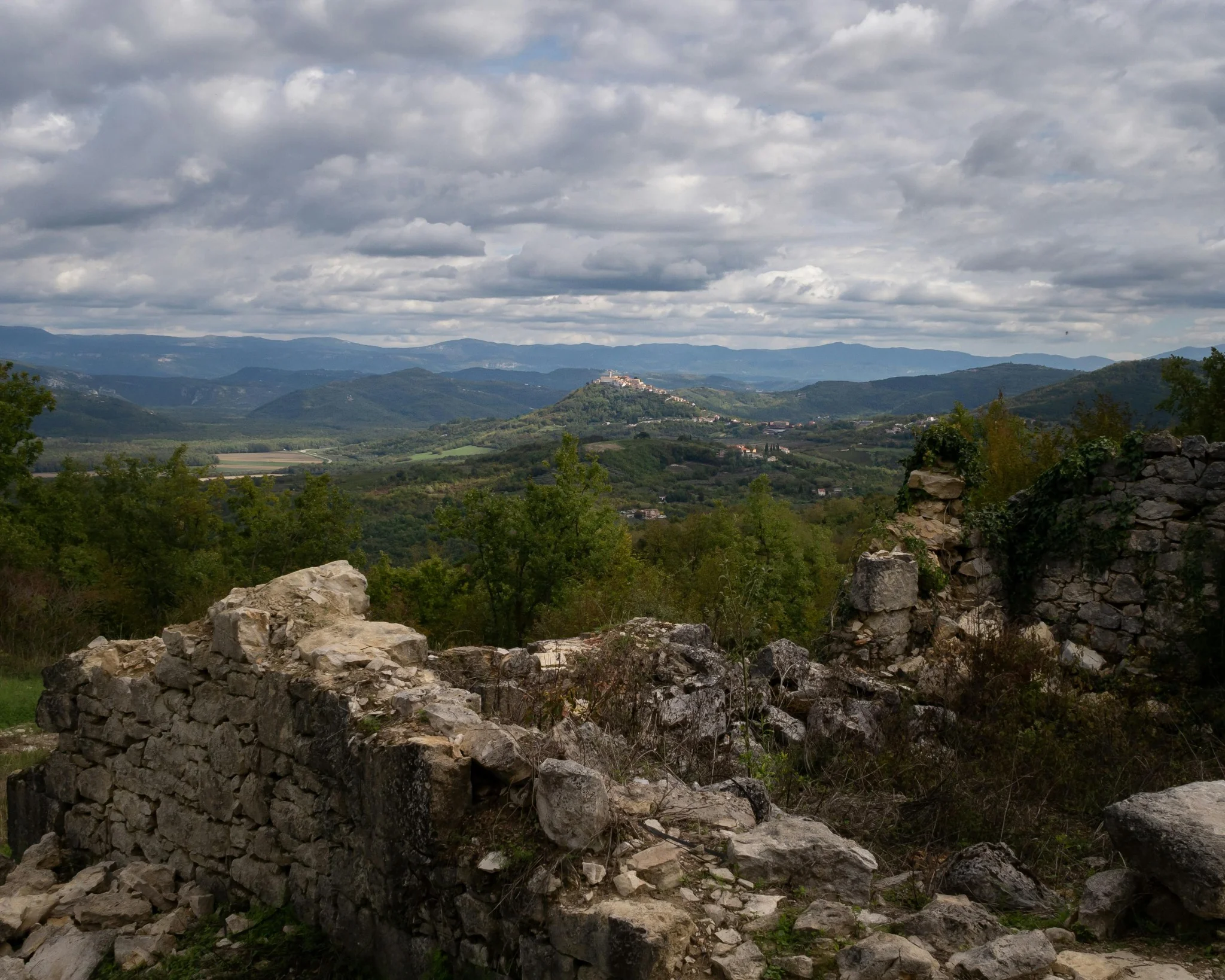
The hill country is reached by car — there is no realistic alternative — and the drive from Rovinj to Motovun takes about forty-five minutes; from Pula airport, a little over an hour. From Trieste in Italy or Ljubljana in Slovenia, the drive is around 90–110 minutes. Most luxury itineraries pair three or four nights on the Istrian coast (Rovinj or Pula) with two or three nights in the hill country, moving by private driver between the two. See our Croatia travel guide for full transfer logistics.
Frequently asked questions
Is inland Istria worth visiting?
For travellers interested in food and wine, hill towns, or the more rural side of Croatian travel, inland Istria is one of the most rewarding regions in Europe. Pair it with a coastal stay in Rovinj or Pula for the strongest possible Istrian week.
How long should I spend in the Istrian hill towns?
Two to three nights is right for most luxury itineraries — a Motovun day, a truffle hunt and winery day, and a wider hill-town loop including Groženjan, Hum, and Buzet. A full week works beautifully for travellers basing themselves at a single estate hotel or villa.
When is the best time to visit Motovun?
September and October are ideal — the white-truffle season opens, the vineyards harvest, the weather is settled and cool. May and June are also excellent; midsummer is hot and the towns busy with day visitors but still worth doing if travel dates are fixed. Late autumn and winter are quieter and more atmospheric, with mist over the valleys and full truffle service in the konobas.
Where is the best place to do a truffle hunt in Istria?
The Mirna river valley below Motovun and the forests around Buzet are the heart of Istrian truffle country. Karlić, Zigante, and Prodan all run private hunts followed by estate lunches; the right one depends on the season and the size of the party. Concierge introductions on request.
What is the smallest town in the world in Istria?
Hum, in the upper Mirna valley, is described by the Croatian tourist board as the smallest town in the world — a single fortified street, a small church, and a population of around twenty. Whether the title is technically correct is open to debate; Hum is genuinely tiny, beautifully preserved, and worth thirty minutes on any inland Istrian itinerary.
Can I do Motovun as a day trip from Rovinj?
Yes — Motovun is forty-five minutes’ drive from Rovinj, and a day trip works well for travellers who only have a single day. A truffle hunt, a winery, and lunch in the valley fit comfortably into a full day. For travellers wanting Groženjan and Hum as well, however, an overnight makes a much stronger trip.
Plan your Istrian hill-town trip
Inland Istria pairs naturally with a coastal Istrian stay — see our Rovinj travel guide and Pula travel guide for the coast, and the Croatia travel guide for the broader picture. For private truffle hunts, winery introductions, or full Istrian weeks, see our concierge enquiries page.