National Park Island
Mljet
Two saltwater lakes, a Benedictine monastery on an island within an island, and the Adriatic’s quietest national park — Odysseus’s Mljet, the green island of southern Dalmatia.
The greenest island on the Adriatic
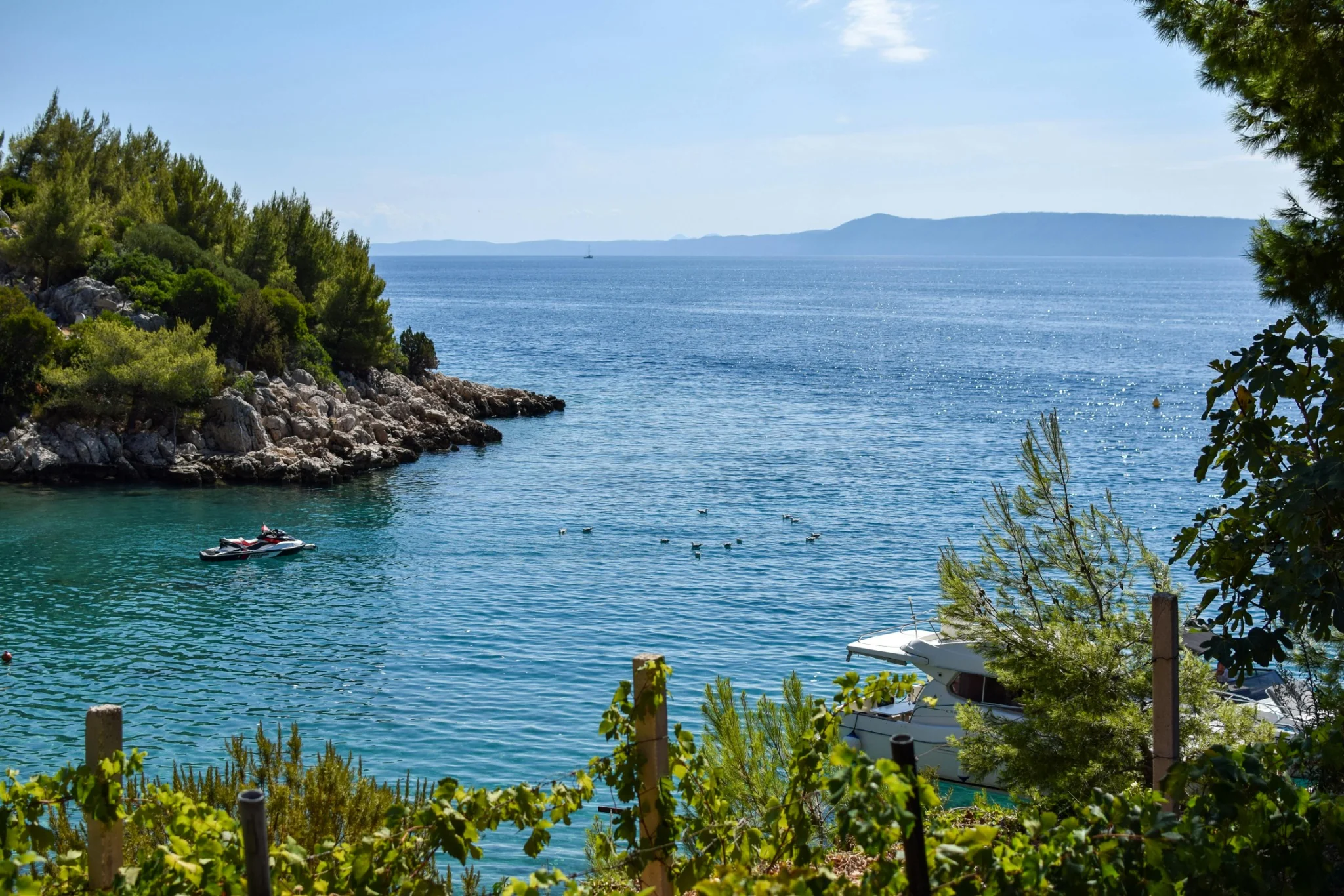
Mljet is the long, narrow, densely forested island that runs west from the southern Dalmatian coast just above Dubrovnik. It is the most heavily wooded of the major Croatian islands — pine, holm oak, and aleppo cover almost three-quarters of its surface — and the western third is a national park, established in 1960, built around two interconnected saltwater lakes and the small islet within the larger lake that holds a twelfth-century Benedictine monastery. Homer, in the Odyssey, had Odysseus shipwrecked here and held by the nymph Calypso in a cave on the southern coast. The cave still exists; the locals will show you which one.
For the luxury traveller, Mljet is the antithesis of Hvar: small, quiet, almost without hotels, and built around a single landscape rather than a single town. It is the most rewarding two-night side-trip from a Dubrovnik or Korčula stay, and one of the most beautiful pieces of coastline in the Mediterranean.
Mljet National Park and the saltwater lakes
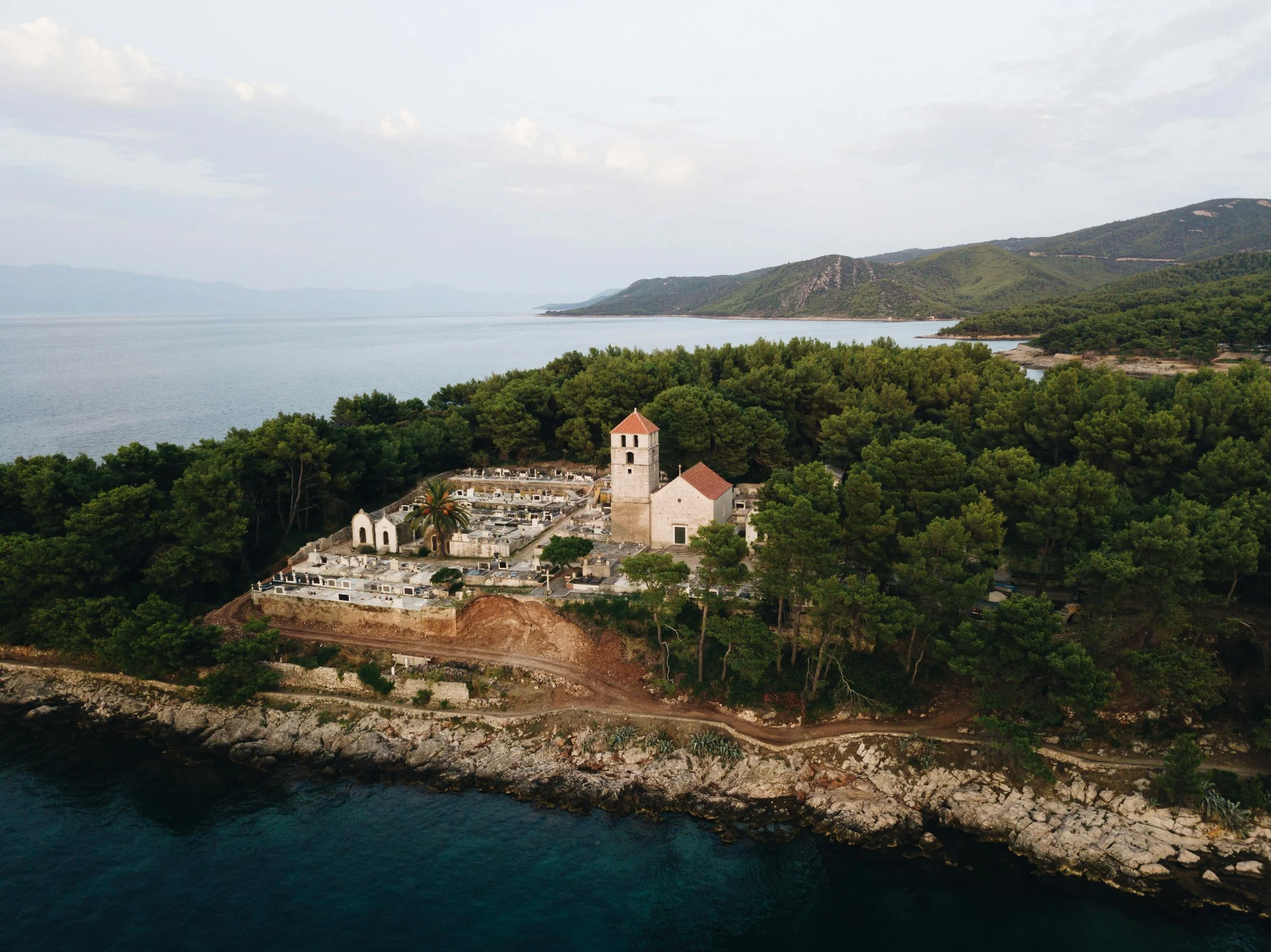
The two lakes — Veliko Jezero (“Great Lake”) and Malo Jezero (“Small Lake”) — sit at the western end of the island, connected to each other and to the open sea by narrow channels. Both are in fact bays of the sea rather than freshwater lakes; the water is brackish, the temperature higher than the open Adriatic, and the swimming exceptional. A path circles both lakes, and a small boat in summer takes visitors from the dock at Pristanište out to St Mary’s Island in Veliko Jezero — an islet within the lake within the island, holding the twelfth-century Benedictine monastery and a single restaurant.
The monastery itself was abandoned in 1809 under Napoleonic rule and has been partially restored; the chapel and the cloister are open to visitors, and a quiet hour spent on the island is among the most memorable on Mljet. The restaurant on the island serves a simple lunch — fish, pasta, the local wine — and is the right midday stop on a national-park day.
Cycling and walking the park
The national park is best seen by bicycle or on foot — there are no cars on the trails, and the path that loops both lakes is one of the most beautiful rides on the Adriatic. Bicycles can be rented at Pomena or Polače, the two main entry villages, and a half-day loop covers both lakes, the small island, and the western beaches at Pomena. Walkers should plan three or four hours for the same ground, longer for travellers wanting to climb to the viewpoint above Veliko Jezero. The Montokuc trail — three hours from Pomena — climbs to the highest point of the western half of the island and is the strongest serious walk in the park.
Beaches and the southern coast
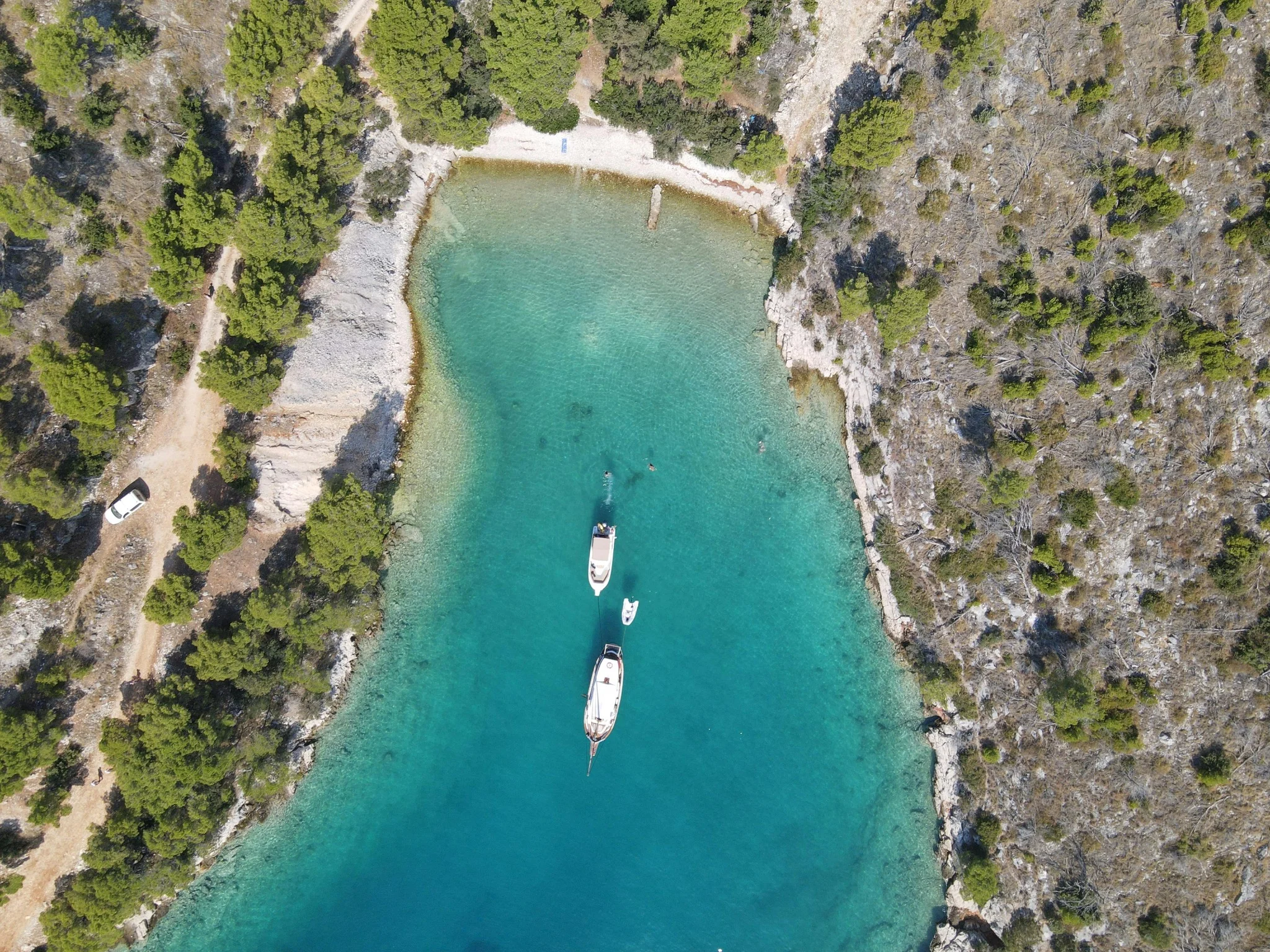
Mljet’s beaches are small, quiet, and concentrated on the southern coast. Saplunara, at the eastern tip of the island, is the rare Adriatic sand beach — a long, shallow, golden bay with two small konobas and a handful of villa rentals. Blace, just east of Saplunara, is even quieter. Odisejeva Špilja (Odysseus’s Cave), on the southern coast, is the local candidate for the cave where the nymph Calypso held Odysseus for seven years; the cave is reachable by sea kayak or by a steep walking path, and the swimming inside is exceptional.
Where to stay
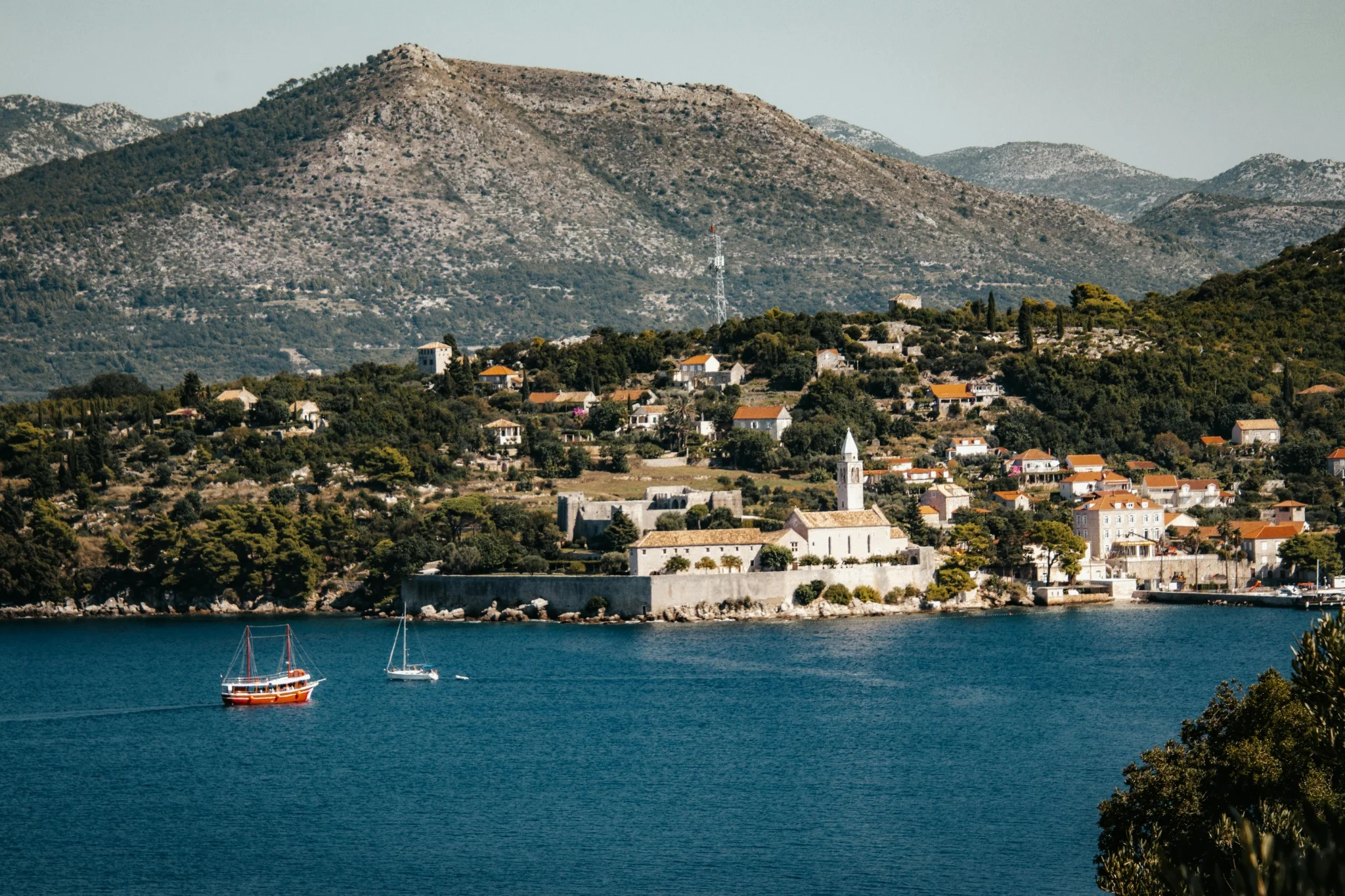
Mljet has almost no hotels. The right way to stay is in a small guest-house in Pomena or Polače (the two western villages, inside the national park) or in a private villa at the eastern end of the island near Saplunara.
- Hotel Odisej, Pomena — the only hotel of any size on the island, set on the harbour at the western end of the national park. Plain, well-located, the easiest base for a national-park stay.
- Stermasi, Saplunara — small family-run apartments and a beachside konoba on the sand at Saplunara, the most beautiful spot to stay on the island.
- Villa Korta, Sobra — small luxury guest-house on the central north coast, the right base for travellers arriving by ferry from Dubrovnik.
- Private villa rentals — the strongest option for serious luxury travellers. Restored stone villas with pools at Saplunara, Maranovići, and Prožura. Concierge introductions on request.
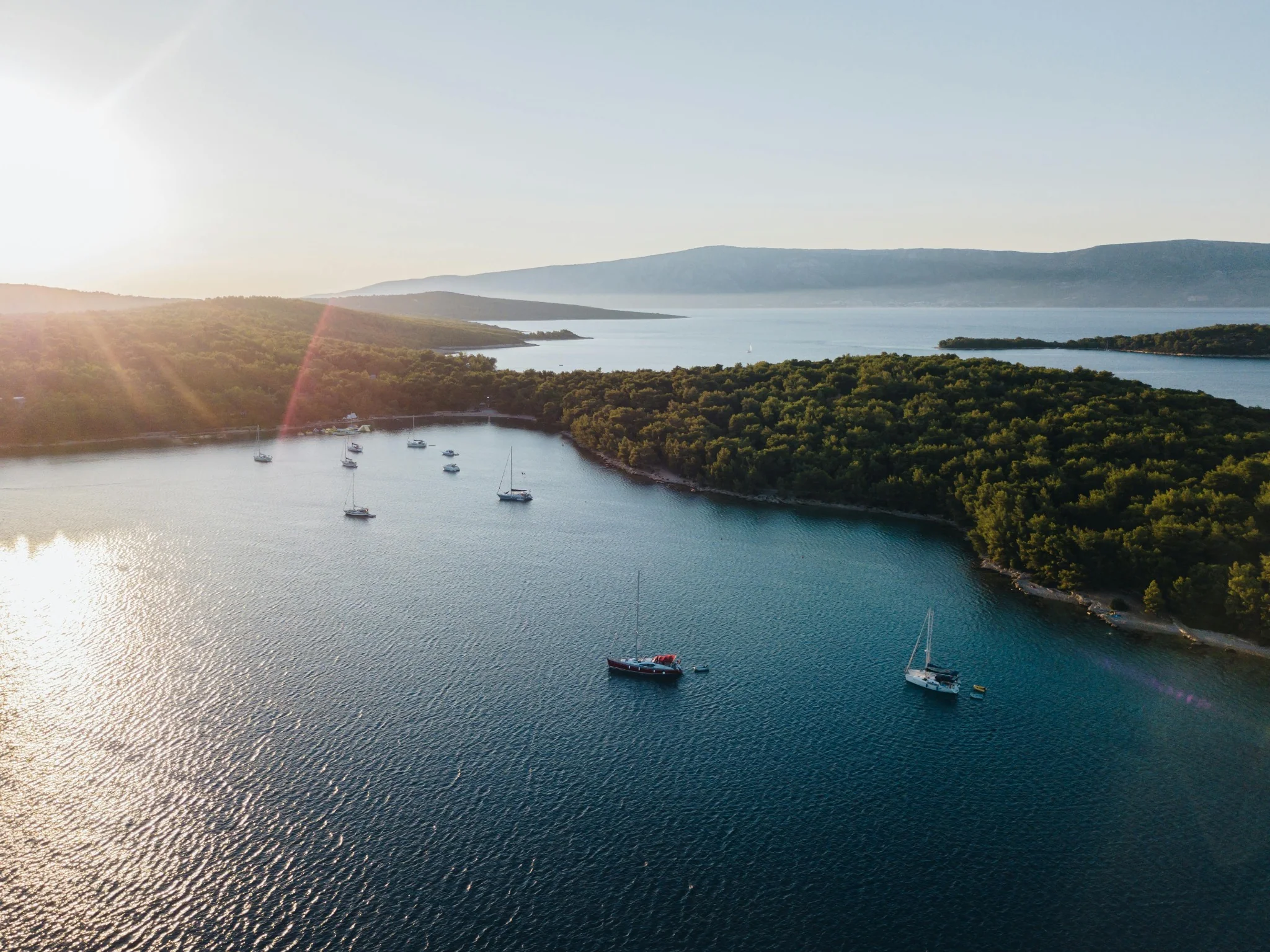
- Yacht-supported stays — Mljet is exceptionally well-suited to a chartered yacht week, anchoring at Polače inside the national park, in the bay at Saplunara, and at the small islets along the southern coast. See our Croatia ferry & yacht guide.
Where to eat
- Konoba Stermasi, Saplunara — fish from the morning’s catch, served on a terrace above the sand beach. The unmissable lunch on the eastern half of the island.
- Konoba Galija, Pomena — small, family-run, the strongest fish kitchen in the national-park villages.
- Restaurant Melita, St Mary’s Island — the small kitchen at the monastery, the right midday stop on a Veliko Jezero day.
- Konoba Mali Raj, Babine Kuće — hidden konoba on the northern shore of Veliko Jezero, reached by a short walk from the lake-circling path.
How to get to Mljet
The fastest connection is the Krilo or Jadrolinija catamaran from Dubrovnik to Polače or Sobra (about 90 minutes), running once or twice daily in season. Car ferries run year-round from Prapratno on the Pelješac peninsula to Sobra (about an hour). From Korčula, summer catamarans connect to Polače in about an hour. For private travellers the most rewarding arrival is by chartered yacht or speedboat from Dubrovnik, anchoring at Polače inside the national park; the run takes around two hours. See our Croatia ferry & yacht guide for full transfer logistics.
Frequently asked questions
Is Mljet worth visiting?
For travellers interested in landscape, quiet, and the most beautiful national-park island in the Mediterranean, Mljet is one of the most rewarding destinations in Croatia. It is the antithesis of Hvar — small, green, almost hotel-free, and built around two saltwater lakes and a twelfth-century monastery rather than a town.
How long should I spend on Mljet?
Two nights is the right minimum — one day for the national park and St Mary’s island, one for the southern coast and Saplunara. Three to four nights at a private villa works beautifully for travellers who want a slow week. Day trips from Dubrovnik or Korčula are possible but barely scratch the surface.
When is the best time to visit Mljet?
May, June, and September are ideal — warm sea, settled weather, the national park trails clear and quiet. July and August are excellent on the southern beaches but the catamaran from Dubrovnik fills with day-trippers; if travelling in midsummer, an overnight at Pomena is essential to see the park outside of day-visitor hours.
Can you do Mljet as a day trip from Dubrovnik?
Yes — the catamaran from Dubrovnik to Polače takes ninety minutes and full-day organised tours run all summer. The trip works for travellers wanting only the national-park lakes; a single overnight, however, opens up the eastern half of the island, the Saplunara beach, and the southern coast, and makes the trip far more rewarding.
What is the monastery on the island in the lake?
The Benedictine monastery on St Mary’s Island in Veliko Jezero was founded in the twelfth century and was the largest landowner on Mljet for six hundred years until its abandonment under Napoleonic rule in 1809. The chapel and cloister have been partially restored and are open to visitors; a small restaurant operates in the former refectory.
Is Mljet better than Korčula?
They are different islands. Korčula is built around its medieval walled town, its wines, and its harbour life. Mljet is built around its landscape — two saltwater lakes, dense pine forest, a twelfth-century monastery, and a single sand beach at the far end. Travellers wanting town, food, and wine go to Korčula; travellers wanting quiet, walking, and a national park go to Mljet. A southern Dalmatian week often does both.
Plan your Mljet trip
Mljet pairs naturally with a Dubrovnik or Korčula leg of a southern Dalmatian week — see our Dubrovnik travel guide, Korčula travel guide, and Pelješac travel guide, plus the Croatia national parks guide for the broader park network. For private boat days, villa introductions, or yacht-supported Mljet weeks, see our concierge enquiries page.