Dalmatian Islands
Korčula
Marco Polo’s Island
Welcome to Korčula
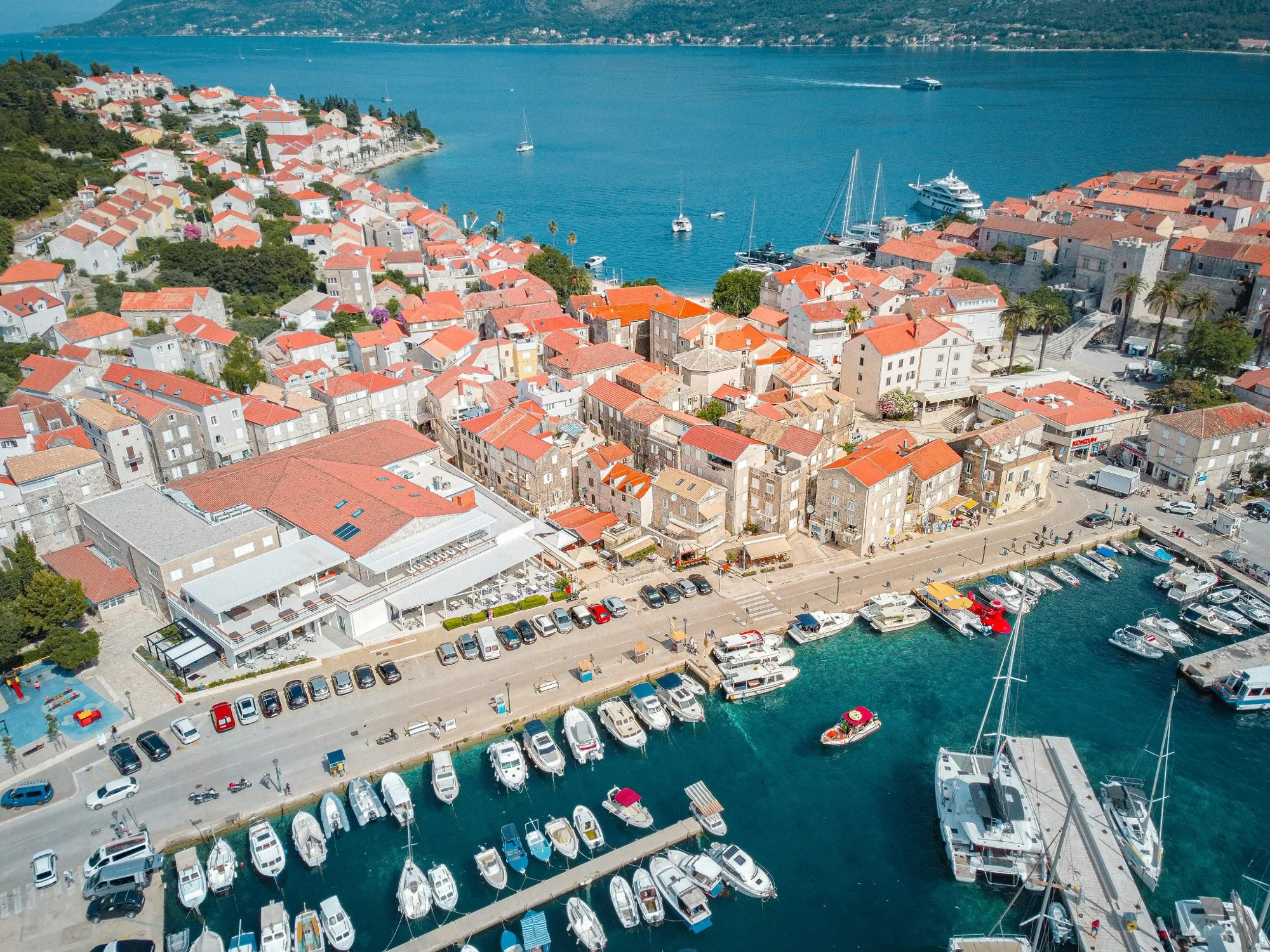
Korčula is one of the most enchanting islands in Croatia — a long, mountainous, densely forested island stretching nearly 50 kilometres along the southern Dalmatian coast. At its eastern tip, the medieval walled old town of Korčula sits on a tiny peninsula like a pocket-sized Dubrovnik, with narrow herringbone streets designed in the 13th century to channel the cooling Maestral wind in summer and shield against the bora in winter. Local tradition (and a good deal of historical argument) places it as the birthplace of Marco Polo. The island is also one of Croatia’s most important wine regions, home to two of the country’s signature white grape varieties: Pošip and Grk.
This Korčula travel guide covers the best things to do, where to eat, where to stay, and how to plan a luxury visit.
Why Visit Korčula
Korčula is the island for travelers who’ve outgrown Hvar’s glamour. The old town is one of the most photogenic in Europe, the surrounding waters are a mosaic of swimming coves and sandy beaches, the Pelješac wine peninsula is a 15-minute ferry away, and the island’s interior — forested, hilly, dotted with old stone-walled vineyards — is among the most peaceful landscapes on the Adriatic. Korčula is small enough to know intimately after a week, and rich enough to come back for.
For luxury travelers, Korčula offers a quieter, more authentic Croatian island experience than Hvar — with exceptional restaurants, a growing scene of boutique hotels in restored old-town palazzi, and easy private-boat access to the wine country and the islands of Mljet and Ĺastovo.
Top Things to Do on Korčula
- Walk the old town. The herringbone street plan, the cathedral of St Mark, the alleged Marco Polo house, the city walls, and the views from Revélin tower. The whole walled town is barely 250 metres long — lose yourself in it.
- Watch a Moreska sword dance. The traditional Korčulan sword dance has been performed since the 15th century. Public performances run weekly in summer.
- Visit Lumbarda’s wineries. The white-sand-soiled vineyards of Lumbarda, just east of Korčula Town, produce the island’s prized Grk — an indigenous variety grown nowhere else. Visit Bire, Popić, and Cebalo cellars by appointment.
- Beach day at Pržina or Vela Ṕržna. Lumbarda’s two famous sandy beaches — rare on the Croatian coast — are perfect for swimming and afternoon lounging.
- Drive to Vela Luka. The island’s western town is far quieter than Korčula Town — a working harbor with excellent restaurants and access to the smaller islands of Prožura and Vrnik.
- Take the ferry to Pelješac. The 15-minute crossing from Oŕebić (just opposite Korčula Town) reaches Croatia’s most prestigious wine region. The Dingač and Postup vineyards produce the country’s finest reds.
- Visit Blača Monastery. The cave monastery in the island’s central highlands — a 30-minute drive plus a 30-minute walk — is one of the most extraordinary religious sites in Croatia.
- Sail to Mljet National Park. The forested island of Mljet, with its two saltwater lakes, is a half-day boat trip from Korčula and one of the most beautiful protected landscapes on the Adriatic.
Where to Eat on Korčula
LD Restaurant at the Lesić Dimitri Palace is Korčula’s flagship fine-dining experience — modern Mediterranean cooking on a sea-front terrace. Filippi, in the old town, is the long-standing classic for refined Dalmatian cuisine. Belin in nearby Lumbarda serves seasonal cooking using produce from the family’s own farm. Konoba Mate in the inland village of Pupnat is the legendary destination konoba — a 20-minute drive from town and worth every minute. For a casual lunch on the harbor, Freš</́ wine bar is the perfect stop.
Where to Stay on Korčula
For pure luxury, Lesić Dimitri Palace in the old town is one of the most beautiful boutique properties in Croatia — five suites in restored 18th-century bishop’s residences, with the cathedral’s bell tower as a neighbor. Aminess Lume Hotel in nearby Brna is the resort-style option, with a serious spa. Korkyra Heritage Hotel on the harbor is a refined mid-luxury choice. For an extended stay, the restored stone houses of Lumbarda and the inland villages of Žrnovo and Pupnat offer beautiful villa rentals. Across the channel on Pelješac u2014 a fifteen-minute ferry from Korčula town u2014 the Relais & Châteaux Korta Katarina estate at Orebić is the strongest partner stay for travellers spending a Korčula-and-Pelješac week, with the new Hotel Katarina opening in early 2026 and the 61.3-metre superyacht M/Y Katharine for private Adriatic days.
How to Get to Korčula
Korčula has no airport. Most travelers fly to Split (SPU) or Dubrovnik (DBV) and continue by ferry. From Split, daily catamarans (Krilo, Jadrolinija) reach Korčula Town in about 3 hours. From Dubrovnik, fast catamarans cross in about 2 hours. The car ferry from Oŕebić on the Pelješac peninsula is a quick 15-minute crossing if you’re driving down the coast.
Best Time to Visit Korčula
Late May, June, and September are the perfect months — warm sea, vineyard-tour weather, and uncrowded restaurants. July and August are spectacular but the old town can feel busy at midday with cruise tenders. The vineyards are at their most beautiful in September during the Grk and Pošip harvest. Winter is quiet and atmospheric — the catamaran service reduces but the old town keeps its life year-round, unlike Hvar.
Practical Tips
- The old town is fully pedestrian — there’s parking just outside the walls.
- To explore the rest of the island, a rental car is essential — ferries to Lumbarda and the wineries are infrequent.
- Wine tastings at the smaller cellars (Bire, Popić) need to be booked a day ahead.
- Konoba Mate in Pupnat is small — reserve well in advance, especially in summer.
- The Moreska sword dance runs Mondays and Thursdays in summer; tickets sell at the venue.
Frequently Asked Questions
Is Korčula worth visiting?
Yes — Korčula is one of the most beautiful islands in the Adriatic and is often called “Little Dubrovnik” for its walled medieval old town. The wine country of Lumbarda, the sandy beach of Pržina, the wooded hills of the interior, and the easy ferry connection to the Pelješac wine peninsula make Korčula a wonderful 3–4 night base.
How do you get to Korčula from Split?
Daily Krilo or Jadrolinija fast catamarans connect Split to Korčula Town in about 3 hours. From Dubrovnik, fast catamarans cross in about 2 hours. If you’re driving down the coast, the car ferry from Orebić on the Pelješac peninsula is a quick 15-minute crossing to the eastern end of Korčula.
Is Korčula better than Hvar?
It depends on what you’re after. Hvar is the more glamorous, livelier, and more photogenic island, with a stronger nightlife and dining scene. Korčula is quieter, more authentic, and rewards travelers who want a less polished Croatian island experience. Many luxury travelers visit both on a longer Dalmatian itinerary.
What is Korčula known for?
Korčula is known for its medieval walled old town (laid out in the 13th century with a herringbone street plan), its claim as the birthplace of Marco Polo, the indigenous white wines Pošip and Grk grown in the Lumbarda vineyards, and the centuries-old Moreška sword dance still performed weekly in summer.
Can you do Korčula as a day trip from Dubrovnik?
It’s possible but rushed. The fast catamaran is about 2 hours each way, leaving 4–5 hours on the island — enough for the old town and a quick lunch but not for the wine country, beaches, or inland villages. To experience Korčula properly, plan at least one overnight stay.
Plan Your Croatia Trip
Korčula pairs naturally with Dubrovnik, Hvar, the Pelješac wine peninsula, and Mljet National Park. See our 7 Day Croatia Itinerary and Croatia Travel Guide for trip planning ideas.
For private boat days, villa introductions, or full Croatian weeks, see our concierge enquiries page.