Southern Dalmatia
Orebić
Pelješac’s Sea-Captain Town & Gateway to Korčula
Welcome to Orebić
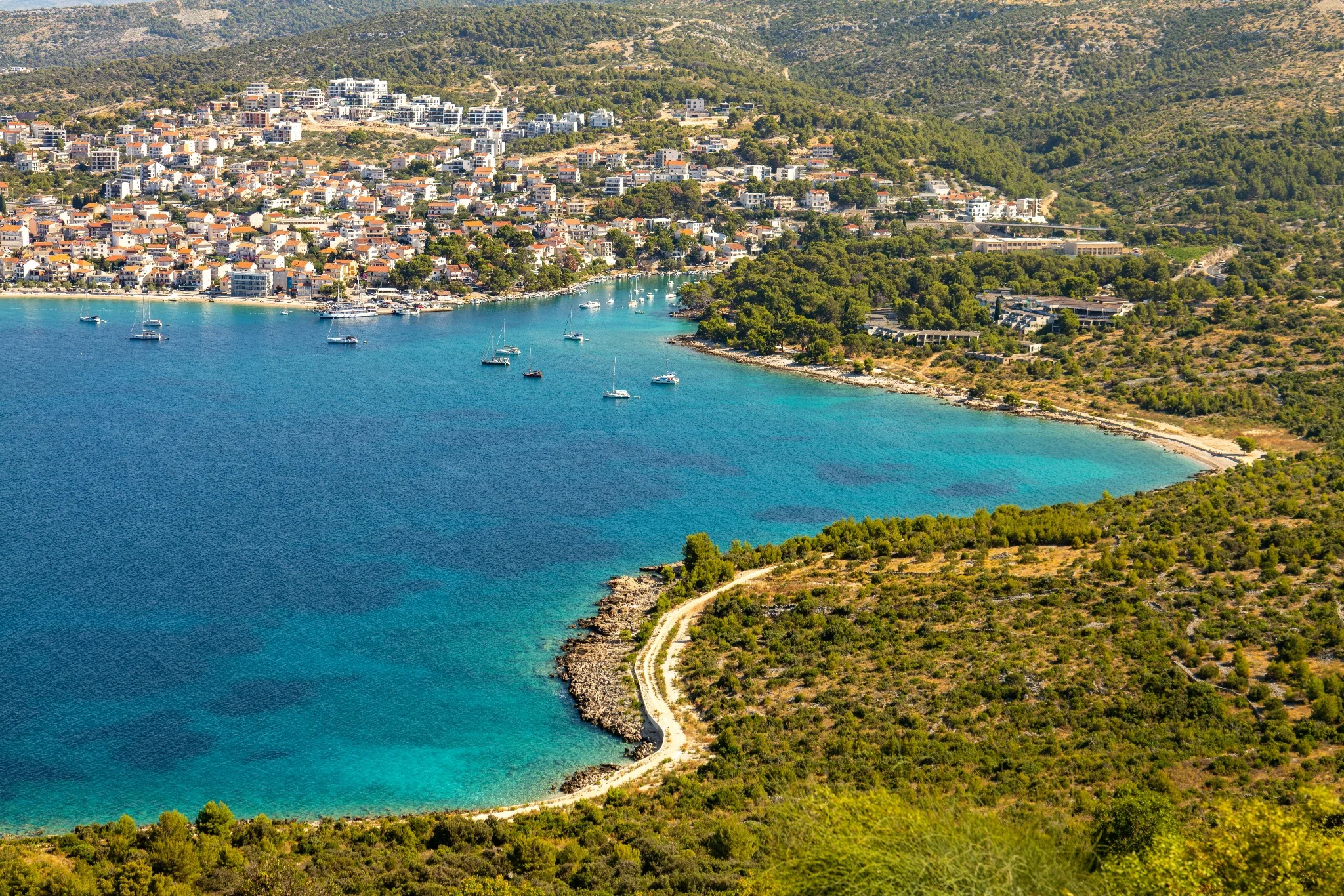
Orebić is the most quietly beautiful town on the southern Adriatic. It sits at the western tip of the Pelješac peninsula, looking directly across a kilometre of clear sea to the walled old town of Korčula on its own island opposite — one of the most spectacular harbour-to-harbour views on the Mediterranean. A long stone seafront promenade runs the length of town, the limestone wall of Mount Sveti Ilija rises 961 metres directly behind, and the Postup and Dingač vineyards — the two most important Plavac Mali appellations in Croatia — climb the slopes either side. The pace is unhurried, the swimming is exceptional, and the village still feels like a working Dalmatian harbour rather than a resort.
For luxury travellers, Orebić is the right base for the southern half of Pelješac — wine days at the great vineyards, a fifteen-minute ferry to Korčula for dinner, oyster lunches up the coast at Mali Ston, and unhurried evenings on a quiet seafront. This Orebić travel guide covers the town, the beaches, the climbs, the wineries, and the best places to eat and stay.
Why Visit Orebić
Orebić is the rare Croatian destination that combines four distinct draws within a few kilometres: a long pebble-and-sand beach in town with shallow turquoise water and Korčula directly opposite; the most important red-wine appellation in Croatia (Plavac Mali from Dingač and Postup, both within ten minutes’ drive); a serious mountain hike up Mount Sveti Ilija for the best panorama in the southern Adriatic; and the easiest island access on the coast — the Korčula ferry runs every hour or two and the crossing takes fifteen minutes.
For travellers who have already done Dubrovnik and want a quieter Dalmatian week with serious wine, calm swimming, and a single luxury base, Orebić is the answer. The headline property — Korta Katarina, the Relais & Châteaux estate at the eastern edge of town — anchors the luxury end of the village; private villa rentals on the slopes above provide the rest.
Top Things to Do in Orebić
- Walk the seafront from town to Trstenica. The long stone Riva runs east from the harbour to the pine-shaded pebble beach of Trstenica — about a kilometre, lined with cafés, swim platforms, and the calmest water on the channel. Sunset along this walk, with Korčula’s old town glowing across the channel, is one of the great hours of any Adriatic trip.
- Cross to Korčula for dinner. The line ferry from Orebić to Korčula Town takes fifteen minutes and runs every hour or two through the day; foot-passenger boats are even faster. Pair an afternoon walk through Korčula’s walled old town with dinner at LD Restaurant or Filippi and the last ferry back to Orebić for a quiet harbour night.
- Taste at Korta Katarina. The Korta Katarina estate at the eastern edge of town — the only Relais & Châteaux property on the southern Adriatic — pours one of the most considered Plavac Mali blends in Croatia, a fifty-fifty of Dingač and Postup made by the late Mike Grgich’s protégés. Tastings on the terrace overlooking the channel are arranged by appointment.
- Drive the Dingač and Postup vineyards. The two great Plavac Mali appellations rise on the slopes immediately above and east of Orebić — south-facing dry-stone parcels that fall almost vertically to the sea. The road through the village of Potomje and into Dingač climbs spectacularly; smaller producers — Miloš, Bartulović, Madirazza — host private tastings on advance request.
- Climb Mount Sveti Ilija. The 961-metre limestone summit directly behind Orebić is the highest point on Pelješac and one of the most rewarding climbs on the Adriatic. The waymarked trail from the Franciscan monastery above town takes about four hours up and three down, with a panorama from the summit that takes in Korčula, Lastovo, Mljet, and on a clear day the Italian shelf.
- Visit the Franciscan Monastery of Our Lady of the Angels. The 15th-century monastery sits 152 metres above Orebić on a small terrace cut from the Sveti Ilija slope — a short, pleasant walk from town with extraordinary views over the channel. The cloister, the small museum of votive ship paintings left by sea captains, and the cypress-shaded courtyard are quietly beautiful.
- The Maritime Museum on the Riva. Orebić was, in the 18th and 19th centuries, the most important sea-captain town on the eastern Adriatic — at the peak, more than thirty percent of all Austro-Hungarian Adriatic merchant captains came from here. The small Maritime Museum on the seafront tells the story through ship models, captains’ portraits, and the remarkable family histories that built the stone houses along the Riva.
- Beach day at Trstenica or Žuljana. Trstenica, on the eastern edge of town, is the long family-friendly pebble beach with shallow turquoise water and pine shade. For something quieter, drive twenty minutes to Žuljana on the southern coast of Pelješac — a small sheltered cove with translucent water and a single seafront restaurant. Trstenik, fifteen minutes east, is the small fishing harbour beneath the Dingač vineyard.
- Take a private boat into the Pelješac Channel. The water around Orebić is some of the clearest on the Adriatic. A half-day private boat from the marina reaches the small uninhabited islets of Sestrice, the quiet northern coves of Korčula, and the Lumbarda sand beaches across the channel — the most rewarding way to spend a sunny afternoon.
Where to Eat in Orebić
Orebić’s dining is small, traditional, and quietly excellent. Konoba Kapelica, in a stone-walled cellar in the old part of town, is the long-running favourite for grilled fish and Plavac Mali by the carafe. Restaurant Mlinica on the Riva has the best harbour-front terrace and a refined Mediterranean menu. Konoba Karmela, a few kilometres east in the village of Stanković, is the destination peka kitchen — slow-cooked lamb and octopus under the bell, served at long communal tables; reserve a day ahead. The Korta Katarina Captain’s Terrace at the Relais & Châteaux estate is the most polished dinner in town, with the channel as backdrop and one of the best Plavac Mali lists on the coast. For a long lunch with a view of Korčula, the small Pizzeria Konoba Kavana at Trstenica beach is the casual local choice.
Where to Stay in Orebić
Orebić’s flagship luxury stay is Korta Katarina on the eastern edge of town — the only Relais & Châteaux estate on the southern Adriatic, with eight individually styled villa suites in the original 19th-century stone villa, the new eleven-suite Hotel Katarina opening in 2026, the working Plavac Mali winery, and the 61.3-metre superyacht M/Y Katharine for private Adriatic days. For a more modest seafront stay, Hotel Indijan on the Riva offers polished four-star rooms with channel views and a small spa. Hotel Adriatic sits at the western end of the seafront on a small bay, family-run and quieter. Private villa rentals on the slopes above town and along the channel coast east of Orebić are increasingly the strongest luxury choice — four- and five-bedroom stone villas with pools, often with private channel access. Concierge introductions on request.
How to Get to Orebić
Orebić sits at the western tip of the Pelješac peninsula. From Dubrovnik, the drive is about two hours via the Pelješac Bridge (which opened in 2022 and removed the Bosnian-Herzegovinian border crossing through Neum). From Split, allow about three hours via the A1 motorway. Dubrovnik Airport (DBV) is the closer of the two main airports — about ninety minutes by car — and the easier arrival for most luxury travellers; Split Airport is roughly 2.5 hours. The Orebić–Korčula ferry (Jadrolinija and Krilo) runs every hour or two through the day and takes fifteen minutes; the foot-passenger catamaran takes ten. Orebić’s marina accommodates yachts up to roughly twenty metres, with deeper-water moorings available across the channel at the ACI Marina in Korčula.
Best Time to Visit Orebić
Orebić is best from late May through early October. June and September are the connoisseur’s months — the sea is warm enough to swim, the wineries are open, the channel ferries run on the high-summer schedule, and the town is quieter than in mid-summer. Late September and early October coincide with the Plavac Mali harvest in Dingač and Postup — the most atmospheric time of year for wine travellers, with the cellars busy and tastings unhurried. July and August are spectacular for swimming and yacht weeks, but the Orebić–Korčula ferry queues are long. April and May are unhurried and beautiful, with the limestone slopes covered in wildflowers and most kitchens already open. Winter is quiet and atmospheric, with most restaurants on weekends only.
Practical Tips
- The Orebić–Korčula ferry queues for cars can be lengthy on July and August weekends; book online in advance and arrive thirty minutes early. Foot passengers walk on without booking.
- The seafront promenade from town to Trstenica is fully walkable — leave the car at the parking on the western edge of town and walk in.
- The Sveti Ilija climb is steep, exposed, and badly waymarked in places; carry water and a paper map, and start before 7 a.m. in summer.
- Wineries in the Dingač and Postup appellations almost all require a phone-ahead booking; the smallest family producers open by appointment only.
- The Maritime Museum on the Riva is small but rewarding; allow about thirty minutes.
- Tap water in Orebić is excellent and comes from the Pelješac karst.
Frequently Asked Questions
Is Orebić worth visiting?
Yes — Orebić is one of the most rewarding small towns on the southern Adriatic. The long seafront with Korčula across the channel, the Plavac Mali vineyards of Dingač and Postup directly above town, the Mount Sveti Ilija climb behind, and the fifteen-minute ferry to Korčula make Orebić the strongest two- or three-night base on the southern half of the Pelješac peninsula.
How long should I spend in Orebić?
Two nights is the minimum, three nights ideal. One day for the seafront, the Franciscan monastery, and Trstenica beach; one day for the Dingač and Postup vineyards and a tasting at Korta Katarina; and a third for a Korčula day or the Sveti Ilija climb. Travellers basing a longer Pelješac week around Orebić can comfortably stay five to seven nights, using the town as a hub for the southern peninsula.
How do you get from Orebić to Korčula?
The Orebić–Korčula channel is one of the easiest island crossings on the Adriatic. The Jadrolinija and Krilo car ferries run every hour or two through the day and take about fifteen minutes; the foot-passenger catamaran takes ten. Many travellers leave the car in Orebić and cross as foot passengers for a Korčula day or evening, returning on the last ferry back.
What is Orebić famous for?
Orebić is famous for three things: its 18th- and 19th-century sea-captain heritage (more than thirty percent of all Austro-Hungarian Adriatic captains came from the town at the peak); the Plavac Mali vineyards of Dingač and Postup, the most important red-wine appellations in Croatia, that climb the slopes directly above town; and its position on the narrow channel opposite Korčula, with one of the most spectacular harbour-to-harbour views on the Mediterranean.
Where should I stay in Orebić?
For the headline luxury stay, Korta Katarina at the eastern edge of town is the only Relais & Châteaux estate on the southern Adriatic, with the new Hotel Katarina opening in 2026. For seafront four-star, Hotel Indijan on the Riva is the polished choice; for a quieter family-run stay, Hotel Adriatic at the western end of the seafront. Private villa rentals on the slopes above town and along the channel coast east of Orebić are increasingly the strongest luxury option for travellers wanting more space and privacy.
Is Orebić better than Korčula?
They are different. Korčula has the dramatic walled old town, the better small-luxury restaurants, and the busier evening scene. Orebić is calmer, has the wine country directly above it, the long pebble seafront, and the Sveti Ilija climb. The fifteen-minute ferry between them means you don’t have to choose — many travellers base in Orebić for the calm and ferry over to Korčula for an afternoon and dinner.
Plan Your Croatia Trip
Orebić pairs naturally with the rest of Pelješac for the wine country and Mali Ston oysters, with Korčula across the channel, with Dubrovnik ninety minutes south, and with Mljet for a national-park island day. See our 7 Day Croatia Itinerary for the canonical southern Dalmatian route through Orebić, or the Croatia Travel Guide for trip planning essentials. For the headline luxury stay in town, see our dedicated Korta Katarina page. For private wine days, Korčula evenings, villa introductions, or full Pelješac weeks built around Orebić, see our concierge enquiries page.